EN10219 RHS Steel Tubes Wholesale for African Contractors
Secure your Rectangular Hollow Section (RHS) Wholesale orders by mastering EN10219 tolerances to prevent costly SONCAP rejections at African ports. Verify mill certificates against actual heat numbers and optimize container loads with custom cuts to minimize demurrage fees and site waste effectively.
- Published
- Updated
- Read time
- 8 min
- Comments
- 0
EN10219 RHS Steel Tubes Wholesale for African Contractors
The lowest FOB price is often the most expensive line item on your final invoice.
Successful wholesale procurement of Rectangular Hollow Section (RHS) for African infrastructure projects depends less on the initial quote and more on strict adherence to EN10219 dimensional tolerances and verifiable mill certification. Without these, even minor deviations trigger SONCAP rejections, leading to demurrage costs that far exceed any upfront savings.
I still remember the silence on the other end of the phone when a contractor in Lagos realized his container of S355JR steel was stuck at Apapa Port. It wasn’t a documentation error or a missing form. The wall thickness on the tubes deviated by less than half a millimeter from the certificate specifications. To a casual observer, it looked fine. To the Nigerian customs inspectors enforcing SONCAP regulations, it was a non-compliant shipment. The demurrage charges accumulated daily, turning a profitable project into a mid-six-figure loss before the cargo was even cleared. That incident shifted my entire approach to Rectangular Hollow Section (RHS) Wholesale. I stopped looking at steel as just a commodity and started treating it as a compliance-critical component where paper trails matter as much as the metal itself.
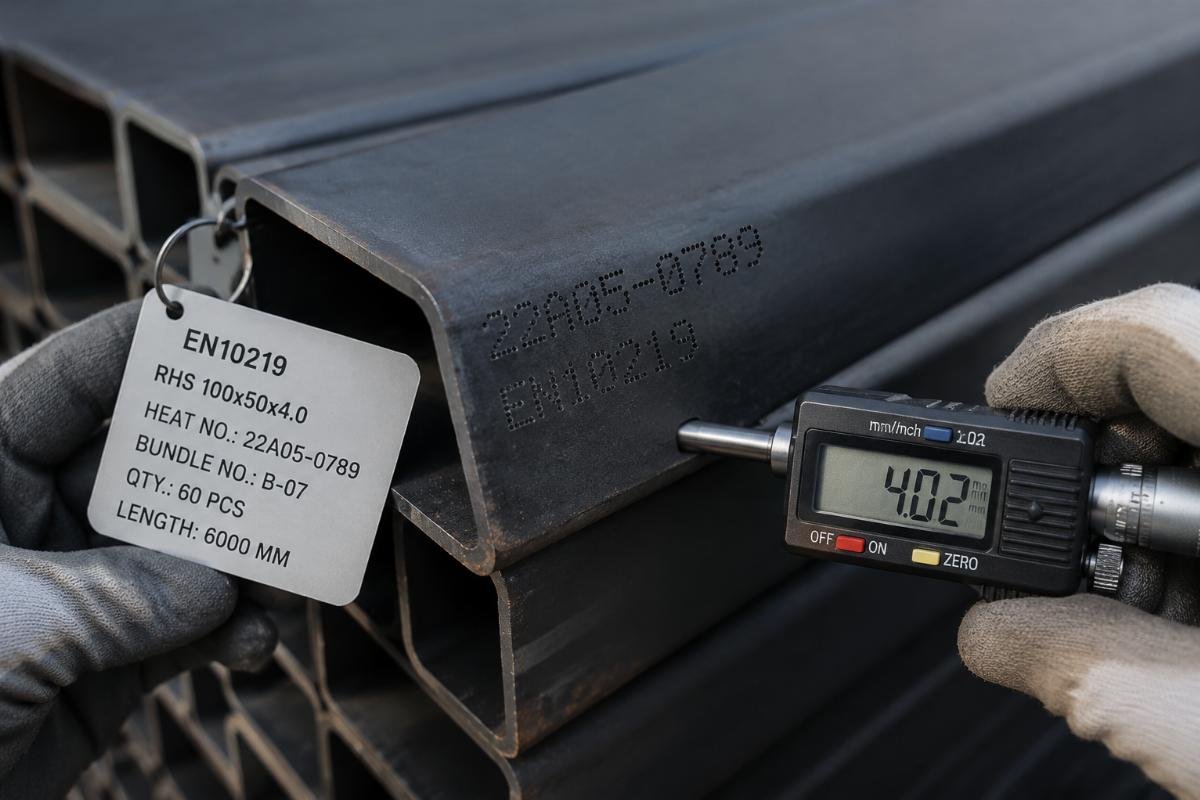
This guide breaks down the specific hurdles African contractors face when sourcing structural steel and how to navigate them without compromising on budget or timeline.
Why Do Standard RHS Tubes Fail African Port Inspections?
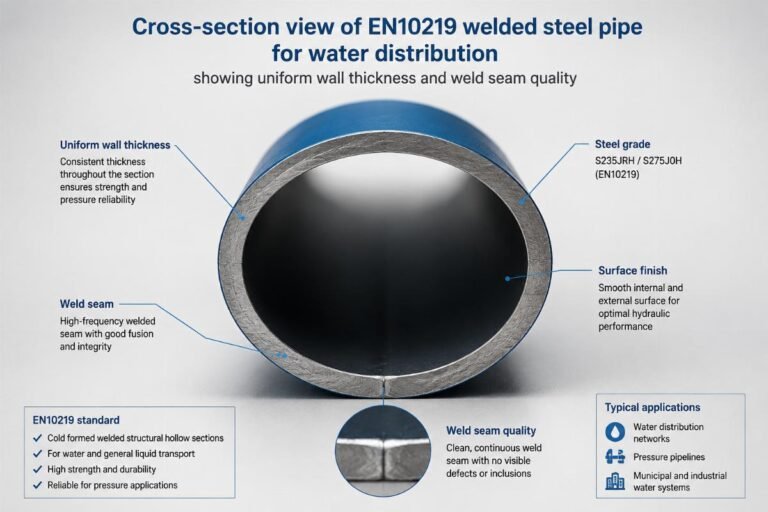
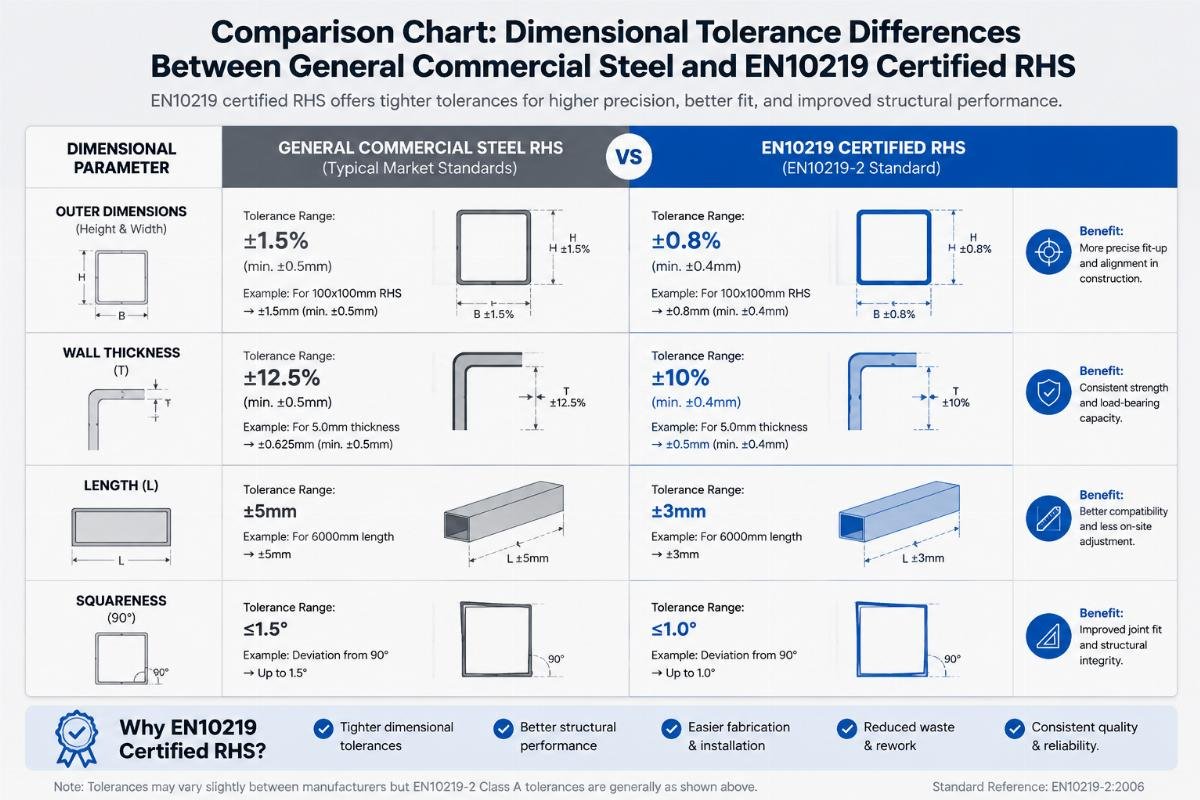
Many buyers assume that “standard size” is a universal concept. They order what they believe is a standard 100x50mm tube, expecting it to fit perfectly into their fabrication plans and clearance protocols. However, the reality is that dimensional tolerances vary significantly between standards. The European standard EN10219, which is widely accepted and often required for major infrastructure projects in Africa, has stricter requirements for cold-formed welded structural hollow sections compared to general commercial grades.
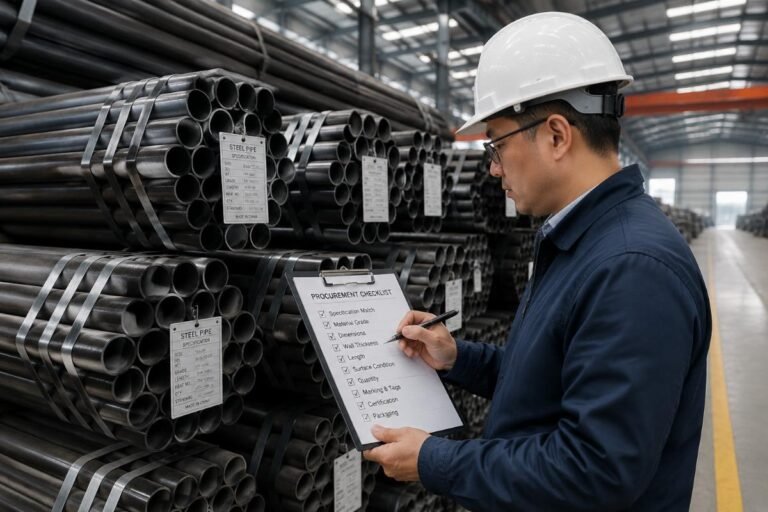
When shipments arrive at ports like Apapa, Durban, or Mombasa, inspectors do not just check the quantity. They verify that the physical product matches the Mill Test Certificate (MTC). If the certificate states a nominal wall thickness of 5mm, but the actual measurement falls outside the permitted tolerance range defined by EN10219, the entire batch can be flagged. This is not a minor administrative hurdle; it is a fundamental compliance failure. [NEED_CITE: EN10219 tolerance classes for external dimensions and wall thickness]
The cost impact is immediate. Demurrage fees at major African ports are steep. A delay of just one week can cost several times the savings achieved by choosing a cheaper, less precise supplier. Furthermore, if the steel is rejected, finding a local buyer for non-compliant stock is difficult, often leading to abandonment or costly re-export procedures.
| Tolerance Aspect | General Commercial Standard | EN10219 Structural Standard | Risk Level in African Ports |
|---|---|---|---|
| Wall Thickness Deviation | Broad allowance | Strict class-based limits | High |
| Outer Dimension Accuracy | Moderate | Tight precision | Medium |
| Certification Requirement | Basic invoice | Full MTC with heat numbers | Critical |
| Surface Treatment Verification | Visual check | Detailed report required | Medium |
To mitigate this, buyers must demand suppliers who produce specifically to EN10219 standards and can provide certificates that explicitly reference this norm. Generic certificates that list only chemical composition without dimensional tolerance verification are insufficient for rigorous port inspections. When engaging in Rectangular Hollow Section (RHS) Wholesale, ensure the supplier’s quality control process includes third-party verification or in-house lab testing that aligns with these strict European norms.
How to Verify Supplier Certifications Before Shipping?
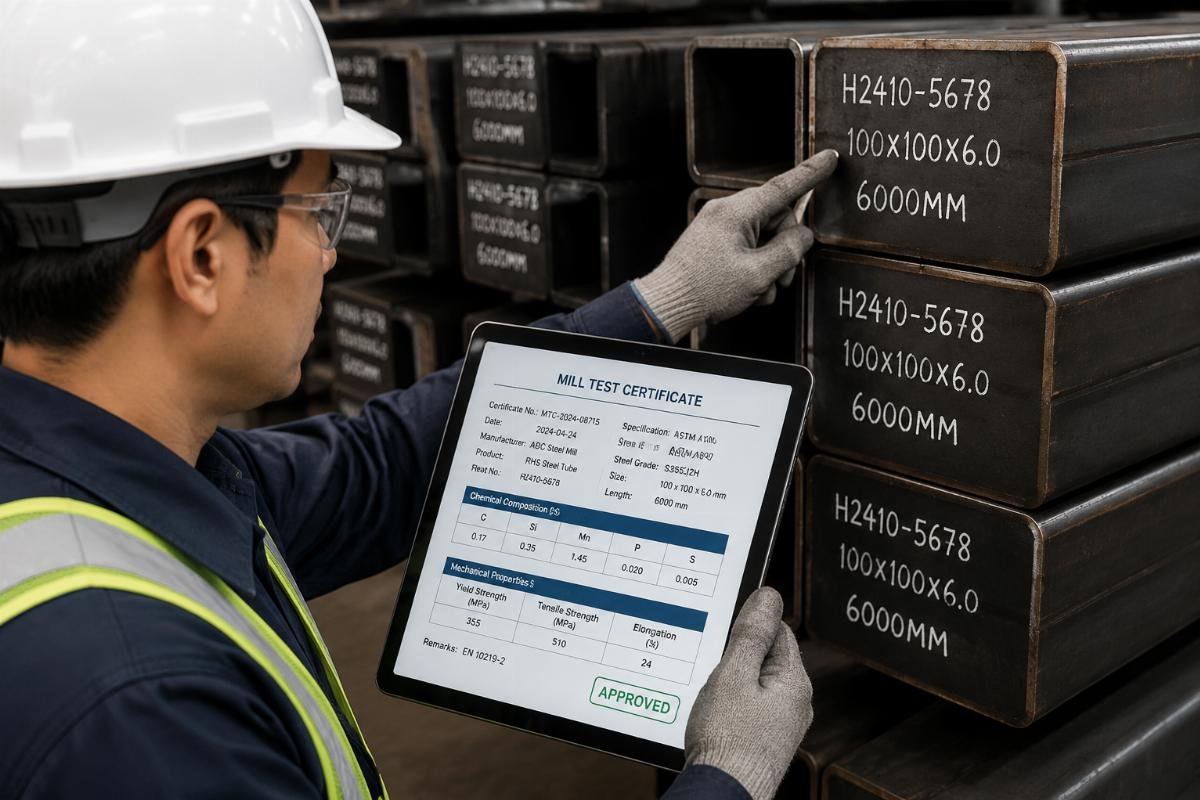
A Mill Test Certificate is not just a piece of paper; it is the legal identity of the steel. In my experience, the most common fraud or error is not fake certificates, but mismatched ones. A supplier might provide a valid MTC from a previous batch because the current production run had minor inconsistencies. For African contractors, this is a disaster waiting to happen.
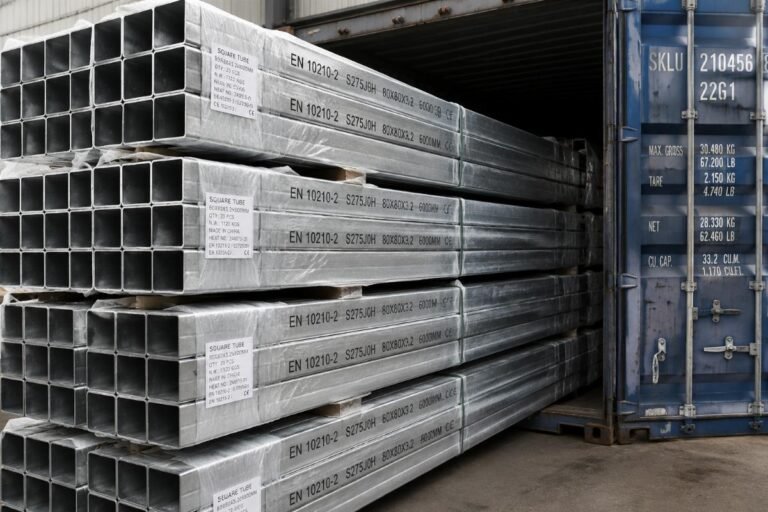
Verification starts with the heat number. Every bundle of steel should have the heat number physically stamped or tagged on the material. This number must match the MTC exactly. But matching numbers is only the first step. You must cross-check the chemical composition and mechanical properties listed on the MTC against the requirements of your project specification, such as S355JR or S355J0. [NEED_CITE: Chemical composition limits for S355JR grade per EN10025]
I once worked with a distributor who received a shipment where the MTC claimed S355JR, but the yield strength values were borderline. On-site welding tests later revealed poor fusion characteristics, typical of lower-grade steel masquerading as high-strength structural steel. The rework cost was substantial, delaying the project by weeks.
To avoid this, implement a pre-shipment verification protocol. Request the MTC before the goods leave the factory. Check the heat numbers. If possible, engage a third-party inspection agency to verify a random sample of the load against the certificate. This small upfront cost is negligible compared to the risk of customs rejection or structural failure. When sourcing Rectangular Hollow Section (RHS) Wholesale, prioritize suppliers who offer transparent access to their laboratory reports and allow for independent verification. This transparency is a stronger indicator of reliability than any marketing claim.
What Are the Critical Specs for Structural RHS in Hot Climates?
Africa’s diverse climate, ranging from humid coastal regions to arid inland areas, places unique demands on structural steel. Corrosion is the silent killer of infrastructure. While many buyers focus on the grade of steel, such as S235 or S355, they often overlook the importance of surface treatment and specific grade variants like J0 or J2, which offer better impact resistance at varying temperatures.
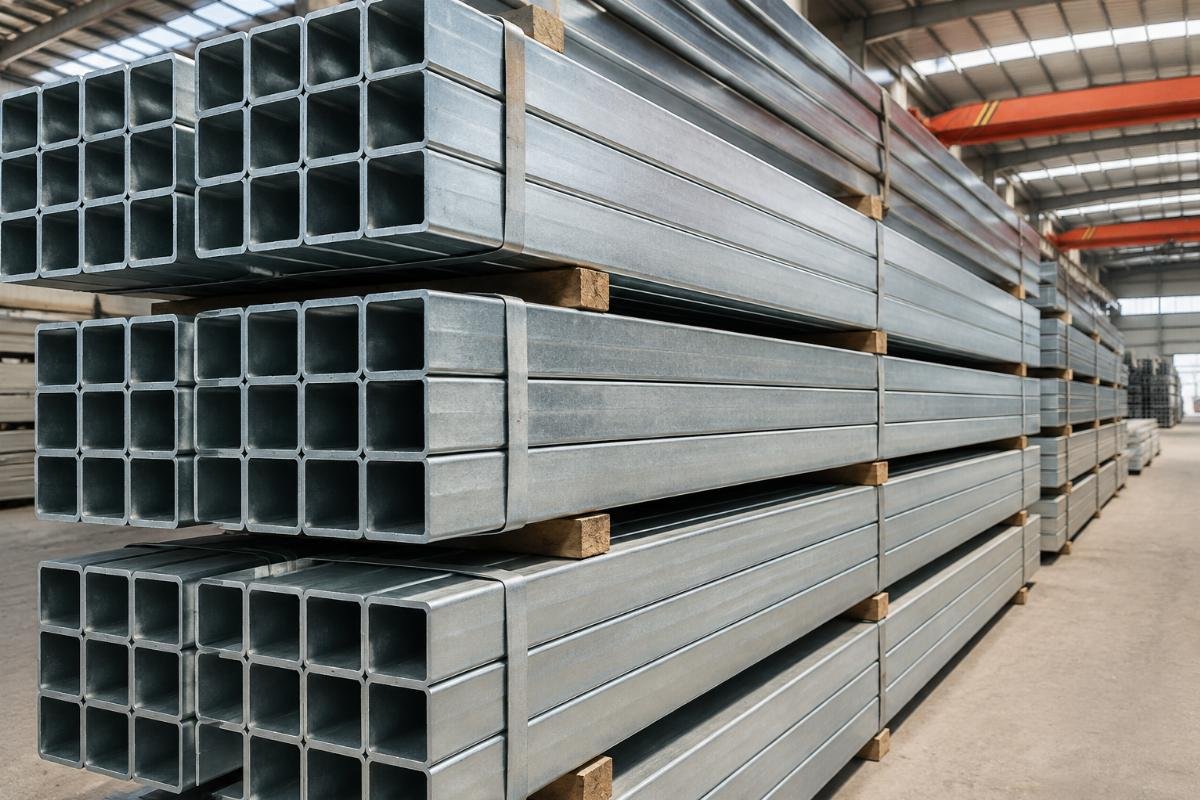
For coastal projects in West Africa or port infrastructure, galvanizing thickness is critical. Standard galvanizing may not suffice for long-term exposure to salt-laden air. Specifying the correct zinc coating weight and ensuring it is applied uniformly across the rectangular profile, including the corners, is essential. [NEED_CITE: ISO 1461 standards for hot-dip galvanized coatings]
Moreover, the choice between S355JR and S355J0 matters. The “J0” designation indicates guaranteed impact energy at 0 degrees Celsius, which might seem irrelevant in tropical climates. However, this grade often implies a cleaner steel production process with lower impurity levels, leading to better weldability and overall structural integrity. Using non-certified S235 instead of the required S355JR to cut costs can lead to structural rejection during engineering audits. The percentage of rework caused by such substitutions is significant in large-scale projects.
When evaluating Rectangular Hollow Section (RHS) Wholesale options, ask suppliers about their surface treatment capabilities. Do they offer shot blasting before painting? Can they provide hot-dip galvanizing with certified thickness reports? These details determine the lifespan of your structure and the maintenance costs down the line. A slightly higher initial investment in properly treated steel saves money on repairs and replacements.
How to Optimize Wholesale Orders for Container Loads?
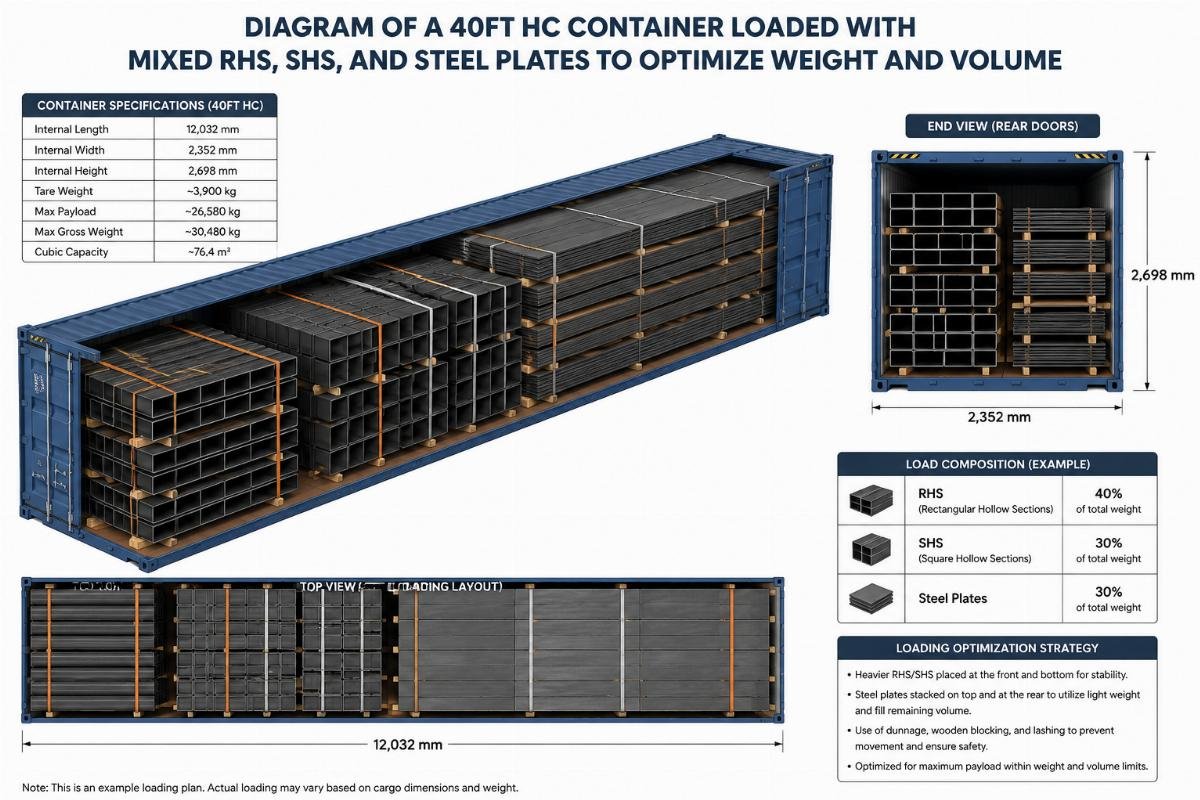
Freight costs to African ports are volatile and significant. Optimizing container loads is not just about filling space; it is about maximizing payload while minimizing waste. Many wholesalers offer only standard lengths, forcing contractors to cut steel on-site, which generates waste and increases labor costs.
A more efficient approach is to order custom-cut lengths. By providing exact fabrication drawings to the manufacturer, you can receive steel that fits your project needs directly. This reduces on-site waste to near zero and speeds up construction. Additionally, consolidating different products in one container can optimize freight costs per ton. For mid-sized warehouse projects, mixing RHS with Square Hollow Sections (SHS) and steel plates in a 40ft High Cube container allows for a balanced load that maximizes weight limits without exceeding volume constraints.
I recall a project where a contractor ordered only standard 6-meter lengths. The design required 4.5-meter sections. The leftover 1.5-meter pieces were largely unusable for primary structures, resulting in significant material waste. By switching to custom-cut orders, the same contractor reduced material waste noticeably and simplified site logistics.
Suppliers who offer mixed-container consolidation and custom cutting services provide a tangible advantage. They help reduce the total landed cost by optimizing both freight and material usage. When negotiating Rectangular Hollow Section (RHS) Wholesale contracts, inquire about the supplier’s ability to handle mixed loads and custom dimensions. This flexibility is a key differentiator between a simple trader and a strategic partner.
Conclusion
Procuring structural steel for African markets requires a shift from price-focused buying to compliance-focused sourcing.
Success lies in verifying EN10219 tolerances, ensuring MTC accuracy, and optimizing logistics through custom cutting and mixed loads. By prioritizing these technical and logistical details, contractors can avoid costly delays and ensure the structural integrity of their projects. Reliable Rectangular Hollow Section (RHS) Wholesale partners are those who understand these nuances and provide the documentation and flexibility needed to navigate complex import environments.
Tags
Share this article
- LinkedIn -- share "EN10219 RHS Steel Tubes Wholesale for African Contractors" on LinkedIn
- X -- share "EN10219 RHS Steel Tubes Wholesale for African Contractors" on X
- Facebook -- share "EN10219 RHS Steel Tubes Wholesale for African Contractors" on Facebook
- WhatsApp -- share "EN10219 RHS Steel Tubes Wholesale for African Contractors" on WhatsApp
- Email -- share "EN10219 RHS Steel Tubes Wholesale for African Contractors" on Email

Written by
author
Editor covering global sourcing, supplier verification, and industrial product knowledge. Content is compiled from manufacturer specifications, industry standards, and hands-on experience with international B2B buyers. Every article is fact-checked before publishing to help procurement professionals make informed decisions.
All posts by author