API 5L Seamless Steel Pipe Manufacturer for Oil & Gas Pipeline Buyers
Master API 5L Seamless Steel Pipe Sourcing by distinguishing PSL1 from PSL2 and verifying NACE compliance for sour service. Avoid costly customs delays and site rejections through rigorous MTC checks and third-party inspections to ensure your pipeline project meets strict technical standards.
- Published
- Updated
- Read time
- 8 min
- Comments
- 0
API 5L Seamless Steel Pipe Manufacturer for Oil & Gas Pipeline Buyers
Most buyers assume “API 5L” is a single standard. It is not.
Successful procurement of API 5L Seamless Steel Pipe Sourcing depends entirely on distinguishing between Product Specification Levels (PSL1 and PSL2) and verifying chemical composition for sour service environments before payment. Without this verification, pipes may pass mill tests but fail at the project site due to customs detention or welding rejection.
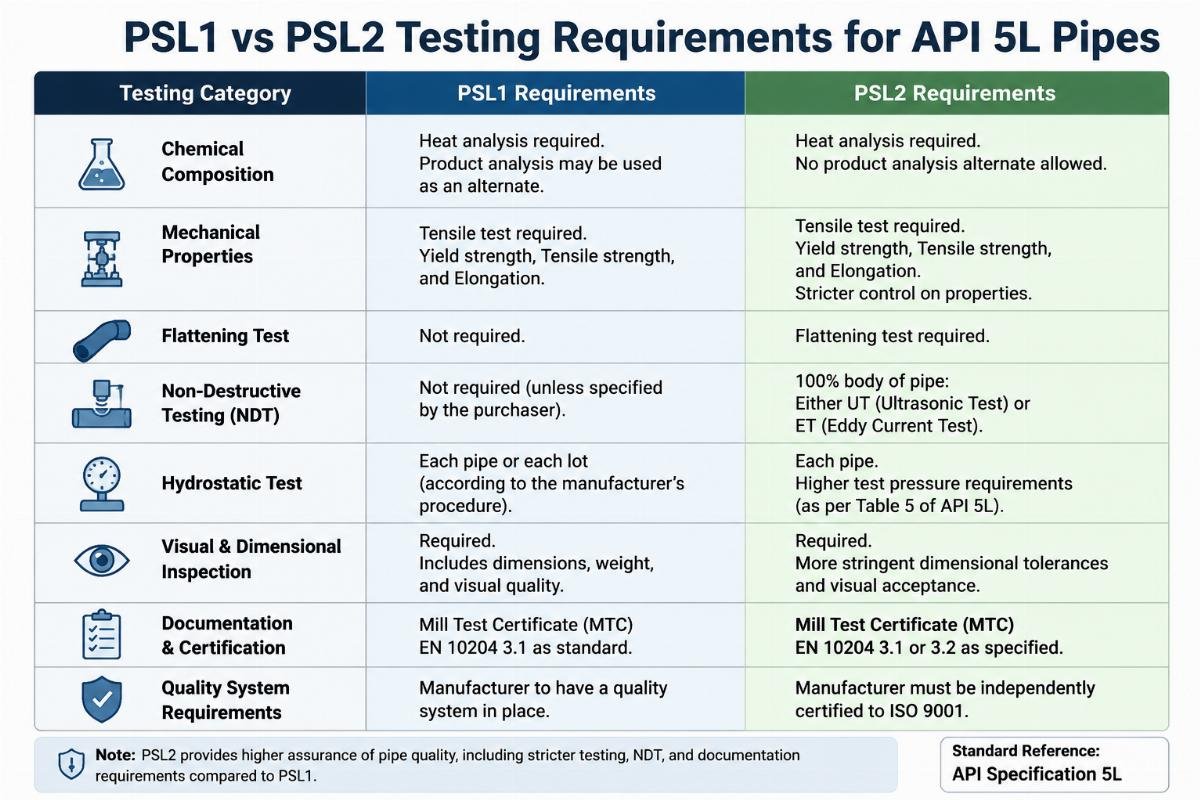
I still remember the humidity in the Riyadh port warehouse. A client had ordered a full container of seamless pipes for a critical gas line extension. The paperwork looked perfect. The pipes looked shiny. But when the site inspector checked the Mill Test Certificate (MTC) against the purchase order, he stopped cold. The contract specified PSL2 with specific Charpy V-notch impact testing requirements for low-temperature toughness. The delivered cargo was PSL1. The difference wasn’t just a label; it was a fundamental gap in mechanical testing protocols. The cargo sat in the port for weeks. Demurrage costs mounted daily. The buyer had saved a fraction on the unit price by not insisting on third-party verification, only to lose multiples of that saving in storage fees and project delays. That incident shifted my perspective from simple trading to rigorous technical compliance. [NEED_CITE: API 5L specification differences between PSL1 and PSL2 testing requirements]
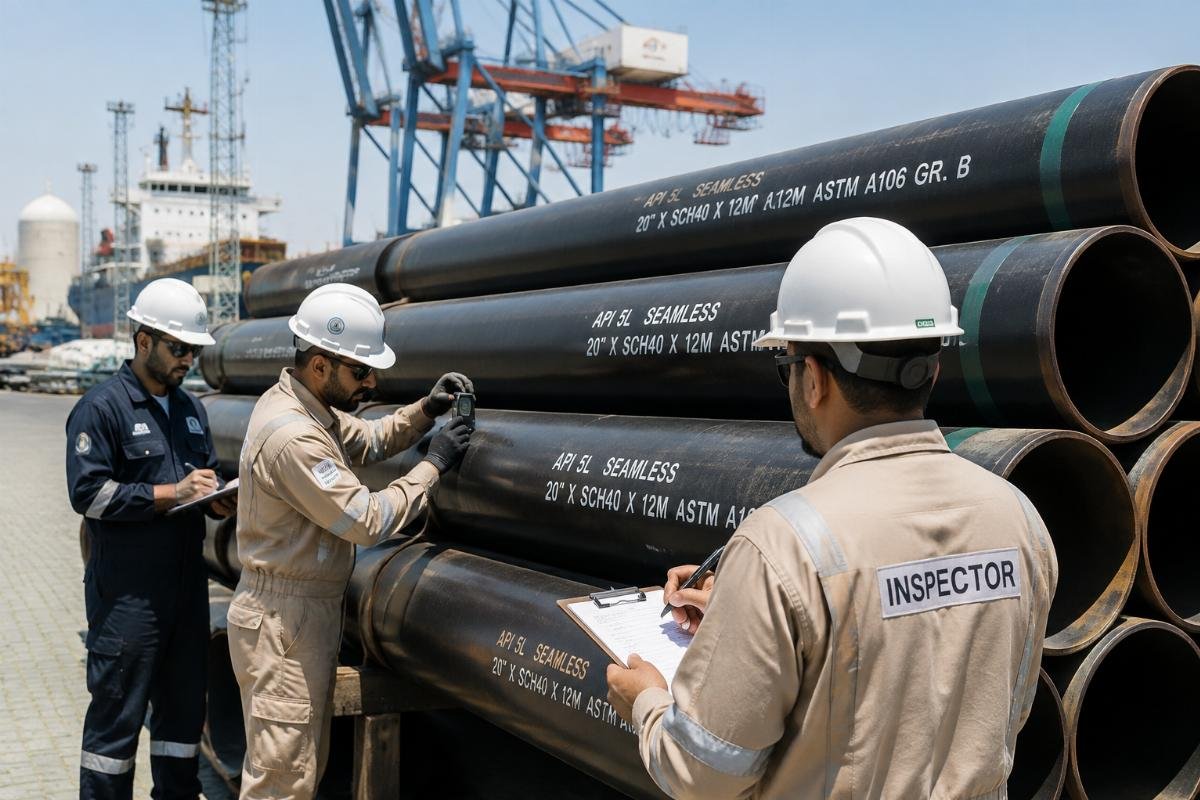
This guide breaks down the hidden risks in pipeline procurement. It moves beyond basic price comparison to the technical checkpoints that actually determine whether your cargo clears customs and passes site acceptance.
Why API 5L PSL Level Matters for Your Project?
Many procurement managers treat API 5L as a generic commodity grade. This is a dangerous oversimplification. The American Petroleum Institute divides API 5L into two distinct product specification levels: PSL1 and PSL2. Understanding the difference is the first step in effective API 5L Seamless Steel Pipe Sourcing.
PSL1 is the standard requirement for general line pipe. It covers basic chemical composition and tensile strength. However, it does not mandate Charpy V-notch impact testing, which measures how steel behaves under sudden stress or low temperatures. PSL2, on the other hand, imposes stricter controls. It requires mandatory impact testing, tighter dimensional tolerances, and more rigorous non-destructive testing (NDT). For high-pressure gas lines or pipelines in colder climates, PSL2 is not optional; it is a safety necessity.
| Feature | PSL1 (Standard) | PSL2 (Enhanced) |
|---|---|---|
| Chemical Composition | Standard limits | Stricter limits on Carbon Equivalent |
| Tensile Testing | Required | Required with stricter yield strength tolerance |
| Impact Testing (Charpy) | Not required | Mandatory for most grades |
| Non-Destructive Testing | Optional/Basic | Mandatory (Ultrasonic or Radiographic) |
| Heat Treatment | Not always required | Often required for higher grades |
A buyer in Dubai once sourced PSL1 pipes for a project that explicitly required PSL2 in the engineering design. The supplier argued that the chemical composition was identical. Technically, they were right. But the missing impact test data meant the pipes could not be certified for the project’s pressure rating. The entire batch was rejected. [NEED_CITE: Importance of Charpy V-notch testing in pipeline integrity]
When you engage in API 5L Seamless Steel Pipe Sourcing, always specify the PSL level in the purchase order. Do not rely on the supplier’s default assumption. If your project involves high-pressure transmission or extreme temperatures, PSL2 is the baseline. Verify that the MTC explicitly states “PSL2” and includes the relevant impact test values.
How to Verify Supplier Certifications Before Payment?
The Mill Test Certificate (MTC) is the passport of your steel. Yet, it is also the most common point of failure in international trade. A certificate can look authentic while containing fabricated data. In API 5L Seamless Steel Pipe Sourcing, trusting the document without verification is a gamble.
The primary risk is “certificate mismatch.” This occurs when the heat numbers on the MTC do not match the actual markings on the pipes, or when the chemical analysis falls outside the allowable range for the specified grade. For example, an X52 grade pipe must have a minimum yield strength of 52 ksi. If the MTC shows values barely touching this limit, the risk of failure during hydrostatic testing increases significantly.
To mitigate this, implement a three-step verification process:
- Cross-Check Heat Numbers: Ensure every pipe bundle has stenciled heat numbers that correspond exactly to the MTC. A mismatch here is an immediate red flag.
- Verify Chemical Composition: Check the Carbon Equivalent (CE) value. High CE values increase weldability issues. For sour service applications, this is critical. [NEED_CITE: Relationship between Carbon Equivalent and weldability in pipeline steel]
- Request Third-Party Inspection: For large orders, insist on pre-shipment inspection by agencies like SGS or Bureau Veritas. They verify dimensions, surface quality, and mark authenticity.
A European EPC contractor once received pipes with MTCs that appeared valid. However, a random spot check by their site engineer revealed that the wall thickness varied beyond the allowed tolerance. The supplier had substituted thinner-walled pipes from a different batch. Because the buyer had not requested a third-party dimensional check, they faced significant rework costs at the fabrication yard.
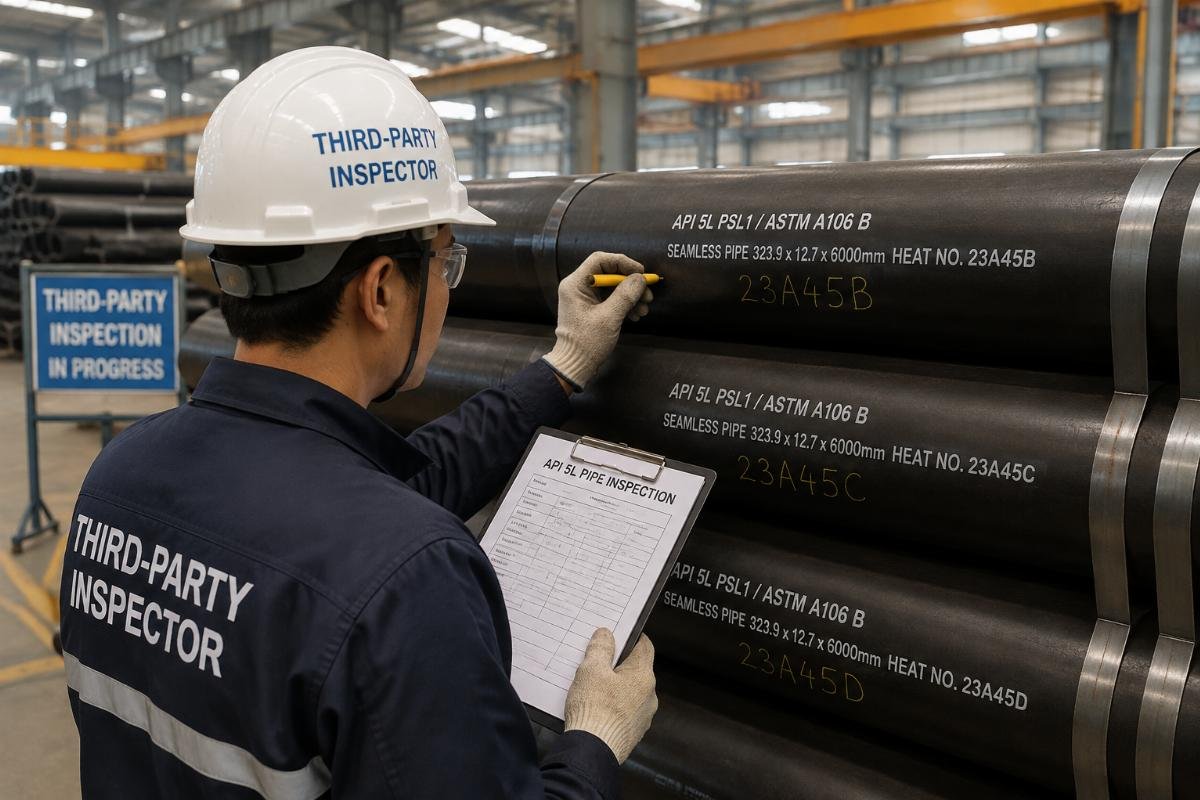
In API 5L Seamless Steel Pipe Sourcing, never accept a scanned copy of an MTC as final proof. Require original documents or verified digital copies from the mill’s official portal. If the supplier hesitates to provide traceable data, walk away.
What Are the Hidden Risks in Sour Service Environments?
Not all oil and gas fields are created equal. Many reservoirs in the Middle East and Africa contain hydrogen sulfide (H2S), a corrosive gas that causes sulfide stress cracking (SSC) in steel. Standard API 5L pipes are not designed for these conditions. Using them in sour service environments is a recipe for catastrophic failure.
This is where NACE MR0175 compliance becomes non-negotiable. NACE International (now AMPP) sets the standard for materials resistant to sulfide stress cracking. Pipes intended for sour service must undergo specific chemical controls and hardness testing. The hardness of the steel, including the weld zone, must typically remain below 22 HRC (Rockwell C). [NEED_CITE: NACE MR0175/ISO 15156 standards for sour service materials]
When sourcing for such projects, your API 5L Seamless Steel Pipe Sourcing strategy must include:
- Explicit NACE Compliance: State clearly in the inquiry that the pipes must meet NACE MR0175 requirements.
- Hardness Testing: Request hardness test reports for both the base metal and the heat-affected zone.
- Chemical Restrictions: Limit phosphorus and sulfur content to very low levels to reduce susceptibility to cracking.
I recall a project in Qatar where a supplier provided standard API 5L X60 pipes for a sour gas line. The pipes passed standard tensile tests but failed the hardness requirement. The microstructure contained brittle phases that would have cracked under H2S exposure. The discovery happened during pre-commissioning tests, forcing a complete replacement of the installed section. The cost was not just in materials but in the delay of the entire plant startup.
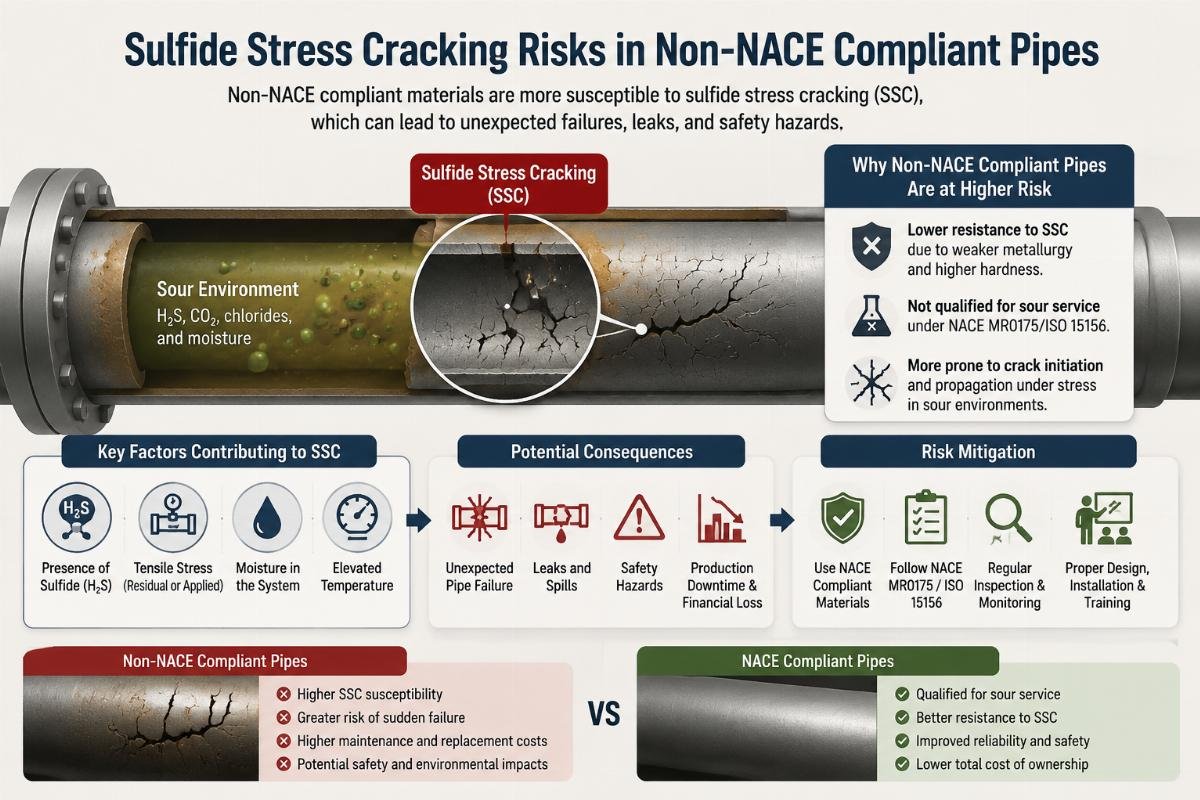
Do not assume that “high quality” equals “sour service ready.” They are distinct specifications. In API 5L Seamless Steel Pipe Sourcing, clarify the environment early. If H2S is present, NACE compliance is mandatory, not optional.
Checklist for Pre-Shipment Inspection of Seamless Pipes?
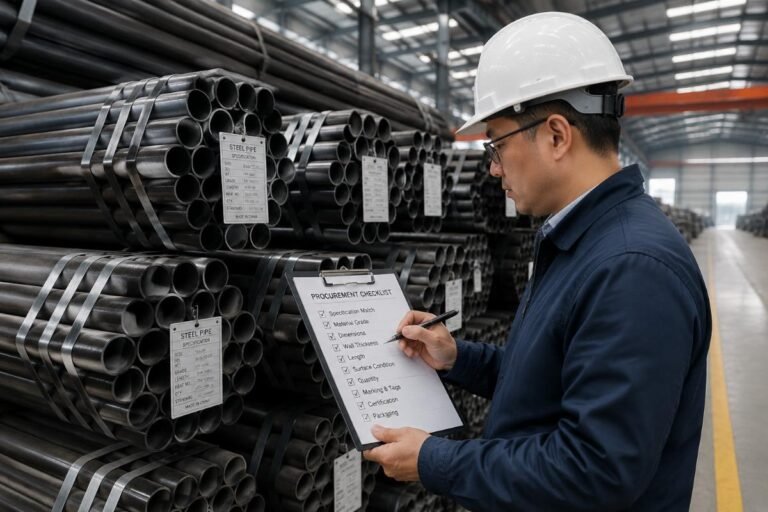
Even with correct certifications, physical defects can slip through. Dimensional inaccuracies, surface pits, or end-bevel issues can cause delays at the fabrication yard. A robust pre-shipment inspection checklist is essential for successful API 5L Seamless Steel Pipe Sourcing.
Focus on these critical areas:
- Dimensional Tolerance: Check outer diameter (OD) and wall thickness (WT). API 5L allows specific tolerances, but some projects require tighter limits. Use ultrasonic thickness gauges for random sampling. [NEED_CITE: API 5L dimensional tolerance standards for seamless pipes]
- Surface Quality: Inspect for scratches, pits, or rust. Seamless pipes should have a smooth finish. Minor imperfections can be dressed, but deep pits compromise integrity.
- End Bevels: Verify that pipe ends are beveled correctly for welding. Incorrect angles lead to poor weld penetration and potential leaks.
- Marking and Stenciling: Ensure grade, size, heat number, and manufacturer logo are clearly marked. Faded or missing marks cause rejection at site entry.
A fabrication shop in Abu Dhabi once received a shipment of seamless pipes with inconsistent wall thickness. Some pipes were within tolerance, while others were near the lower limit. This variation caused alignment issues during fit-up, slowing down the welding process by days. The supplier had skipped the final dimensional audit.
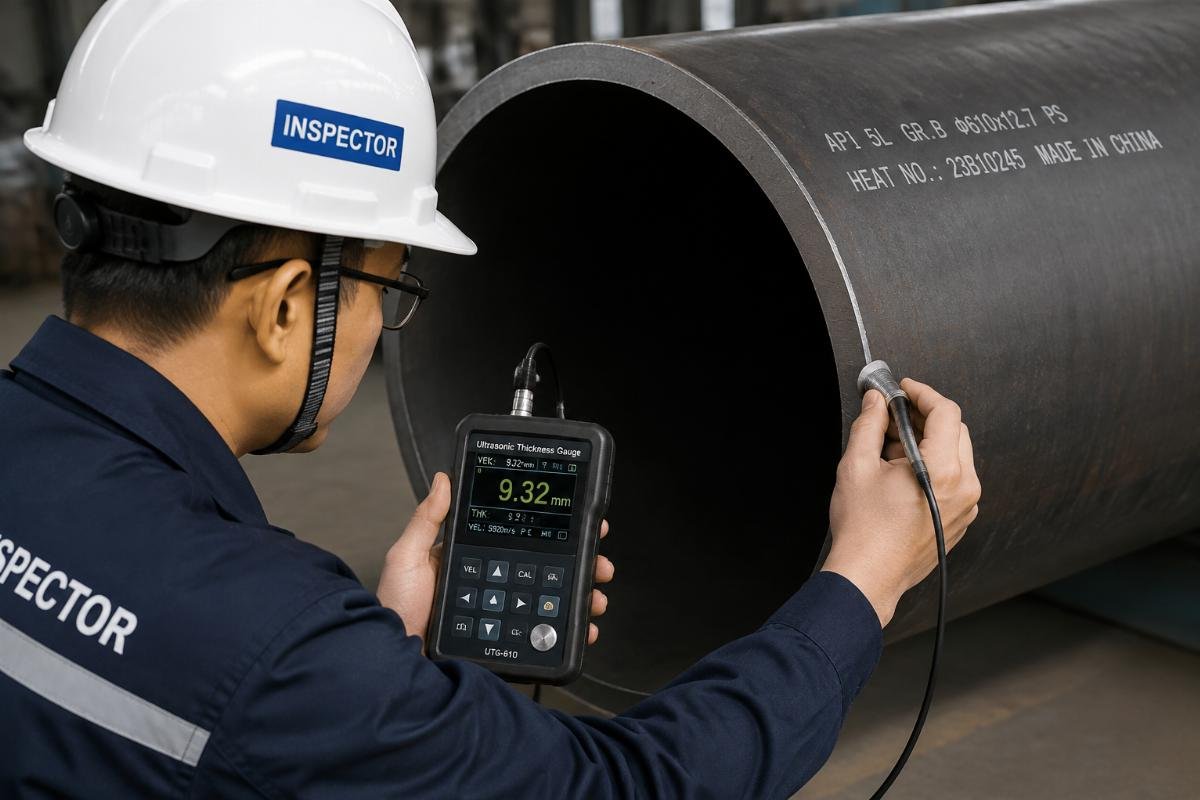
Implementing a strict inspection protocol protects your project timeline. In API 5L Seamless Steel Pipe Sourcing, view inspection not as a cost but as insurance against site rejection.
Conclusion
Procurement success lies in technical precision, not just price negotiation.
Effective API 5L Seamless Steel Pipe Sourcing requires a deep understanding of PSL levels, NACE compliance, and rigorous verification processes. By focusing on these technical details, buyers can avoid costly delays and ensure pipeline integrity. Trust but verify every certificate and dimension.
Tags
Share this article
- LinkedIn -- share "API 5L Seamless Steel Pipe Manufacturer for Oil & Gas Pipeline Buyers" on LinkedIn
- X -- share "API 5L Seamless Steel Pipe Manufacturer for Oil & Gas Pipeline Buyers" on X
- Facebook -- share "API 5L Seamless Steel Pipe Manufacturer for Oil & Gas Pipeline Buyers" on Facebook
- WhatsApp -- share "API 5L Seamless Steel Pipe Manufacturer for Oil & Gas Pipeline Buyers" on WhatsApp
- Email -- share "API 5L Seamless Steel Pipe Manufacturer for Oil & Gas Pipeline Buyers" on Email

Written by
author
Editor covering global sourcing, supplier verification, and industrial product knowledge. Content is compiled from manufacturer specifications, industry standards, and hands-on experience with international B2B buyers. Every article is fact-checked before publishing to help procurement professionals make informed decisions.
All posts by author