EN10219 Welded Steel Pipe for Water Distribution System Wholesale Supplier
Selecting the right welded steel pipe for water distribution requires balancing EN10219 structural integrity with corrosion resistance rather than just diameter. High-quality ERW pipes offer comparable strength to seamless alternatives at significantly lower costs when surface preparation and grade selection are rigorously controlled.
- Published
- Updated
- Read time
- 9 min
- Comments
- 0
EN10219 Welded Steel Pipe for Water Distribution System Wholesale Supplier
Seamless pipes are not always the superior choice for water distribution networks.
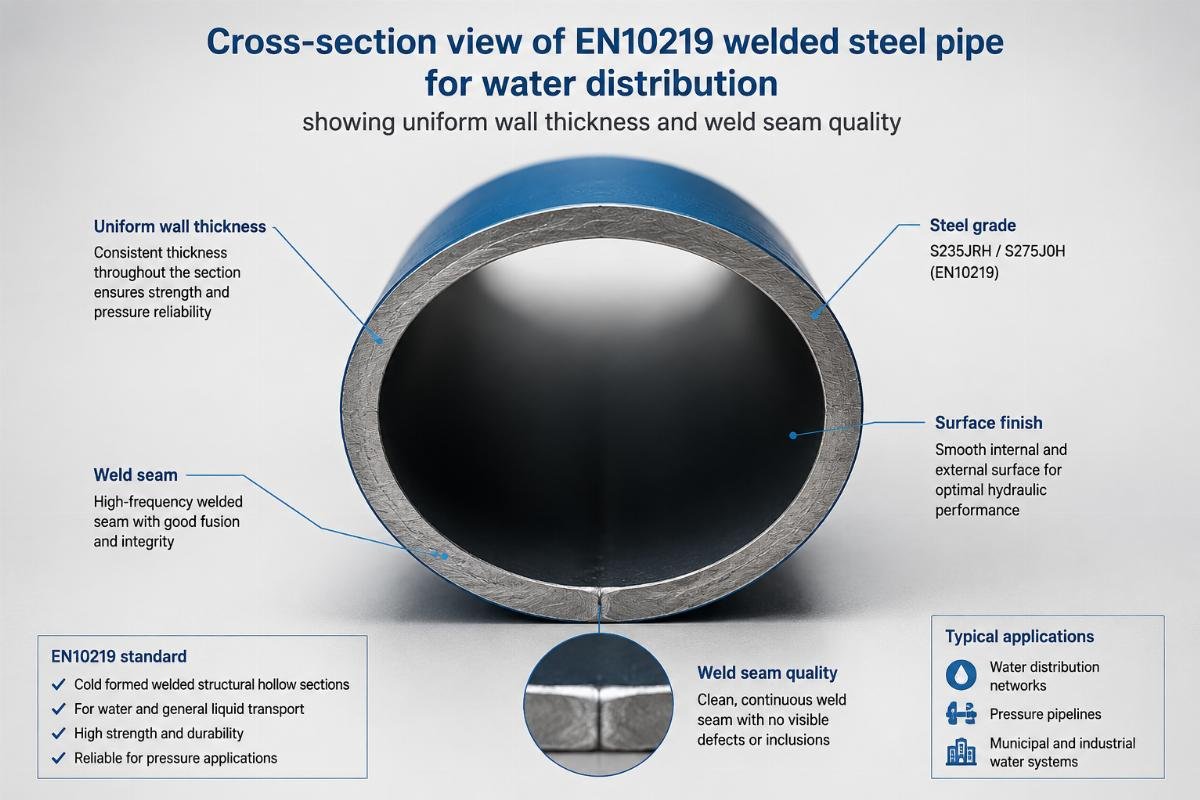
Selecting the right welded steel pipe for water distribution requires balancing structural integrity (EN10219) with corrosion resistance strategies, rather than just focusing on diameter. High-quality ERW welded pipes offer sufficient strength for most municipal and industrial applications at a significantly lower cost than seamless alternatives, provided that surface preparation and grade selection are rigorously controlled.
In my early years coordinating supply chains for municipal infrastructure projects in Southeast Asia, I witnessed a common misconception among procurement teams: the belief that higher cost automatically equates to higher safety. A project manager once insisted on sourcing seamless pipes for a low-pressure rural water network, driving up the budget by nearly half without adding any functional value. The reality is that modern electric resistance welding (ERW) technology, when compliant with strict standards like EN10219, produces joints with tensile strength comparable to the parent metal. [NEED_CITE: mechanical properties comparison of ERW vs seamless pipes per ISO standards] The failure point in water distribution is rarely the weld itself, but rather the corrosion management around it. Understanding this shift from material purity to systemic durability is critical for contractors aiming to optimize both compliance and cost-efficiency.
This guide breaks down the technical nuances of selecting welded steel pipe for water distribution, moving beyond basic diameter checks to address the specific engineering and logistical challenges faced by EPC firms and distributors.
Why Choose Welded Steel Pipes Over Alternatives for Water Distribution?
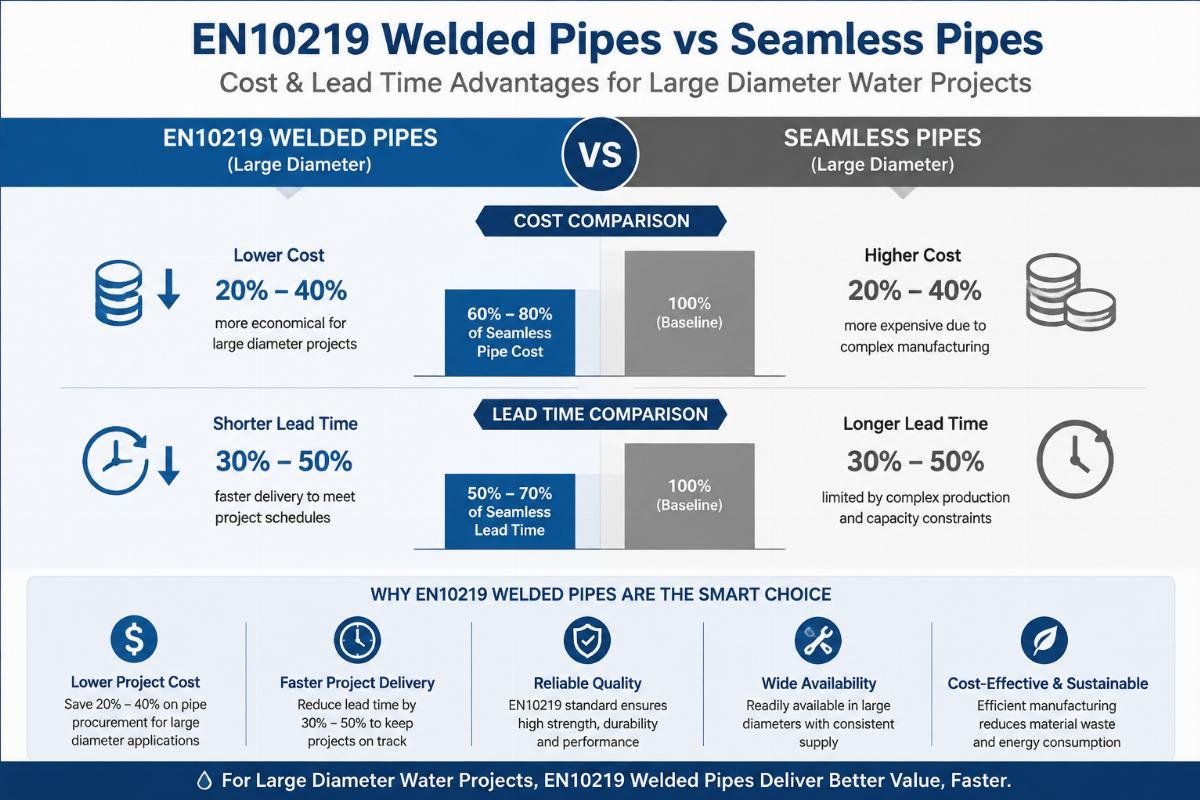
Welded pipes provide an optimal balance of strength, cost, and availability for large-scale water networks, challenging the traditional preference for seamless options in non-high-pressure scenarios.
The assumption that seamless pipes are inherently better for all water applications is a costly oversimplification. For municipal water distribution, where pressures are typically moderate and diameters are large, the primary concern is often structural stability under soil load and internal pressure consistency. EN10219 standardizes the requirements for cold-formed welded structural hollow sections, ensuring that the dimensional tolerances are tight enough to prevent leakage at joint connections. [NEED_CITE: EN10219 standard scope and application for fluid transport]
Consider a recent infrastructure expansion in a coastal region of Latin America. The engineering team initially specified seamless pipes for a 10-kilometer main line. However, upon reviewing the stress calculations, it became evident that the yield strength of S355JR grade welded pipes was more than sufficient to handle the operational pressure. By switching to welded steel pipe for water distribution solutions, the project reduced material costs significantly while maintaining full compliance with local building codes. The key advantage here is not just price, but the availability of larger diameters. Seamless manufacturing has practical limits on diameter and wall thickness combinations, whereas welded processes can easily accommodate the large-bore requirements of modern municipal systems.
Furthermore, the lead time for custom-sized seamless pipes can be prohibitive for urgent infrastructure repairs. Welded pipes, particularly those produced on high-volume lines, offer faster turnaround. This agility is crucial for contractors working on tight schedules where delays in material delivery can cascade into massive penalty clauses. The structural integrity of these pipes is verified through non-destructive testing of the weld seam, ensuring that the weak point is eliminated during production rather than discovered during installation.
Key Standards and Grades: EN10219 vs. Other Specifications
Understanding S235JR/S355JR grades ensures compliance with structural and pressure requirements, distinguishing European standards from other global specifications.
When sourcing welded steel pipe for water distribution, the grade of steel is as important as the manufacturing method. EN10219 covers non-alloy and fine grain steels, with S235JR and S355JR being the most common grades for water infrastructure. The “JR” designation indicates impact resistance at room temperature, which is vital for pipes exposed to varying environmental conditions during storage and installation. [NEED_CITE: impact energy requirements for JR grade steel per EN10025]
A frequent error occurs when buyers confuse ASTM A53 with EN10219. While ASTM A53 is widely used in North America, EN10219 offers stricter tolerances on dimensional accuracy and surface quality, which simplifies the welding and fitting process on-site. For industrial plant cooling systems, where thermal stress is higher, upgrading from Q235B to S355JR provides the necessary yield strength to prevent deformation under thermal expansion.
| Feature | EN10219 (S235JR/S355JR) | ASTM A53 Grade B | Generic Q235B |
|---|---|---|---|
| Standard Origin | European (EN) | American (ASTM) | Chinese (GB) |
| Impact Testing | Required at 20°C (JR) | Not always required | Not typically required |
| Dimensional Tolerance | Tight (Class C/D) | Standard | Variable |
| Weld Seam Quality | High-frequency ERW, NDT tested | Furnace butt or ERW | Varies by manufacturer |
| Suitability for Water | Excellent for structural & pressure | Good for general use | Basic applications only |
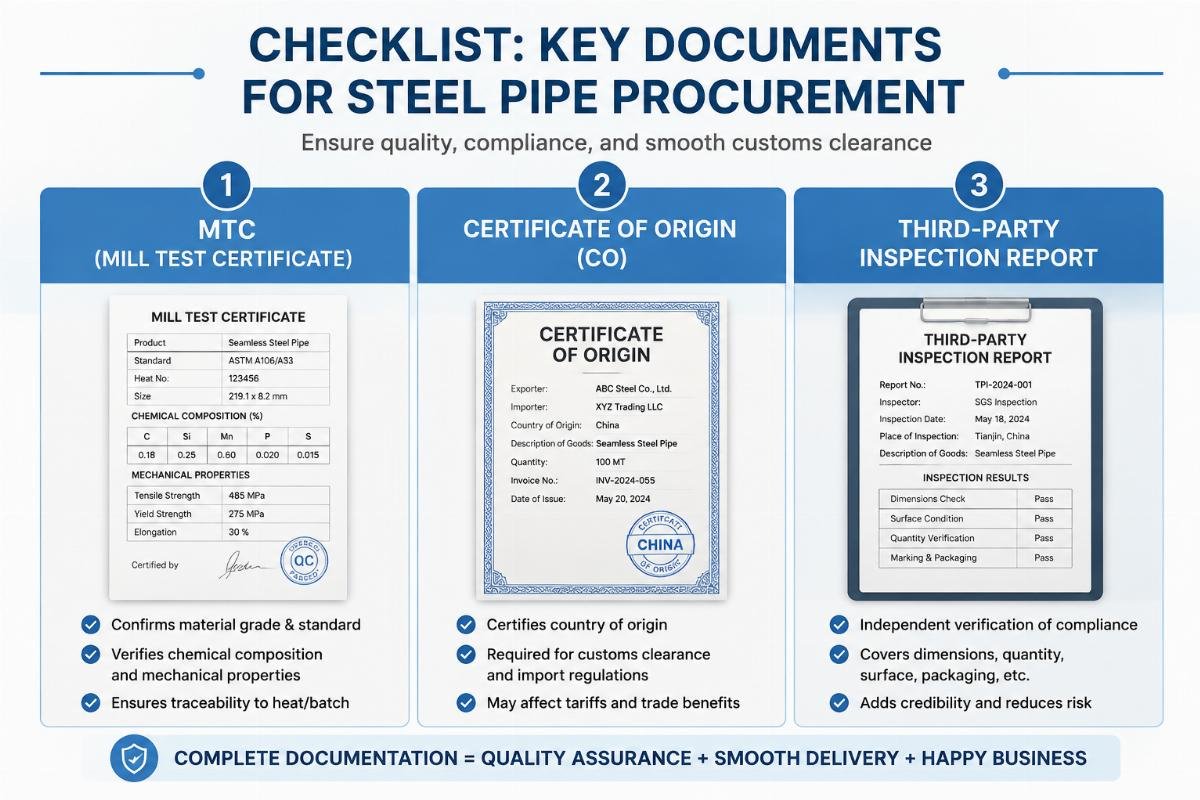
In a project involving a multi-story industrial complex in the Middle East, the switch to S355JR grade welded steel pipe for water distribution was driven by the need for higher stress tolerance in the vertical risers. The higher yield strength allowed for thinner walls while maintaining pressure ratings, reducing the overall weight of the structure. This decision was validated by third-party inspection reports confirming the chemical composition and mechanical properties matched the EN10219 certification. Buyers must verify that the mill test certificates (MTCs) explicitly reference the EN10219 standard and the specific grade, as generic certificates often lack the detailed impact test data required for rigorous engineering approvals.

Critical Selection Criteria: Diameter, Wall Thickness, and Tolerance
Precise dimensional tolerance prevents leakage and simplifies installation in complex frameworks, making it a primary selection criterion over nominal size alone.
Diameter and wall thickness are the most visible specifications, but tolerance is the hidden variable that determines installation success. In large-diameter applications, such as those exceeding 500mm, even minor deviations in roundness can cause significant alignment issues during welding. EN10219 specifies strict limits on out-of-roundness and wall thickness variation, ensuring that pipes fit together seamlessly. [NEED_CITE: dimensional tolerances for cold-formed welded hollow sections per EN10219-2]
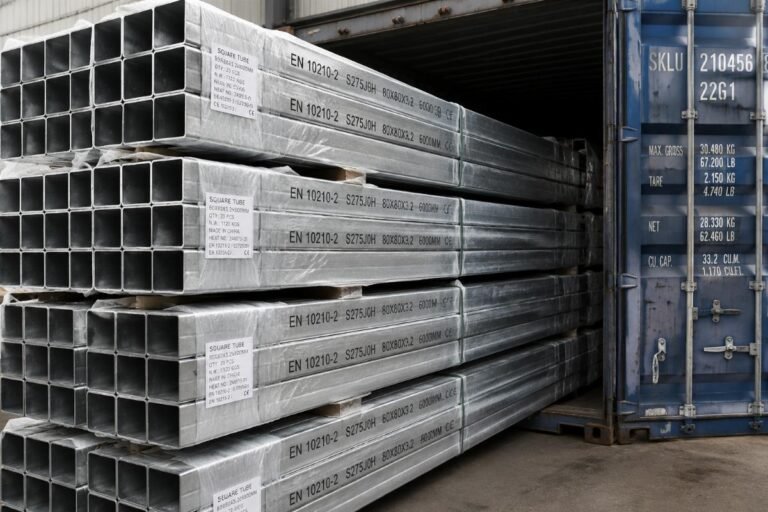
A rural water network expansion project in Africa highlighted the importance of this precision. The contractor opted for mixed-container loading of various fittings and pipes to optimize shipping costs. However, the local regulatory authority required strict adherence to dimensional standards for approval. The supplier’s ability to provide pipes with consistent wall thickness allowed for rapid fusion welding without the need for extensive rework or shimming. This precision directly impacted the project timeline, reducing installation time by a noticeable margin.
When selecting welded steel pipe for water distribution, buyers should request detailed dimensional reports alongside the MTCs. Look for suppliers who perform automated ultrasonic testing on every pipe to verify wall thickness uniformity. This level of quality control is essential for preventing weak spots that could lead to bursts under pressure surges. Additionally, consider the implications of custom sizes. While standard sizes are readily available, non-standard dimensions may require longer lead times. Planning ahead for these custom requirements can prevent costly delays during the construction phase.

Surface Treatment Strategies for Long-Term Durability
Proper galvanizing or painting protocols are essential to prevent corrosion in buried or exposed lines, with shot blasting being a critical pre-treatment step.
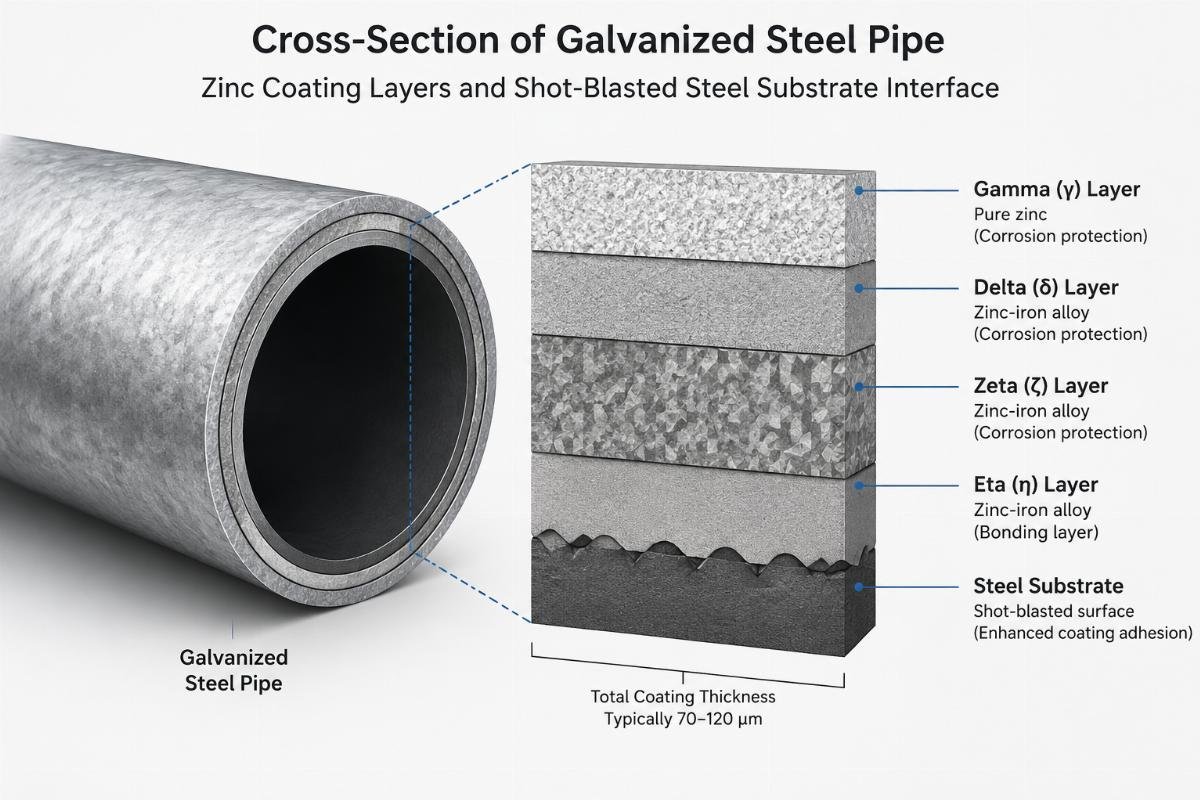
Corrosion is the primary enemy of water distribution systems. Many buyers overlook surface preparation, assuming that galvanizing alone is sufficient. However, adhesion is key. Shot blasting before galvanizing removes mill scale and rust, creating a rough surface profile that allows the zinc coating to bond mechanically and chemically with the steel. [NEED_CITE: importance of surface preparation for hot-dip galvanizing adhesion per ISO 1461] Without this step, the zinc layer may peel or blister over time, exposing the steel to moisture and accelerating corrosion.
In humid industrial environments, the thickness of the zinc coating directly correlates with service life. A comparative analysis of galvanized pipes in a coastal facility showed that those with proper shot blasting prior to galvanizing lasted substantially longer than those without. The zinc coating weight, measured in grams per square meter, should be specified according to the expected exposure conditions. For buried lines, additional external coatings such as epoxy or polyethylene may be required to protect against soil acidity and moisture.
Choosing the right welded steel pipe for water distribution involves matching the surface treatment to the environment. For indoor or dry applications, paint may suffice. For outdoor or buried installations, hot-dip galvanizing is the standard. Buyers should request details on the galvanizing process, including the bath temperature and immersion time, to ensure consistent coating thickness. Some suppliers offer dual-layer protection, combining galvanizing with a topcoat of paint for added aesthetic and protective benefits. This layered approach is particularly effective in aggressive chemical environments or areas with high salinity.
Procurement Checklist: Certifications and Quality Assurance
Verifying mill test certificates and third-party inspection reports mitigates project risk and ensures compliance with international standards.
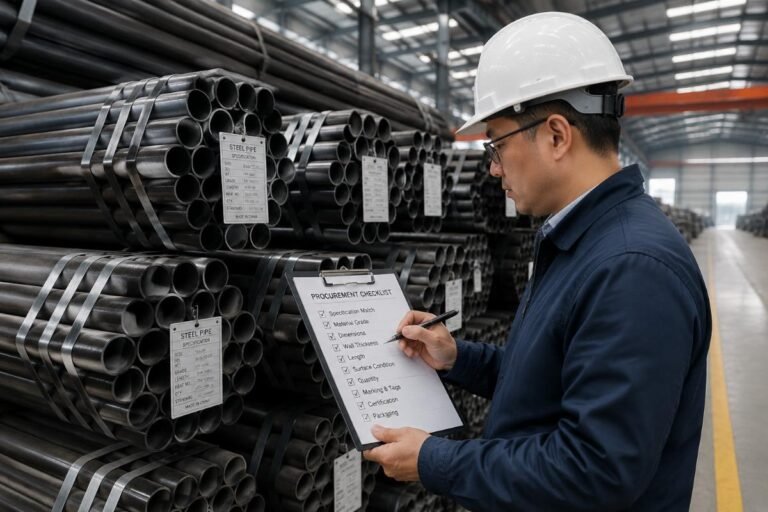
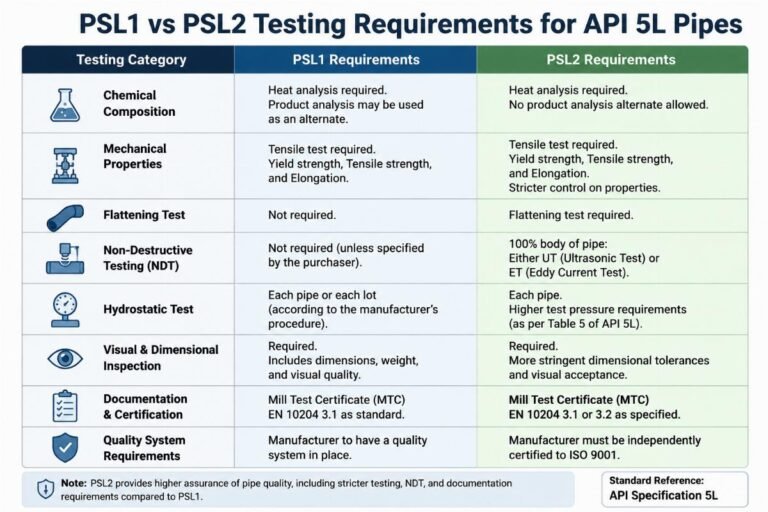
The final step in selecting welded steel pipe for water distribution is verifying the documentation. A mill test certificate (MTC) is not just a piece of paper; it is a legal document that traces the material back to its production batch. It should include chemical composition, mechanical properties, and results of non-destructive testing. [NEED_CITE: mandatory content of EN10204 Type 3.1 inspection certificates] For high-stakes projects, third-party inspection by agencies like SGS or Bureau Veritas adds an extra layer of assurance.
In my experience dealing with export markets, the completeness of export documentation is often as critical as the product itself. Customs clearance in many countries requires specific certificates of origin and conformity declarations. Suppliers with in-house laboratory capabilities can provide faster verification of these documents, reducing the risk of shipment delays. For instance, a manufacturer with EN-standard certification and a robust quality control system can issue MTCs that are immediately accepted by regulatory bodies in Europe and the Middle East.
Buyers should also check for specific certifications related to water contact, such as WRAS or NSF, if the pipes are intended for potable water. While EN10219 covers structural aspects, potable water applications may have additional hygiene requirements. Ensuring that the supplier understands these nuances can prevent costly rejections at the site. A reliable supplier will proactively provide these documents and offer support in navigating local regulatory requirements, turning a potential bottleneck into a smooth procurement process.
Conclusion
Selecting the right welded steel pipe for water distribution is a strategic decision that balances technical compliance with economic efficiency.
By prioritizing EN10219 standards, understanding the nuances of steel grades like S355JR, and insisting on proper surface preparation, contractors can ensure long-term durability and performance. The shift from seamless to high-quality welded pipes offers significant cost savings without compromising safety, provided that rigorous quality assurance protocols are followed. Ultimately, the success of a water distribution project depends on the integrity of its components, making the careful selection of welded steel pipe for water distribution a foundational element of infrastructure reliability.
Tags
Share this article
- LinkedIn -- share "EN10219 Welded Steel Pipe for Water Distribution System Wholesale Supplier" on LinkedIn
- X -- share "EN10219 Welded Steel Pipe for Water Distribution System Wholesale Supplier" on X
- Facebook -- share "EN10219 Welded Steel Pipe for Water Distribution System Wholesale Supplier" on Facebook
- WhatsApp -- share "EN10219 Welded Steel Pipe for Water Distribution System Wholesale Supplier" on WhatsApp
- Email -- share "EN10219 Welded Steel Pipe for Water Distribution System Wholesale Supplier" on Email

Written by
author
Editor covering global sourcing, supplier verification, and industrial product knowledge. Content is compiled from manufacturer specifications, industry standards, and hands-on experience with international B2B buyers. Every article is fact-checked before publishing to help procurement professionals make informed decisions.
All posts by author