EN10219 Large-Diameter Thick-Wall Steel Pipe Wholesale Supplier
Avoid site rejection when sourcing Large-Diameter Thick-Wall Steel Pipe for EPC by prioritizing verified dimensional tolerance over unit price. Learn to enforce EN10219 Class C checks and validate weldability data in Mill Test Certificates to ensure structural integrity and seamless installation.
- Published
- Updated
- Read time
- 9 min
- Comments
- 0
EN10219 Large-Diameter Thick-Wall Steel Pipe Wholesale Supplier
The nominal size on your purchase order is not the dimension that determines structural safety.
For EPC contractors and procurement managers, the single most critical factor when sourcing Large-Diameter Thick-Wall Steel Pipe for EPC projects is not the lowest unit price, but the verified dimensional tolerance class and weldability compliance documented in the Mill Test Certificate. Success depends on enforcing strict EN10219 Class C or D tolerance checks before shipment to avoid site rejection due to negative wall thickness deviations.
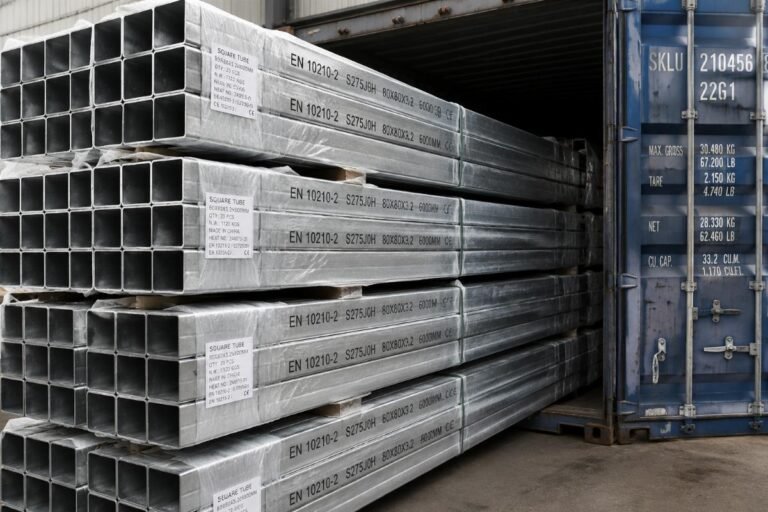
I still remember the humidity and the noise at the port in Monterrey, Mexico. A client had sourced a batch of large-diameter square hollow sections locally to save on logistics. When the steel arrived at the industrial plant site, the welding team couldn’t get the nodes to fit. The issue wasn’t the outer dimension; it was the wall thickness. The pipes were technically within the “standard” tolerance, but they were hovering right at the negative limit. For thick-walled sections, that slight deviation meant the cross-sectional area was insufficient for the load-bearing calculations approved by the structural engineer. The entire batch was rejected. I had to step in with a copy of the EN10219 standard, pointing out that for thick walls, the general tolerance classes were too loose for high-stress connections. We re-specified the order with tighter controls, and the second batch passed inspection immediately. That experience reinforced a simple truth: in heavy structural steel, the paper trail is as important as the metal itself.

Understanding why these failures happen requires looking beyond the basic specification sheet. Most buyers assume that if the outer diameter fits, the pipe is good. However, for Large-Diameter Thick-Wall Steel Pipe for EPC applications, the internal geometry and the consistency of the wall thickness are what dictate weldability and structural integrity.
Why Do Large-Diameter Thick-Wall Pipes Fail Site Inspection?
Dimensional tolerance violations, particularly in wall thickness, are the primary cause of site rejection for structural steel.
When a pipe arrives at a construction site in the Middle East or Latin America, the first thing inspectors check is not the surface finish, but the dimensions. If the wall thickness is below the minimum allowed by the project specification, the pipe cannot be used, regardless of its yield strength. This is because the structural design relies on a specific cross-sectional area to handle loads. A thinner wall means less material to resist bending and compression.
The problem often stems from a misunderstanding of tolerance standards. Many suppliers quote based on general commercial tolerances, which allow for significant variation. For large-diameter pipes, this variation can be several millimeters. In a thick-wall application, a negative deviation of even a small percentage can reduce the load-bearing capacity enough to fail safety margins. [NEED_CITE: relationship between wall thickness deviation and structural load capacity in EN10219]
Consider a bridge project in the Middle East where custom non-standard sizes were required for complex node connections. The initial supplier provided pipes that met the nominal size but had inconsistent wall thicknesses due to poor rolling control. This made precision cutting and welding nearly impossible, as the fit-up gaps varied along the length of the pipe. The project faced delays while the manufacturer re-machined the ends to ensure uniformity. The cost of these delays far exceeded any savings from the initial lower price.
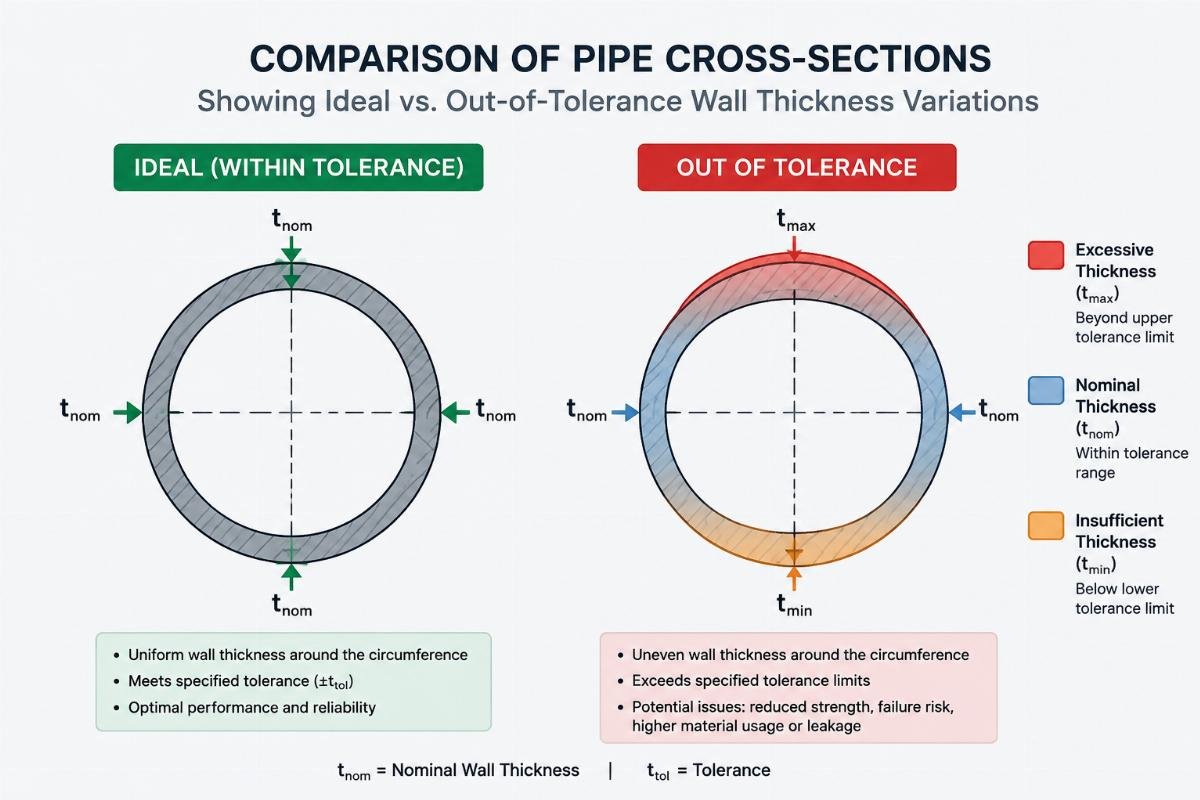
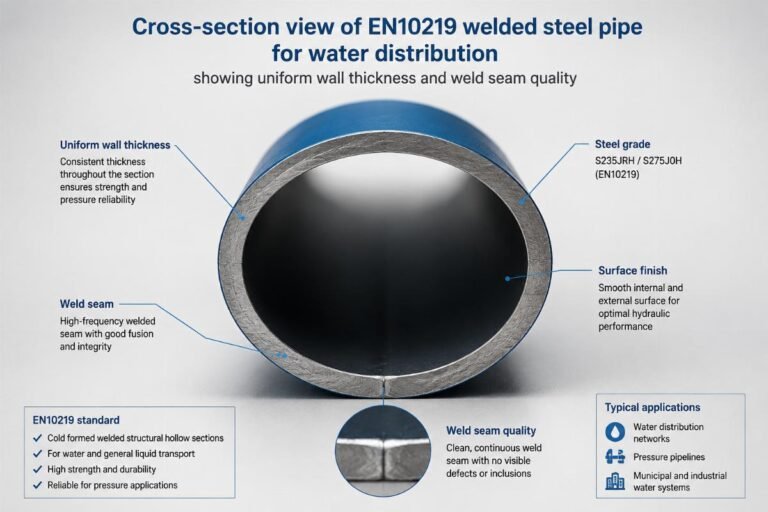
To avoid this, buyers must specify the tolerance class explicitly. EN10219 defines different classes for cold-formed welded structural hollow sections. Class C is typically required for mechanical purposes where tighter tolerances are needed. Without this specification, suppliers may default to looser classes, leading to the kind of issues seen in Monterrey. When sourcing Large-Diameter Thick-Wall Steel Pipe for EPC, the specification must include the exact tolerance class, not just the nominal dimensions.
How to Verify Dimensional Tolerances in Mill Test Certificates?
A Mill Test Certificate (MTC) is only useful if you know how to read the specific tolerance data against your project requirements.
The MTC is the legal document that certifies the chemical and mechanical properties of the steel. However, many procurement managers only check the grade (e.g., S355JR) and the yield strength. They overlook the dimensional data. For Large-Diameter Thick-Wall Steel Pipe for EPC, the dimensional section of the MTC is critical. It should list the actual measured values for outer diameter, wall thickness, and length, not just the nominal values.
EN10219 sets out specific requirements for these measurements. For thick-walled sections, the tolerance on wall thickness is crucial. The standard allows for certain deviations, but these must be clearly stated. If the MTC only says “within standard,” it is insufficient for high-specification projects. You need to see the actual measurements or a statement confirming compliance with a specific class, such as Class C or D. [NEED_CITE: EN10219 tolerance classes for wall thickness and outer diameter]
| Parameter | General Commercial Tolerance | EN10219 Class C (Typical for Structural) | Risk Level for EPC |
|---|---|---|---|
| Wall Thickness | Loose (often unspecified) | Tighter, defined by formula | Low if verified |
| Outer Diameter | Standard ISO limits | Strict limits for fit-up | Medium |
| Straightness | Basic | Enhanced for long spans | High if ignored |
| Certification Detail | “Conforms to standard” | Specific measured values | Critical for audit |
In a warehouse project in Southeast Asia, a buyer consolidated mixed containers of SHS and plates. The customs clearance went smoothly because the documentation was complete, but the site engineer noticed that the MTCs for the pipes did not specify the tolerance class. He requested a third-party inspection before unloading. The inspection revealed that while the pipes were chemically correct, the dimensional consistency was poor. Because the buyer had specified the requirement for EN10219 compliance in the contract, they were able to reject the non-compliant portion before it entered the construction phase. This highlights the importance of having the right language in your purchase order and verifying it against the MTC.
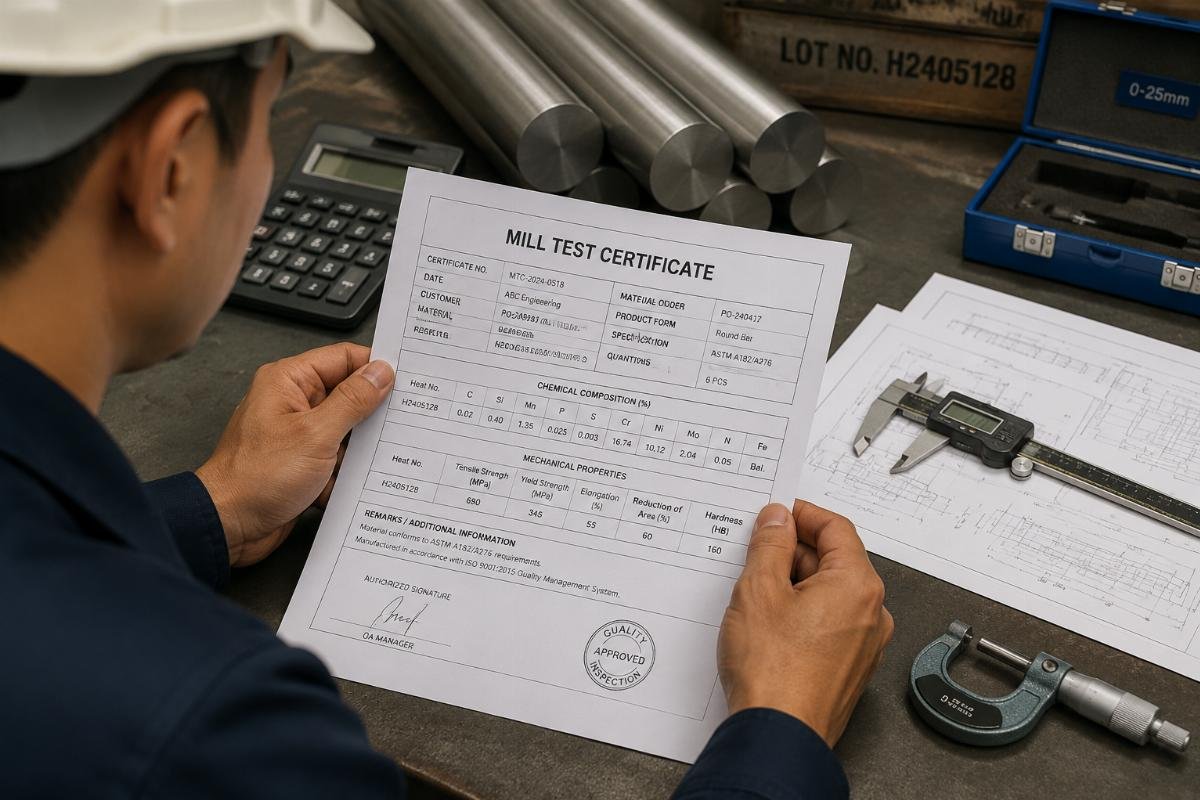
When reviewing an MTC for Large-Diameter Thick-Wall Steel Pipe for EPC, look for the specific clause that references the tolerance standard. If it is missing, ask the supplier for clarification. A reputable manufacturer will provide MTCs that detail the actual measurements or confirm compliance with the specified class. This level of transparency is a key indicator of quality control.
What Are the Critical Weldability Parameters for EPC Projects?
Chemical composition, specifically the Carbon Equivalent (CE), determines whether a thick-wall pipe can be welded without cracking.
Thick-wall pipes require more heat input during welding, which can affect the microstructure of the steel in the heat-affected zone. If the carbon content is too high, or if other alloying elements are not balanced, the steel can become brittle and prone to cracking. This is why the Carbon Equivalent value is a critical parameter in the MTC. [NEED_CITE: Carbon Equivalent formula and weldability thresholds for structural steel]
For grades like S355J0 or S355J2, the CE value must be kept within specific limits to ensure good weldability. Buyers should check the MTC for the actual CE value, not just the individual element percentages. A low CE value indicates better weldability. In addition to CE, the impact test results at specific temperatures (e.g., -20°C for J0, -40°C for J2) are important for projects in colder climates or where dynamic loads are expected.
A fabrication shop in Europe once received a batch of pipes that had the correct yield strength but a higher than expected CE value. The welders reported difficulty in achieving sound welds, with increased instances of porosity and cracking. The batch had to be returned, causing significant disruption to the production schedule. This could have been avoided if the CE value had been checked against the welding procedure specification before the order was placed.
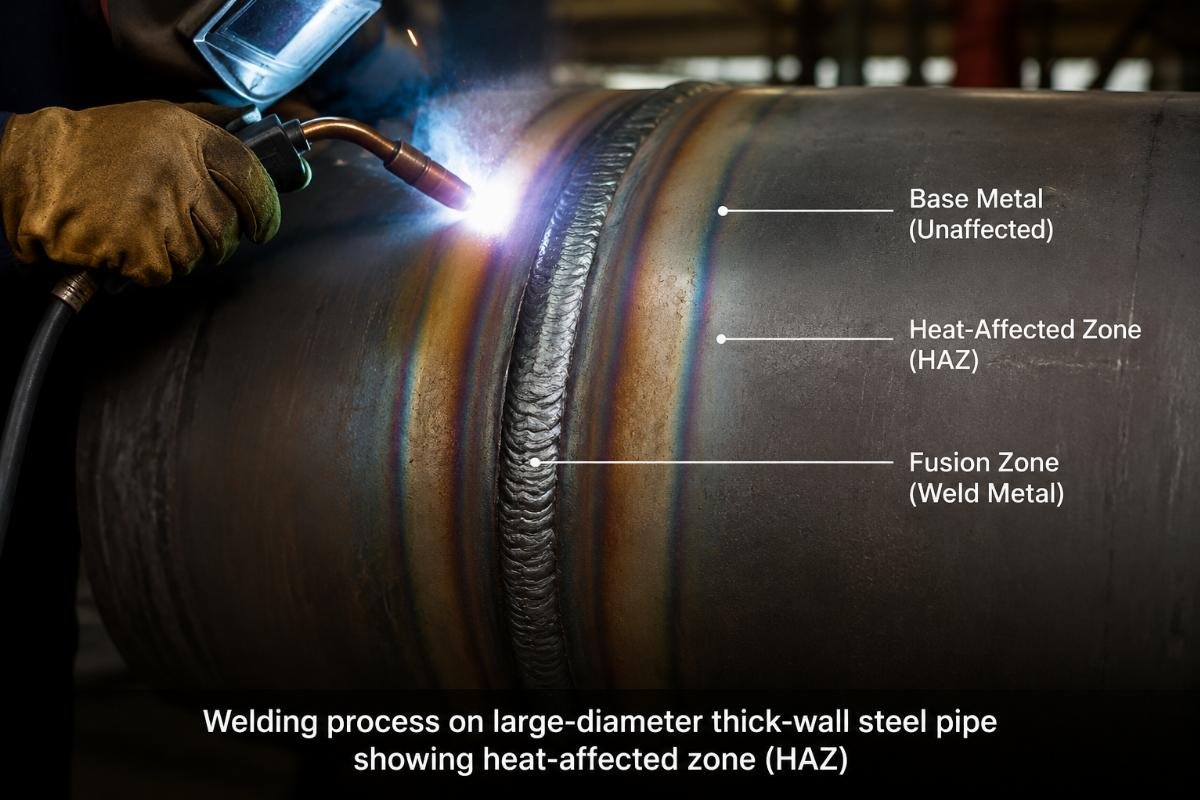
When sourcing Large-Diameter Thick-Wall Steel Pipe for EPC, ensure that the MTC includes the Carbon Equivalent value and the impact test results. These parameters are just as important as the dimensional tolerances for ensuring the structural integrity of the final assembly. Suppliers who can provide consistent chemical composition and low CE values demonstrate a higher level of process control.
How to Structure Your Procurement Specification to Avoid Risks?
Clear specifications that define tolerance classes, inspection rights, and documentation requirements are the best defense against site rejection.
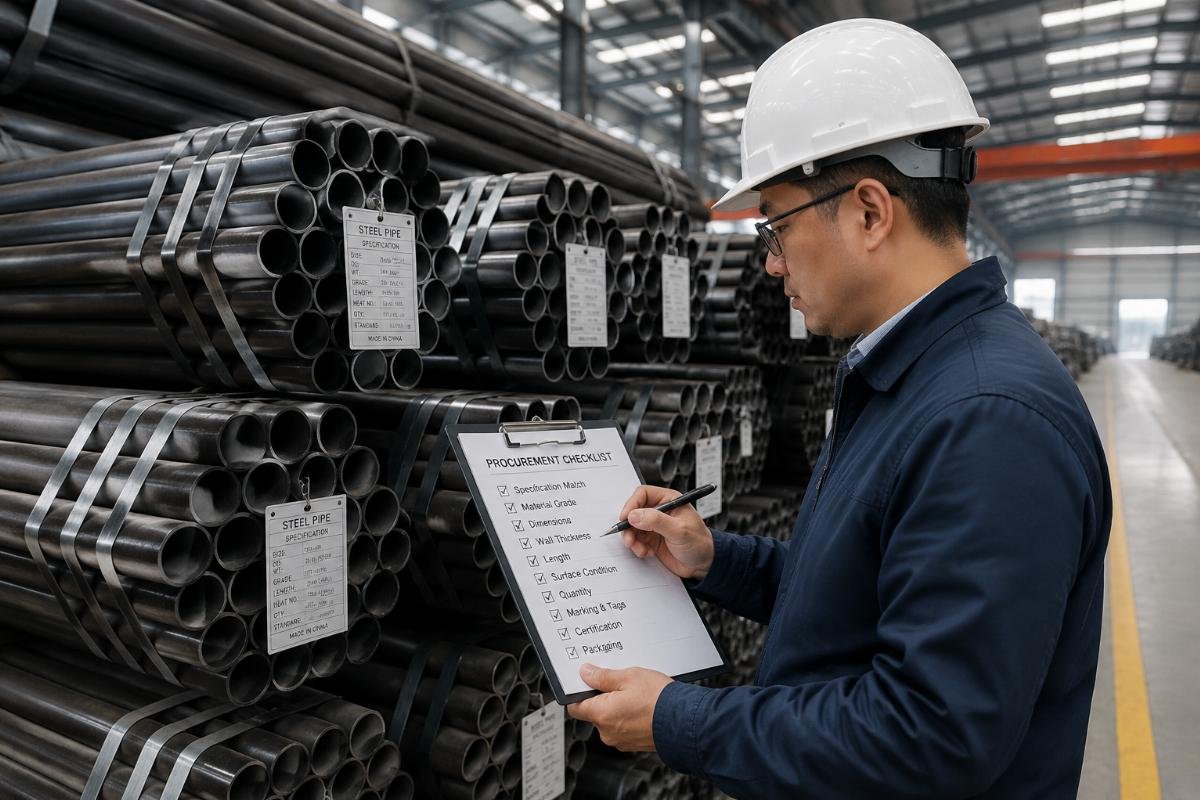
The purchase order is the first line of defense. It must be specific. Instead of just listing “SHS 200x200x10,” specify “SHS 200x200x10, EN10219, Class C tolerance, S355J2, with full MTC including actual dimensional measurements and CE value.” This leaves no room for ambiguity. [NEED_CITE: best practices for structural steel procurement specifications]
Additionally, include the right to third-party inspection before shipment. This allows you to verify the dimensions and documentation before the goods leave the factory. It is much cheaper to fix a problem at the mill than at the construction site. For Large-Diameter Thick-Wall Steel Pipe for EPC, this step is non-negotiable.
In the case of the Monterrey project, the lack of specific tolerance requirements in the initial order led to the rejection. By updating the specification to include EN10219 Class C, the subsequent order was successful. The supplier, understanding the strict requirements, ensured that the rolling process was adjusted to meet the tighter tolerances. This collaboration between buyer and supplier is essential for complex projects.
Xin Jiyuan’s approach to manufacturing aligns with these rigorous requirements. By maintaining in-house laboratory verification and offering custom non-standard sizes with guaranteed EN10219 compliance, the production process is designed to meet the exact needs of EPC contractors. The ability to provide detailed inspection reports and support third-party verification ensures that the Large-Diameter Thick-Wall Steel Pipe for EPC delivered to the site is ready for immediate installation.
Conclusion
Verifying tolerance classes and weldability data in Mill Test Certificates is more critical than negotiating unit price.
Sourcing Large-Diameter Thick-Wall Steel Pipe for EPC requires a shift in focus from cost to compliance. By specifying EN10219 tolerance classes, checking Carbon Equivalent values, and enforcing pre-shipment inspections, buyers can avoid the costly delays and rejections that plague many international construction projects. The right documentation and clear specifications are the keys to successful project delivery.
Tags
Share this article
- LinkedIn -- share "EN10219 Large-Diameter Thick-Wall Steel Pipe Wholesale Supplier" on LinkedIn
- X -- share "EN10219 Large-Diameter Thick-Wall Steel Pipe Wholesale Supplier" on X
- Facebook -- share "EN10219 Large-Diameter Thick-Wall Steel Pipe Wholesale Supplier" on Facebook
- WhatsApp -- share "EN10219 Large-Diameter Thick-Wall Steel Pipe Wholesale Supplier" on WhatsApp
- Email -- share "EN10219 Large-Diameter Thick-Wall Steel Pipe Wholesale Supplier" on Email

Written by
author
Editor covering global sourcing, supplier verification, and industrial product knowledge. Content is compiled from manufacturer specifications, industry standards, and hands-on experience with international B2B buyers. Every article is fact-checked before publishing to help procurement professionals make informed decisions.
All posts by author