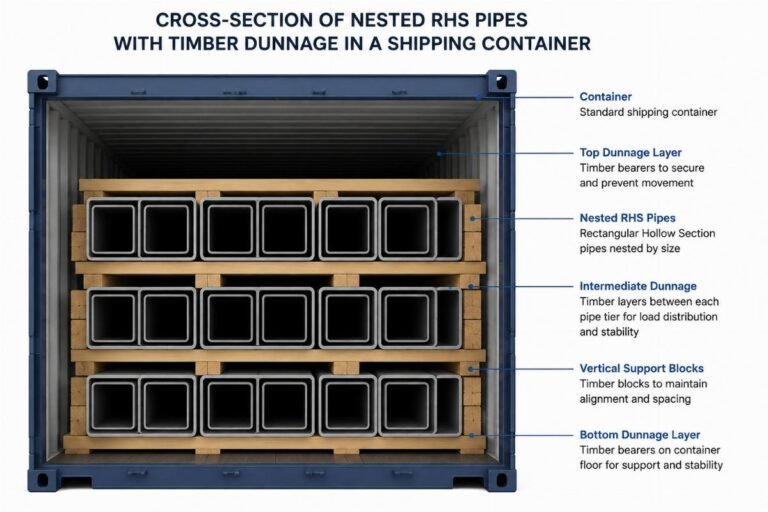
EN10219/EN10210 Steel Pipe Mill Certificate for Export Wholesale
Master Mill Certificate Standards for Steel Pipe Export to prevent costly customs delays and shipment rejections. Learn why EN10219 and EN10210 Type 3.1 certificates are mandatory for structural compliance, how to verify heat numbers, and avoid common documentation pitfalls that lead to project failures.
- Published
- Updated
- Read time
- 8 min
- Comments
- 0
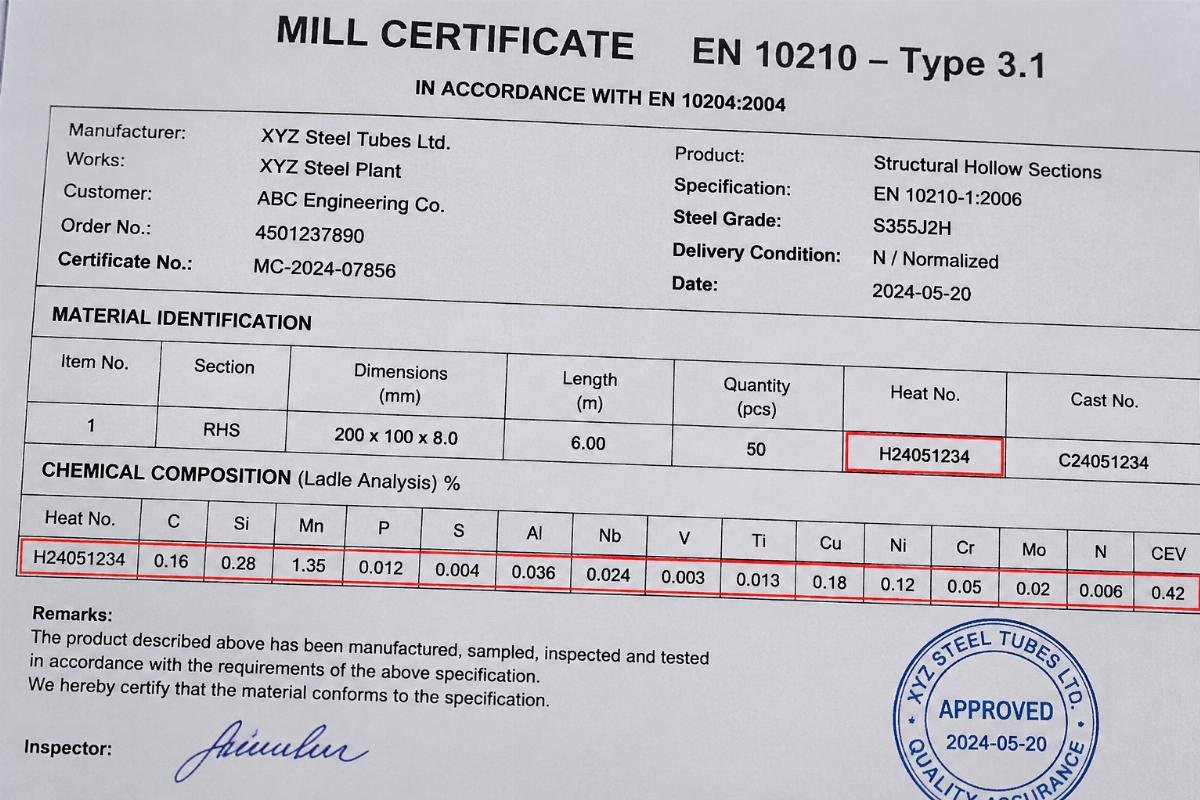
EN10219/EN10210 Steel Pipe Mill Certificate for Export Wholesale
A factory test report is not a mill certificate.
Exporting structural steel pipes requires strict adherence to EN10219 and EN10210 standards, where only Type 3.1 or Type 3.2 certificates issued per EN 10204 are accepted for customs clearance and project compliance; missing inspector signatures or mismatched heat numbers are the primary causes of shipment rejection.
I still remember the silence on the phone line from a procurement manager in Dubai. It was not the silence of agreement, but the heavy, expensive silence of a shipment stuck at Jebel Ali port. His project consultant had rejected an entire container of S355JR square hollow sections because the attached documentation was merely an internal factory quality control sheet, lacking the third-party verification required by EN10219 standards. The cargo sat in the humid coastal air for weeks, accruing storage fees that quickly outpaced the profit margin of the deal. That incident clarified a harsh reality for anyone involved in international steel trade: the physical quality of the pipe is irrelevant if the Mill Certificate Standards for Steel Pipe Export are not met with absolute precision. [NEED_CITE: common reasons for customs clearance delays in structural steel imports]
Understanding the distinction between a simple quality check and a legally binding certification is the first step toward avoiding such logistical nightmares. The global construction industry relies on these documents not just as proof of quality, but as a chain of custody for material safety.
What is a Mill Test Certificate for Steel Pipe Exports?
It is the legal proof of material compliance, not just a quality check.
Many buyers assume that any document stating “Passed” from the manufacturing facility is sufficient for import. This is a dangerous misconception. A Mill Test Certificate (MTC), specifically when aligned with European norms, serves as a statutory declaration that the material meets the mechanical and chemical properties defined in the purchase order and relevant standards. For structural applications, this document is often required by insurance companies, engineering consultants, and local building authorities before the steel can even be unloaded from the vessel.
The core function of an MTC is traceability. It links the physical product to its production batch through unique identifiers. Without this link, the steel is considered unverified raw material, regardless of its actual strength. In jurisdictions with strict building codes, such as those in the European Union, the Middle East, and parts of Southeast Asia, the absence of a compliant MTC can lead to the complete demolition of installed structures if verification cannot be provided post-installation. [NEED_CITE: regulatory requirements for structural steel traceability in EU construction projects]

When reviewing documentation, the term Mill Certificate Standards for Steel Pipe Export should immediately trigger a check for specific standard references. A generic “Quality Certificate” often lacks the detailed chemical breakdown and mechanical test results required for structural integrity assessments. The certificate must explicitly reference the governing standard, such as EN 10219 for welded cold-formed sections or EN 10210 for hot-finished seamless sections, ensuring that the testing methodology aligns with international expectations.
Why EN10219/EN10210 Certificates Differ from Standard Factory Reports?
Third-party verification and specific formatting are mandatory for structural safety compliance.
The difference lies in the level of independence and the rigor of the testing protocol. A standard factory report is typically an internal document generated by the manufacturer’s quality control department. While it may contain accurate data, it lacks the external validation required for high-stakes infrastructure projects. In contrast, certificates compliant with EN10219 and EN10210 standards must adhere to the declaration types defined in EN 10204.
Type 3.1 certificates are issued by the manufacturer’s authorized inspection representative who is independent of the manufacturing department. This separation of duties ensures that the person signing off on the quality has no direct pressure to pass substandard goods to meet production targets. Type 3.2 certificates go a step further, requiring validation by an independent third-party inspector or the purchaser’s appointed representative. [NEED_CITE: differences between EN 10204 Type 3.1 and Type 3.2 certification]
| Feature | Internal Factory Report | EN 10204 Type 3.1 Certificate | EN 10204 Type 3.2 Certificate |
|---|---|---|---|
| Issuer | Manufacturing QC Dept | Authorized Inspection Rep (Independent of Mfg) | Independent Third-Party Inspector |
| Verification Level | Self-declared | Manufacturer Verified | Independent Verified |
| Acceptance in EU Projects | Rarely Accepted | Widely Accepted | Required for Critical Structures |
| Traceability Detail | Basic Batch Info | Full Heat Number & Test Results | Full Heat Number & Witnessed Testing |
A distributor in Southeast Asia once faced a total batch rejection because their supplier provided internal test reports instead of Type 3.1 certificates. The local authority deemed the materials non-compliant with the national building code, which mirrors European standards. The cost of re-exporting the goods and sourcing new stock far exceeded the initial savings from choosing a supplier who did not provide proper certification. This highlights why understanding Mill Certificate Standards for Steel Pipe Export is critical for risk management.

The formatting of these certificates also matters. They must include specific headers, reference the exact standard version, and list the chemical composition and mechanical properties in the units specified by the norm. Missing elements, such as the inspector’s accreditation number or the laboratory’s ISO 17025 accreditation reference, can render the document invalid in strict jurisdictions.
Key Components of a Valid EN Standard Mill Certificate
Must include heat numbers, chemical/mechanical data, and authorized signatures per EN10204.
A valid certificate is a dense document filled with technical data, but several key elements are non-negotiable. The most critical is the heat number. This unique identifier links the certificate to the specific batch of steel used in production. Every pipe in the shipment must be physically marked with this number, allowing inspectors to verify that the document matches the physical goods. A mismatch here is an immediate red flag for customs officials and site engineers.
The chemical composition section must list the percentages of carbon, manganese, silicon, sulfur, phosphorus, and other alloying elements. These values must fall within the tolerance ranges specified by the grade, such as S355JR or S235JR. Similarly, the mechanical properties section must detail yield strength, tensile strength, and elongation values obtained from tensile tests. For EN10219 welded pipes, impact test results at specific temperatures are also crucial to demonstrate toughness. [NEED_CITE: mandatory data fields in EN 10219 mill test certificates]
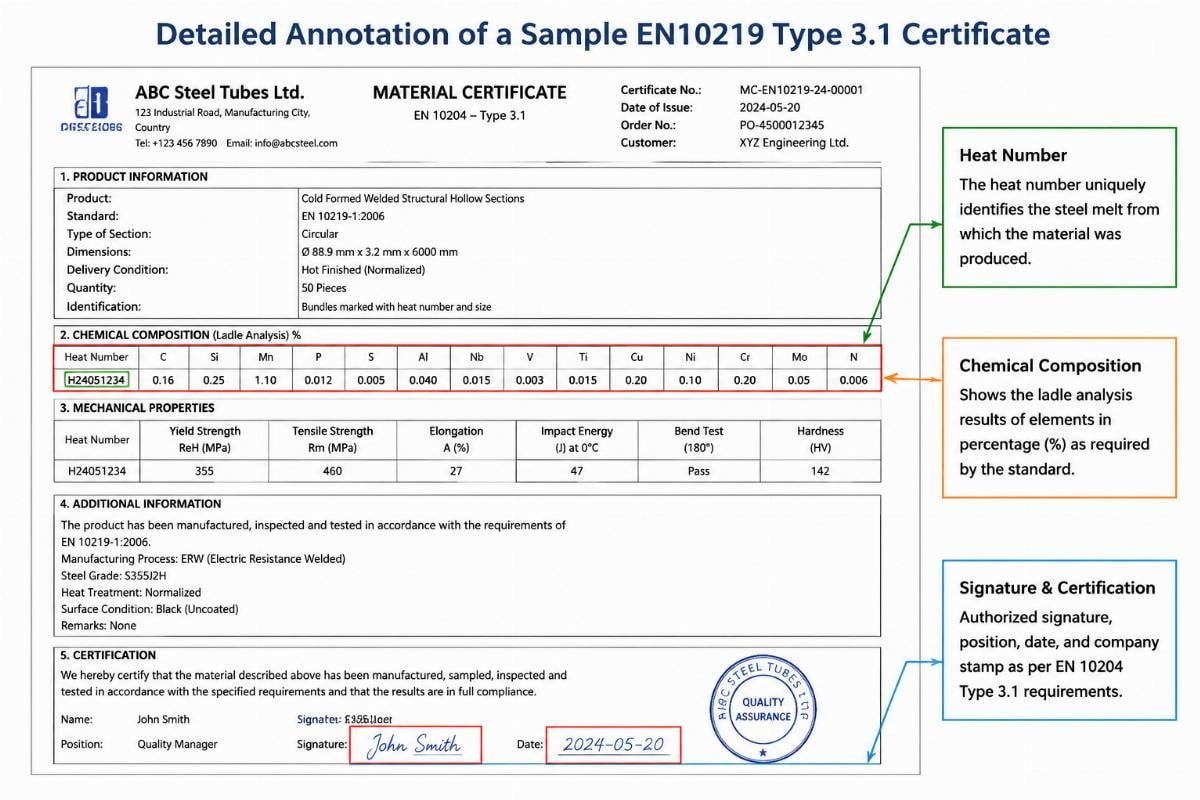
Another vital component is the signature block. The certificate must be signed by an authorized representative whose name and position are clearly stated. For Type 3.1 certificates, this person must be independent of the production team. For Type 3.2, the third-party inspector’s signature and certification body logo must be present. Without these authentications, the document is merely a piece of paper with no legal standing.
Buyers should also look for references to the specific testing standards used, such as EN ISO 6892 for tensile testing or EN ISO 148 for impact testing. These references confirm that the testing methods themselves are standardized and reproducible. When evaluating Mill Certificate Standards for Steel Pipe Export, ensure that every data point on the page can be traced back to a recognized international testing protocol.
Common Pitfalls in Steel Pipe Export Documentation
Mismatched heat numbers and lack of third-party endorsement cause most customs issues.
Even with a general understanding of the requirements, errors frequently occur during the preparation and submission of documentation. One of the most common pitfalls is the discrepancy between physical markings and certificate data. If the heat number stamped on the pipe does not exactly match the number on the MTC, the entire shipment may be held for verification. This often happens when multiple batches are consolidated into a single container without proper segregation and documentation updates.
Another frequent issue is the submission of outdated or incorrect standard versions. Standards are periodically updated, and using a reference to an obsolete version can raise questions about the validity of the testing procedures. For instance, citing an old version of EN 10219 when the current version is required by the project specification can lead to delays while clarifications are sought. [NEED_CITE: impact of obsolete standard references on steel import clearance]
| Pitfall | Consequence | Prevention Strategy |
|---|---|---|
| Mismatched Heat Numbers | Customs Hold / Site Rejection | 100% Batch Verification before shipping |
| Missing Inspector Signature | Document Invalidated | Pre-shipment Document Review |
| Obsolete Standard Reference | Query from Consultant | Check Project Specification Version |
| Internal Report Instead of Type 3.1 | Rejection by Authority | Confirm Certification Type with Supplier |
A European fabricator once queried the chemical composition limits for S355JR grade after receiving a certificate with values outside the expected tolerance. Upon investigation, it was found that the supplier had used a domestic standard that had slightly different limits than the EN standard. This mismatch, though minor in some contexts, was unacceptable for the project’s engineering requirements. Such issues underscore the importance of aligning the Mill Certificate Standards for Steel Pipe Export with the specific destination country’s regulations.
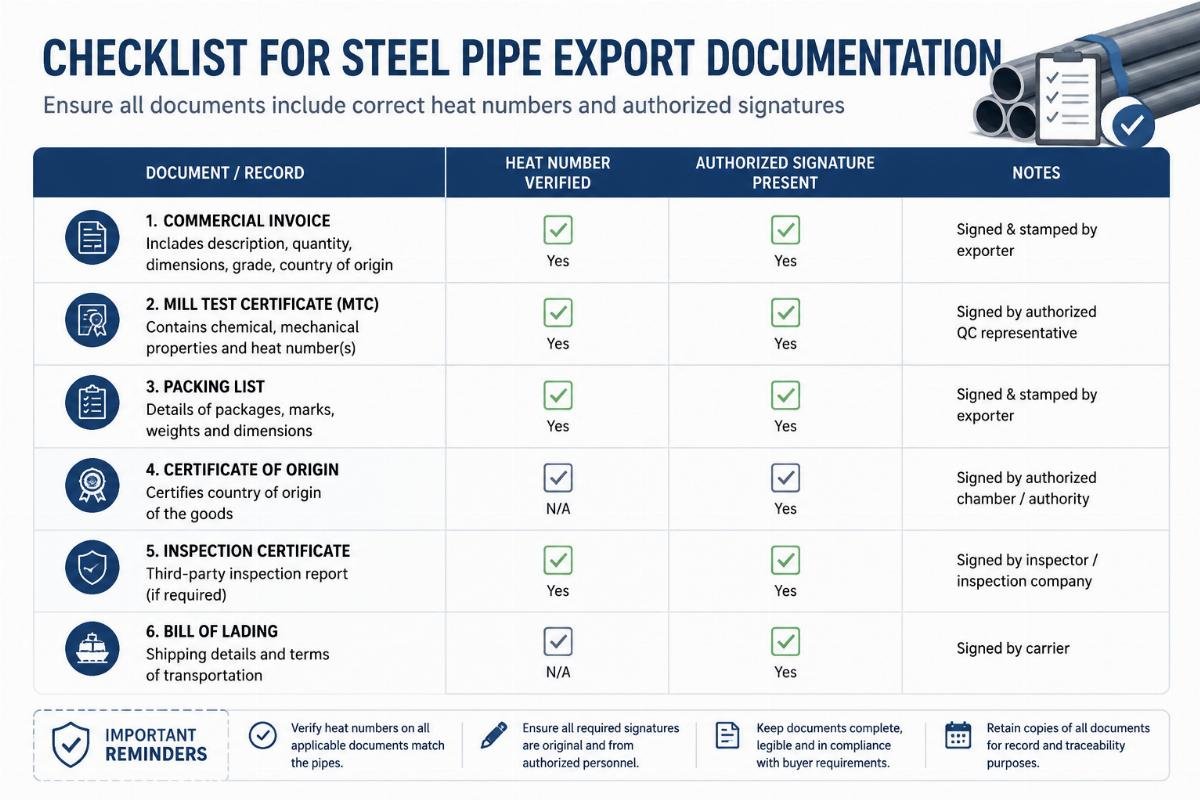
To avoid these pitfalls, it is essential to establish a rigorous pre-shipment verification process. This involves cross-checking every certificate against the physical goods and ensuring that all signatures and stamps are present and valid. Working with manufacturers who have in-house laboratories and extensive export experience can significantly reduce the risk of such errors, as they are more likely to have streamlined processes for generating compliant documentation.
Conclusion
Compliance is not optional; it is the foundation of international steel trade.
Navigating the complexities of Mill Certificate Standards for Steel Pipe Export requires attention to detail and a clear understanding of international standards. By prioritizing Type 3.1 or 3.2 certificates, verifying heat numbers, and ensuring proper authentication, buyers can safeguard their projects against costly delays and rejections. The effort invested in documenting compliance correctly is far less than the cost of resolving a dispute at a foreign port.
Tags
Share this article
- LinkedIn -- share "EN10219/EN10210 Steel Pipe Mill Certificate for Export Wholesale" on LinkedIn
- X -- share "EN10219/EN10210 Steel Pipe Mill Certificate for Export Wholesale" on X
- Facebook -- share "EN10219/EN10210 Steel Pipe Mill Certificate for Export Wholesale" on Facebook
- WhatsApp -- share "EN10219/EN10210 Steel Pipe Mill Certificate for Export Wholesale" on WhatsApp
- Email -- share "EN10219/EN10210 Steel Pipe Mill Certificate for Export Wholesale" on Email

Written by
author
Editor covering global sourcing, supplier verification, and industrial product knowledge. Content is compiled from manufacturer specifications, industry standards, and hands-on experience with international B2B buyers. Every article is fact-checked before publishing to help procurement professionals make informed decisions.
All posts by author