EN10219 S355 Steel Pipe Manufacturer vs European: FOB Price
Discover why the price gap in Chinese vs European steel pipe stems from brand premiums, not material quality. S355J2 structural steel meets identical EN10219 standards regardless of origin. Verify mill test certificates and tolerance tables to secure high-performance steel at a fraction of the branded cost.
- Published
- Updated
- Read time
- 8 min
- Comments
- 0
EN10219 S355 Steel Pipe Manufacturer vs European: FOB Price
The price gap between Chinese and European steel pipes is not a reflection of material inferiority, but a structural difference in branding premiums and local distribution layers.
When you see a significant variance in the FOB quote for an S355J2 structural pipe, it is rarely because the chemical composition has been compromised. The core reality is that European pricing often absorbs heavy brand taxes, regional inventory costs, and multi-tier distributor margins, whereas direct manufacturing from China strips these layers away while maintaining strict adherence to universal EN standards. Buyers save capital by verifying EN-standard compliance through mill test certificates rather than chasing geographic labels. [NEED_CITE: cost structure analysis in global steel supply chains]
I recall standing on the dusty ground of a multi-story car park project in Riyadh, watching a batch of square hollow sections get rejected by a site supervisor. The issue was not rust or bending, but a perceived discrepancy in wall thickness tolerance. The client held a quotation from a German supplier that was nearly double our FOB price, assuming the higher cost guaranteed tighter precision. I pulled out the EN10219 tolerance table and a digital caliper. We measured ten random samples from the container. Every single piece fell within the permissible deviation range defined by the standard. The “premium” product they were considering would have met the exact same dimensional criteria, just with a different stamp on the paperwork. This moment clarified that the fear of substandard material is often a misunderstanding of how international standards work versus how local brands market themselves.
Understanding this distinction requires moving beyond the country of origin and focusing on the technical verification process. The following breakdown examines where the money actually goes, how to validate quality without brand bias, and when direct sourcing becomes the logical engineering choice.
Is Cheap Chinese Steel Actually Lower Quality?
Material chemistry is identical when certified to the same EN grades, regardless of the manufacturing location.
The assumption that lower-priced steel implies diluted alloy content is a persistent myth in procurement circles. In reality, the mechanical properties of S355JR or S355J2 are defined by universal European Norms, not by national borders. A mill in Shandong producing to EN10219 standards must meet the same yield strength, tensile strength, and impact toughness requirements as a mill in Germany or Italy. [NEED_CITE: EN10219-1 mechanical property requirements]
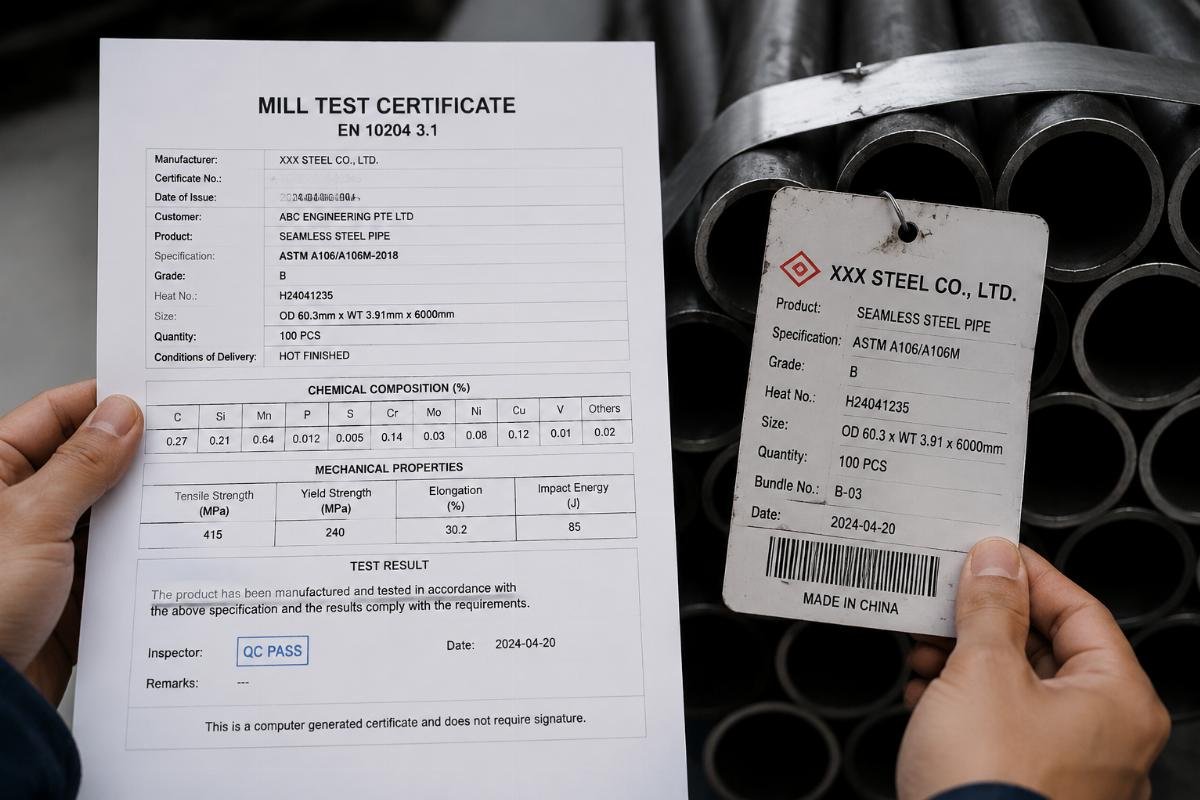
The difference lies in the production scale and overhead structure. Large-scale Chinese manufacturers often operate with higher volume throughput, allowing them to amortize fixed costs over larger batches. This efficiency translates into lower FOB prices without altering the fundamental metallurgy. When a buyer requests a Mill Test Certificate (MTC), they are looking for verification of heat analysis and mechanical testing results. If the MTC shows compliance with EN10219, the physical behavior of the steel under load will be indistinguishable from a branded European equivalent.
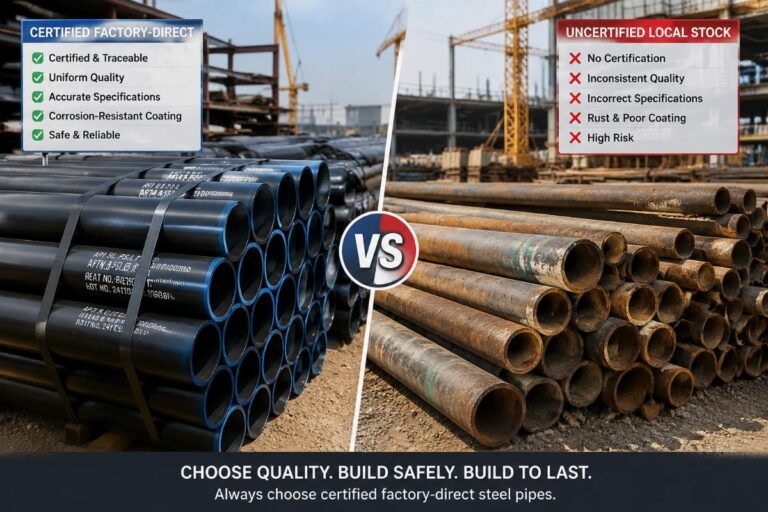
However, the risk is not in the material itself, but in the documentation trail. Unverified suppliers may provide fabricated certificates. The solution is not to avoid Chinese steel, but to enforce rigorous third-party inspection protocols. Reputable manufacturers maintain in-house laboratories that perform routine spectroscopy and tensile testing, ensuring that every batch matches the declared grade before it leaves the factory floor. This internal quality control, when backed by external audit reports, provides the same assurance as any heritage European brand.
Decoding the Price Gap: Where Does the Money Go?
Brand premium and local inventory costs drive European prices up, not raw material expenses.
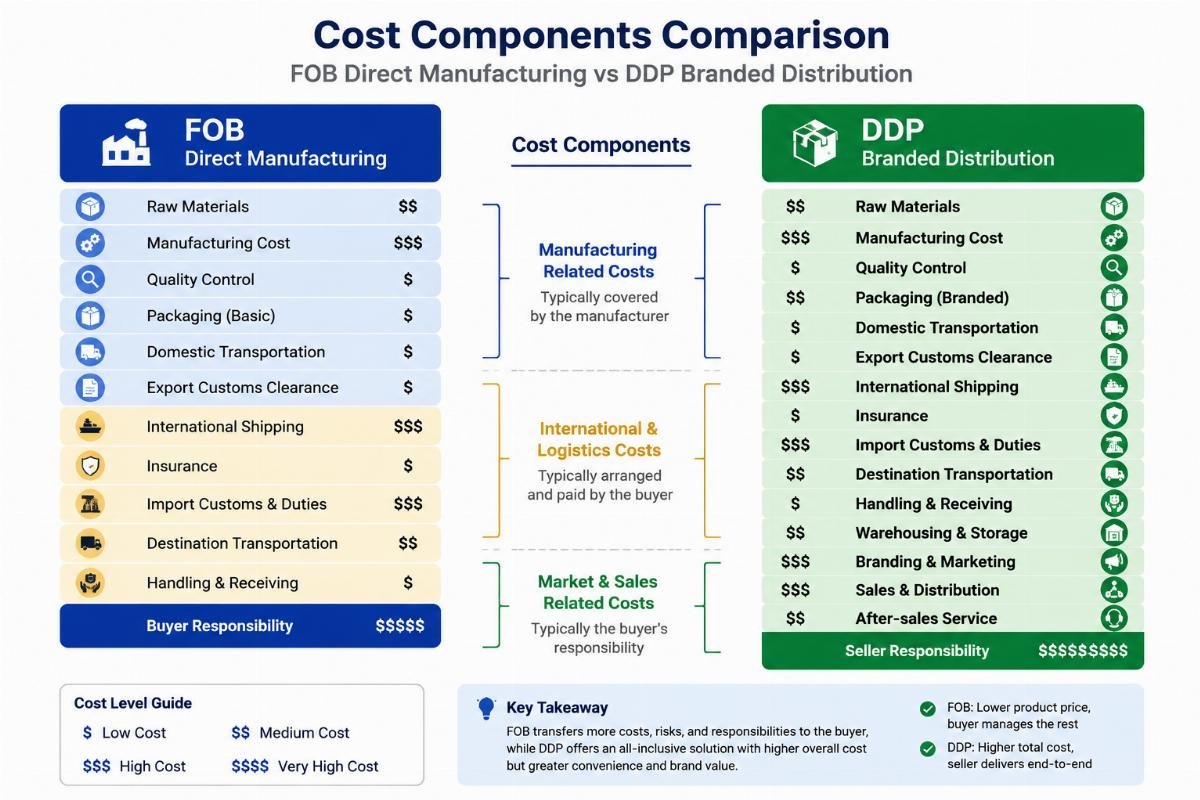
When comparing a FOB Qingdao price with a DDP Europe price, the disparity often confuses buyers who expect a linear relationship between quality and cost. The reality is that the European price includes multiple layers of value-added services and risk mitigation that are not present in a direct factory export model. [NEED_CITE: logistics and tariff impact on steel pricing]
Consider the journey of a steel pipe. In the European model, the material may be produced locally or imported, then stored in regional warehouses to ensure immediate availability. This inventory holding cost, combined with local labor rates, energy costs, and stringent environmental compliance fees, adds significant weight to the final unit price. Furthermore, established brands charge a premium for their reputation, which serves as an insurance policy for buyers who lack the technical expertise to verify quality themselves.
In contrast, a direct manufacturer operating on an FOB basis transfers the logistics and inventory risk to the buyer. The price reflects the pure cost of production plus a modest margin. There are no middlemen taking a cut for regional distribution, and no brand marketing budgets embedded in the tonnage price. This does not mean the Chinese product is “cheap” in terms of quality; it means it is stripped of non-material costs. For large-volume projects where lead time can be planned, this model offers substantial savings. The key is recognizing that you are paying for the steel, not the convenience of local stock or the prestige of a logo.
Critical Check: Tolerances and Certifications That Matter
Focus on EN10219 tolerance tables and valid MTCs, not country of origin.
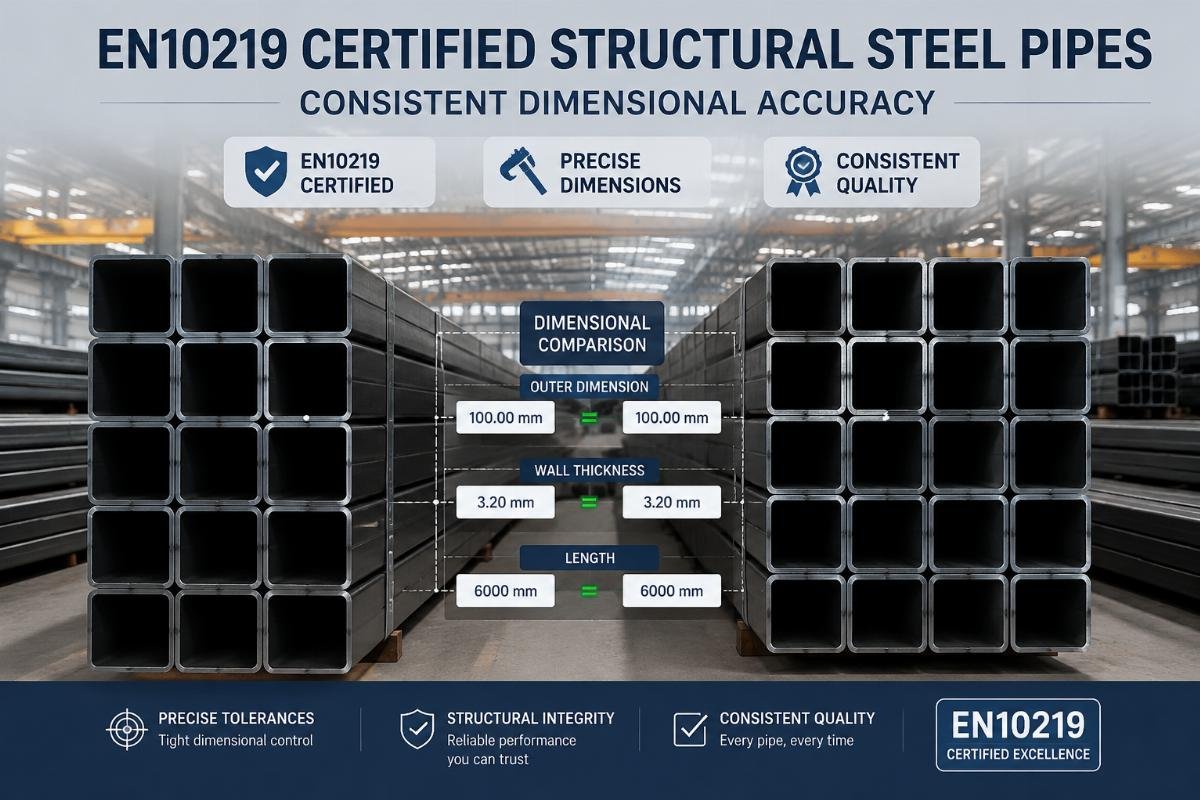
The most common point of failure in international steel procurement is not material weakness, but dimensional mismatch. Structural engineers design connections based on specific outer dimensions and wall thicknesses. If a pipe falls outside the allowed tolerance, it may not fit into pre-fabricated joints, causing costly delays on site. This is where the EN10219 standard becomes the ultimate arbiter, not the brand name.
EN10219 specifies cold-formed welded structural hollow sections. It defines precise tolerance classes for external dimensions, wall thickness, and straightness. A competent manufacturer will produce to Class C or Class D tolerances, depending on the agreement. The critical step for the buyer is to request the specific tolerance class in the purchase order and verify it against the inspection report. [NEED_CITE: EN10219-2 dimensional tolerances]
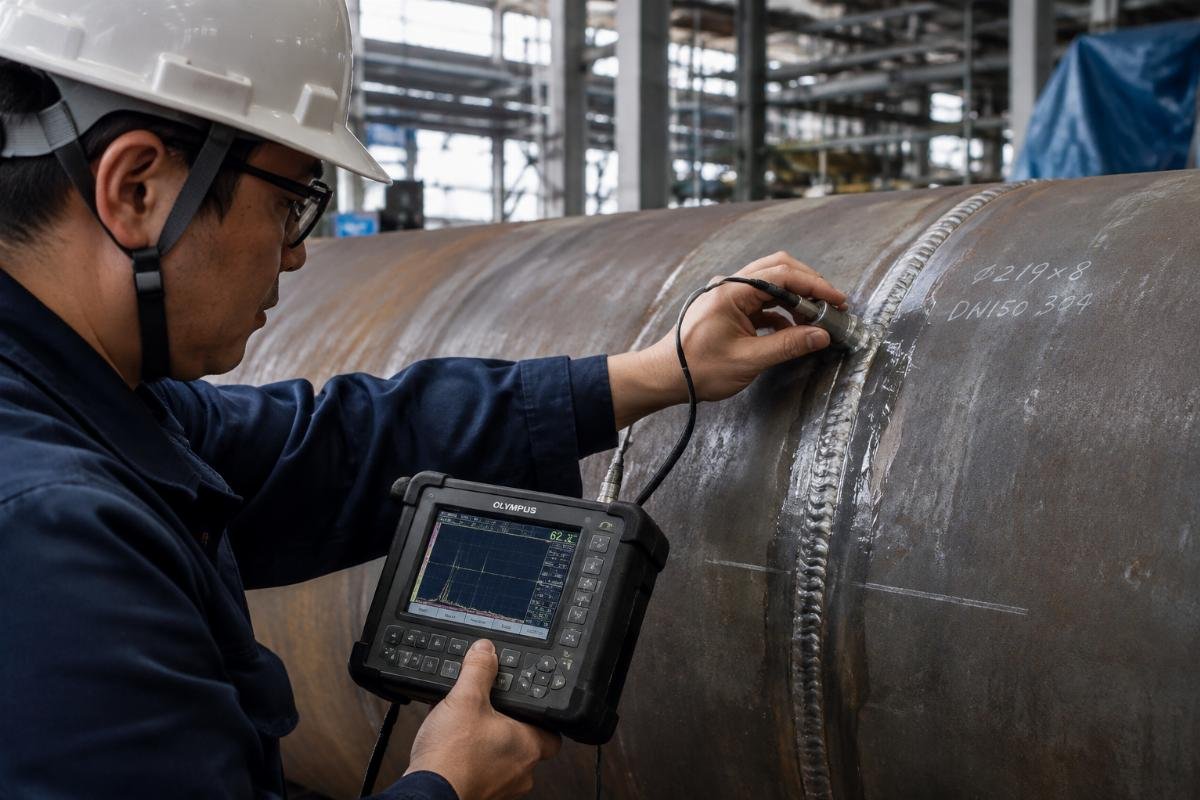
Verification requires more than just reading a certificate. It demands a cross-check of the manufacturing process. Reputable producers use automated ultrasonic testing for weld integrity and laser measurement systems for dimensional accuracy. When evaluating a supplier, ask for evidence of their in-house laboratory capabilities. Do they perform routine impact tests at minus twenty degrees Celsius for J2 grade materials? Can they provide traceability from the raw coil to the finished pipe? These questions separate serious manufacturers from trading companies that simply rebrand generic stock.
For instance, in a recent infrastructure tender in Africa, a client expressed concern about the consistency of wall thickness across a large order. We provided third-party inspection reports from a recognized agency, detailing random sampling results across multiple bundles. The data showed a tight distribution around the nominal value, well within the EN10219 limits. This transparency resolved the fear of substandard material and secured the contract. The lesson is clear: trust data, not geography.
Real-World Scenarios: When to Choose Which?
Chinese steel offers better value for large-volume, standard-spec projects where lead time is manageable.
The decision between Chinese and European sources should be driven by project parameters, not prejudice. For urgent, small-volume repairs where immediate availability is critical, local European distributors remain the logical choice. The premium paid ensures rapid delivery and reduces logistical complexity. However, for major construction projects such as warehouse frameworks, bridge supports, or multi-story buildings, the volume justifies the effort of direct sourcing.
A case in point is a warehouse framework project in Southeast Asia. The contractor initially specified a well-known European brand for its S355JR beams and hollow sections. Upon reviewing the budget, the cost overrun was significant. We proposed switching to a direct Chinese manufacturer capable of meeting the same EN10219 certification requirements. The client conducted a thorough audit of the production facility, including a review of their patent certificates and international certifications. Satisfied with the technical capability, they placed the order. The result was a noticeable reduction in total project cost while maintaining full compliance with the engineering specifications. The mechanical properties tested upon arrival matched the design requirements perfectly. [NEED_CITE: case studies on structural steel procurement optimization]
This approach works best when the buyer has the capacity to manage logistics and quality verification. It requires a clear understanding of the required standards, such as EN10210 for hot-finished sections or EN10219 for cold-formed ones. It also demands patience for sea freight timelines. But for contractors and procurement managers in emerging markets, the savings can be reinvested into other critical aspects of the project, such as foundation work or finishing materials. The key is to view the steel pipe not as a branded commodity, but as a standardized industrial component defined by its technical data sheet.

Conclusion
Stop paying brand tax for material that meets the same universal standard.
The divergence in price between Chinese and European steel pipes is a function of supply chain structure, not material quality. By focusing on EN10219 compliance, verifying mill test certificates, and understanding tolerance requirements, buyers can secure high-performance structural steel at a fraction of the branded cost. The smart procurement strategy is to validate the data, not the label.
Tags
Share this article
- LinkedIn -- share "EN10219 S355 Steel Pipe Manufacturer vs European: FOB Price" on LinkedIn
- X -- share "EN10219 S355 Steel Pipe Manufacturer vs European: FOB Price" on X
- Facebook -- share "EN10219 S355 Steel Pipe Manufacturer vs European: FOB Price" on Facebook
- WhatsApp -- share "EN10219 S355 Steel Pipe Manufacturer vs European: FOB Price" on WhatsApp
- Email -- share "EN10219 S355 Steel Pipe Manufacturer vs European: FOB Price" on Email

Written by
author
Editor covering global sourcing, supplier verification, and industrial product knowledge. Content is compiled from manufacturer specifications, industry standards, and hands-on experience with international B2B buyers. Every article is fact-checked before publishing to help procurement professionals make informed decisions.
All posts by author