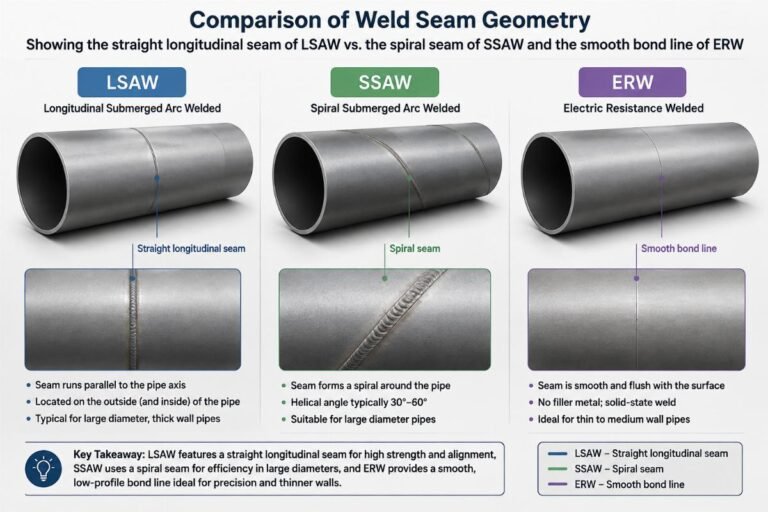
EN10219 Steel Pipe vs Regional Distributor: Factory Direct Wholesale
Navigating Chinese Steel Pipe vs Regional Distributor sourcing reveals factory-direct procurement lowers total landed costs for large infrastructure projects. Avoid hidden markups and misgraded stock risks by securing verifiable mill test certificates. Ensure structural compliance and significant logistics savings through strategic volume ordering and mixed container consolidation.
- Published
- Updated
- Read time
- 7 min
- Comments
- 0
EN10219 Steel Pipe vs Regional Distributor: Factory Direct Wholesale
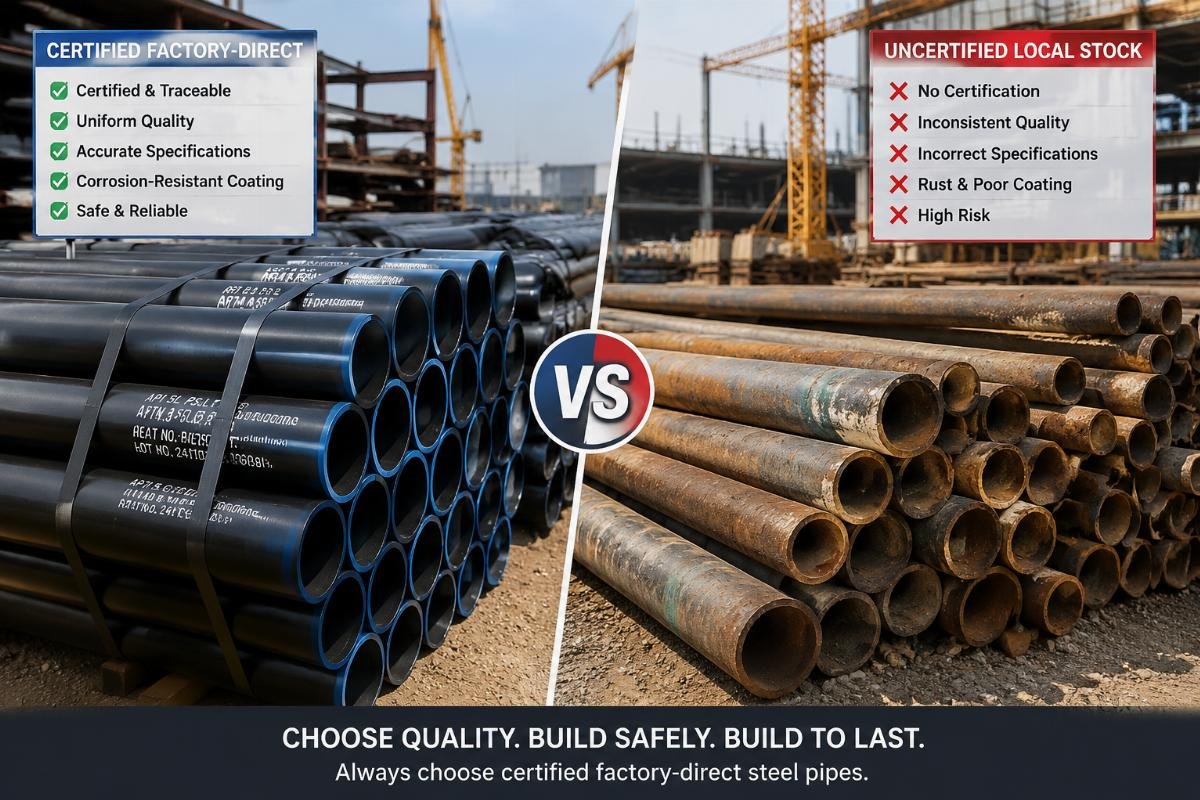
Local stock is rarely cheaper when rework costs are included.
For large-scale infrastructure projects in emerging markets, sourcing Chinese Steel Pipe vs Regional Distributor options reveals that factory-direct procurement typically yields a lower total landed cost and superior compliance assurance, provided the buyer manages certification verification and logistics planning effectively. While regional distributors offer immediate availability for small emergency repairs, they often lack the traceable mill test certificates required for structural integrity in major tenders. The hidden markup in local supply chains, combined with the risk of misgraded materials, makes direct factory sourcing the preferred strategy for contractors managing volume orders exceeding a single container load.
I still remember the humidity in the Lagos warehouse during that Ikeja project. The site manager was furious because a batch of square hollow sections, purchased from a nearby distributor for speed, failed the wall thickness check. The calipers showed a deviation of more than one millimeter from the specified tolerance. The local supplier could not produce a valid certificate linking the steel to its original melt. We waited six weeks for a replacement shipment, halting the entire framework assembly. That delay cost far more than the initial savings on shipping. It taught me that convenience without documentation is a liability, not an asset. [NEED_CITE: common causes of construction delays due to material non-compliance]
The difference becomes clear when you look beyond the sticker price. Many buyers assume that avoiding international freight saves money. However, the reality of Chinese Steel Pipe vs Regional Distributor sourcing involves calculating the total cost of ownership, including the risk of structural failure and project delays.
What Are the Real Cost Differences Between Factory-Direct and Local Distributors?
Visible savings on local pickup often mask significant hidden markups and quality risks.
When comparing Chinese Steel Pipe vs Regional Distributor pricing, it is essential to distinguish between the unit price and the total landed cost. Local distributors add layers of margin to cover their warehousing, inventory holding costs, and the risk of unsold stock. For standard grades like S355 or Q345B, these margins can be substantial. In contrast, factory-direct pricing removes these intermediaries. The cost structure shifts from a high per-unit price with low logistical complexity to a lower per-unit price with managed freight and customs duties.
| Cost Component | Factory-Direct Sourcing | Regional Distributor Sourcing |
|---|---|---|
| Unit Material Price | Lower (wholesale tier) | Higher (retail/wholesale mix) |
| Freight & Logistics | Managed via sea freight consolidation | Minimal or included in high unit price |
| Certification Availability | Full mill test certificates provided | Often generic or missing |
| Quality Traceability | Batch-specific traceability | Limited or no traceability |
| Risk of Rework | Low (pre-shipment inspection) | High (potential for misgraded stock) |
A contractor in Ethiopia once shared how they won a major infrastructure bid by using factory-issued EN10210 certificates. Their competitor, who relied on local stock with generic paperwork, was rejected during the technical evaluation phase. The factory-direct approach allowed for mixed container consolidation, combining beams and pipes from the same production facility. This strategy reduced overall logistics costs significantly compared to sourcing from multiple local suppliers who each charged premium rates for smaller deliveries. [NEED_CITE: impact of mixed-container consolidation on logistics efficiency]

The key is volume. For projects requiring less than a full container, local distribution might remain competitive due to freight minimums. However, for any substantial structural requirement, the economies of scale in factory-direct shipping outweigh the convenience of local pickup.
How Does Quality Control Differ: Certified Mill Production vs. Local Stockpiles?
In-house laboratory testing prevents structural failures that local stockpiles cannot guarantee.
Quality control in Chinese Steel Pipe vs Regional Distributor scenarios is fundamentally different. Factories producing to EN10219 or EN10210 standards maintain in-house laboratories that test every batch for chemical composition and mechanical properties. This ensures that the S355JR grade actually meets the yield strength requirements. Local distributors, however, often store steel from various origins in open yards. Exposure to weather and lack of proper segregation can lead to corrosion or mixing of grades.
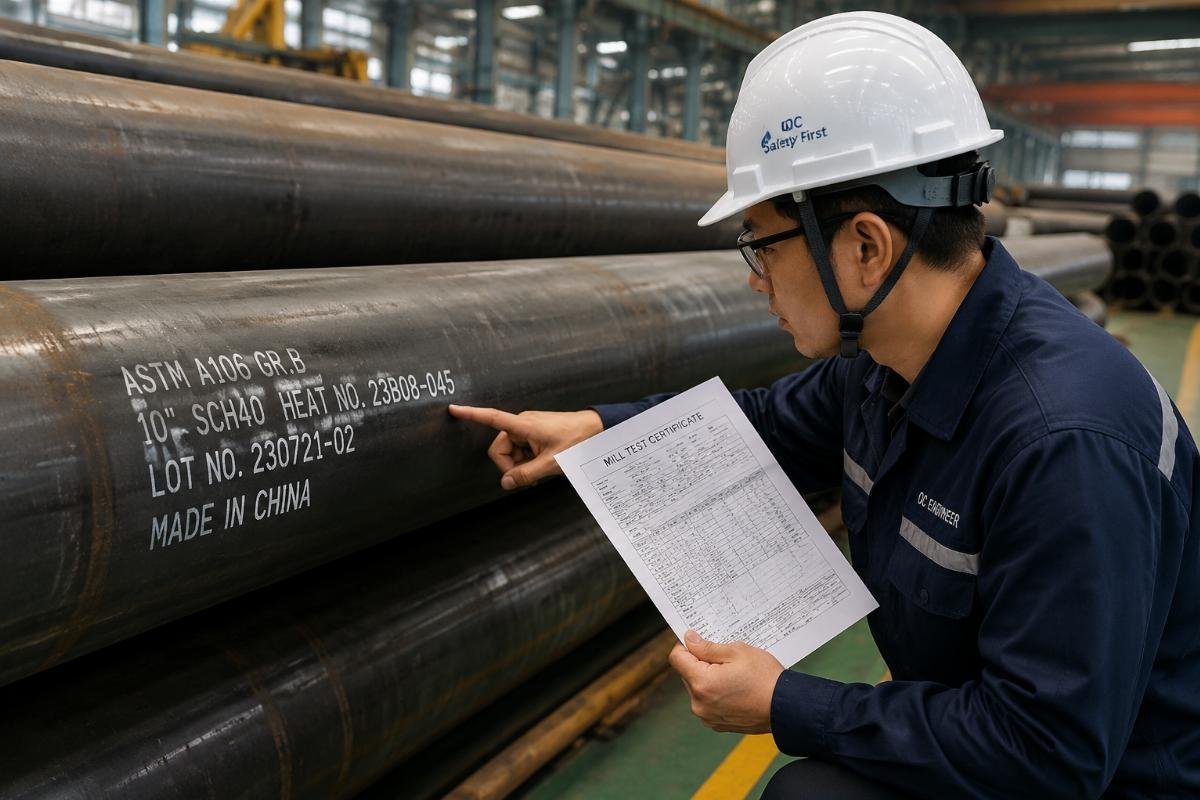
I have seen cases where local stock was labeled as S355 but performed closer to Q235 in tensile tests. Without a mill test certificate (MTC) that traces the material back to the specific heat number, there is no way to verify the grade. Factory-direct sourcing provides MTCs that align with the physical markings on the pipes. This traceability is crucial for third-party inspections, which are mandatory for most government-funded projects in Africa and the Middle East. [NEED_CITE: importance of traceability in structural steel certification]
Manufacturers with established export experience, such as those in Jinan, often operate multiple production lines with strict quality protocols. They can perform custom size manufacturing and surface treatments like shot blasting or galvanizing before shipment. This level of control is impossible to replicate with random local stock. The ability to request non-standard sizes directly from the mill ensures that the structural design is executed precisely, reducing waste on-site.
Can You Trust the Grade? Verifying S355/Q345 Compliance in Emerging Markets
“S355” is not a universal guarantee without verifiable mill test certificates.
One of the most dangerous assumptions in Chinese Steel Pipe vs Regional Distributor procurement is that the grade label on the pipe is accurate. In many emerging markets, local suppliers may relabel lower-grade steel to meet demand. Without proper verification, this leads to catastrophic risks. Factory-direct sourcing mitigates this by providing documents that comply with international standards like EN10219 or ASTM A500.
Verifying these certificates requires checking the batch numbers against the manufacturer’s records. A valid MTC should include the chemical composition, mechanical properties, and the standard to which the steel was produced. Local distributors often provide only a commercial invoice or a generic certificate of origin, which holds no technical value for engineering compliance. [NEED_CITE: standards for mill test certificate validation in construction]

In the Nigerian case mentioned earlier, the lack of a valid MTC meant the entire batch had to be quarantined. The local supplier claimed the steel was compliant but could not prove it. Factory-direct buyers avoid this by insisting on pre-shipment inspections or third-party verification services like SGS or Bureau Veritas. This step ensures that the material leaving the factory matches the order specifications exactly.
Logistics & Lead Time: Is Waiting for China Worth the Savings?
Planned sea freight with consolidation offers better predictability than urgent local premiums.
The argument for local distributors often centers on lead time. “We need it now” is a common refrain. However, Chinese Steel Pipe vs Regional Distributor logistics analysis shows that planned procurement is often more reliable. Sea freight schedules are predictable, and consolidation allows for efficient use of container space. While local pickup is immediate, it is subject to stock availability, which can be erratic for specific structural sizes.
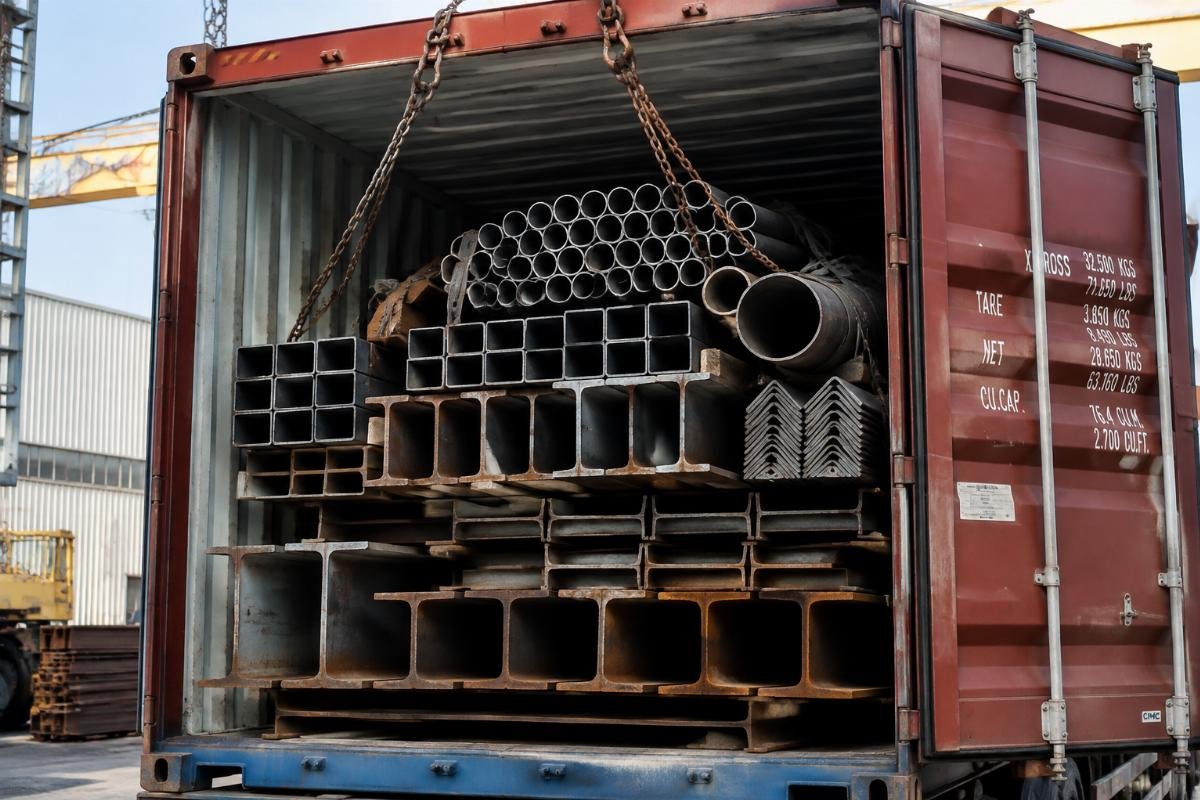
For large projects, the lead time for factory production and shipping is factored into the construction schedule. This planning allows for better cash flow management and reduces the need for expensive expedited local purchases. Moreover, factories can coordinate the shipment of different structural components, such as H-beams and steel plates, in the same container. This mixed loading optimizes freight costs and ensures all materials arrive simultaneously, preventing bottlenecks on-site. [NEED_CITE: benefits of consolidated shipping for construction projects]
The key is communication. Working directly with a manufacturer allows for real-time updates on production status. Local distributors may not have visibility into their own supply chain until the stock arrives. By managing the logistics proactively, buyers can turn the longer lead time of factory-direct sourcing into a strategic advantage, ensuring material availability aligns perfectly with construction phases.
Conclusion
Factory-direct sourcing delivers verified quality and lower total costs for serious projects.
Choosing between Chinese Steel Pipe vs Regional Distributor options depends on the scale and criticality of the project. For minor repairs, local stock offers speed. For structural frameworks, bridges, and large infrastructure, factory-direct procurement provides the necessary certification, traceability, and cost efficiency. The initial effort in managing logistics and verification pays off by eliminating the risk of rework and ensuring compliance with international standards.
Tags
Share this article
- LinkedIn -- share "EN10219 Steel Pipe vs Regional Distributor: Factory Direct Wholesale" on LinkedIn
- X -- share "EN10219 Steel Pipe vs Regional Distributor: Factory Direct Wholesale" on X
- Facebook -- share "EN10219 Steel Pipe vs Regional Distributor: Factory Direct Wholesale" on Facebook
- WhatsApp -- share "EN10219 Steel Pipe vs Regional Distributor: Factory Direct Wholesale" on WhatsApp
- Email -- share "EN10219 Steel Pipe vs Regional Distributor: Factory Direct Wholesale" on Email

Written by
author
Editor covering global sourcing, supplier verification, and industrial product knowledge. Content is compiled from manufacturer specifications, industry standards, and hands-on experience with international B2B buyers. Every article is fact-checked before publishing to help procurement professionals make informed decisions.
All posts by author