S355J0/JR/J2 Cold-Formed Structural Tubes Manufacturer for Sale
Sourcing Cold-Formed Structural Tubes S355J0/JR/J2 requires strict EN10219 verification to prevent customs delays and structural risks. Learn to distinguish impact test temperatures for JR, J0, and J2 grades while ensuring accurate HS code classification for smooth clearance. Avoid costly shipment detentions by mastering these critical procurement details.
- Published
- Updated
- Read time
- 8 min
- Comments
- 0
S355J0/JR/J2 Cold-Formed Structural Tubes Manufacturer for Sale
Most buyers assume S355JR, J0, and J2 are interchangeable grades of the same steel. They are not.
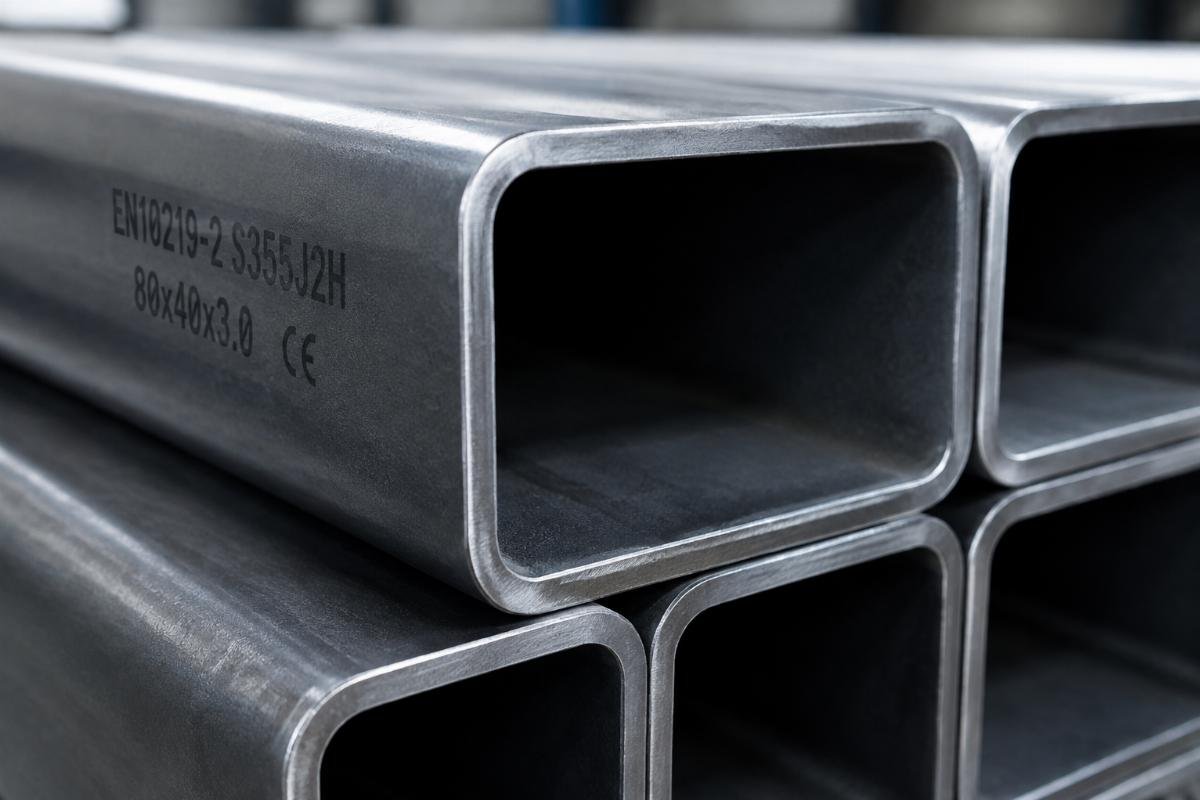
Sourcing compliant Cold-Formed Structural Tubes S355J0/JR/J2 requires strict verification of EN10219 certification and precise HS code classification to prevent costly customs delays and structural risks. The suffix dictates critical impact resistance temperatures that affect safety in cold climates, while the manufacturing process determines the correct customs declaration. Misclassifying cold-formed sections as hot-finished or ignoring impact test requirements can lead to shipment detention at port or rejection during tender inspection.
I recently handled a batch of structural components destined for the Philippines. The client was urgent about clearing customs, but we discovered a mismatch between the HS codes on the packing list and the actual goods. The discrepancy stemmed from declaring cold-formed hollow sections under a code typically reserved for hot-rolled products. This minor administrative error nearly resulted in a two-week detention at the port, risking demurrage charges and project delays. Such issues are common when traders overlook the technical distinction between manufacturing processes. [NEED_CITE: customs classification differences between cold-formed and hot-finished steel tubes]
Understanding these nuances is not just about compliance; it is about ensuring the material performs as engineered. Below, we break down the technical specifications, customs implications, and quality verification steps necessary for procuring high-grade structural tubing.
What Are S355J0/JR/J2 Cold-Formed Tubes?
The designation S355 refers to the minimum yield strength of 355 MPa, but the suffixes JR, J0, and J2 define the material’s toughness at specific temperatures. This is often overlooked in general procurement, leading to material failures in environments colder than anticipated.
S355JR is tested for impact resistance at +20°C. It is suitable for standard indoor structures or mild climates. S355J0 raises the bar, requiring verification at 0°C, making it appropriate for unheated warehouses or regions with moderate winter conditions. S355J2 is the most robust among the three, certified for impact resistance at -20°C. This grade is essential for outdoor infrastructure in colder zones or projects where thermal shock is a concern. [NEED_CITE: Charpy V-notch impact test temperature requirements for EN 10025 and EN 10219 standards]
A Middle East project once rejected a shipment of S355JR tubes because the design specifications explicitly called for S355J2 due to nighttime temperature drops in desert regions. Although the yield strength was identical, the lack of low-temperature toughness certification rendered the material non-compliant with the engineering safety factors.
| Grade | Impact Test Temperature | Typical Application Environment | Risk if Misapplied |
|---|---|---|---|
| S355JR | +20°C | Indoor, Mild Climate | Brittle fracture in cold weather |
| S355J0 | 0°C | Unheated Storage, Moderate Winter | Failure in freezing conditions |
| S355J2 | -20°C | Outdoor Infrastructure, Cold Climates | Catastrophic failure in sub-zero temps |
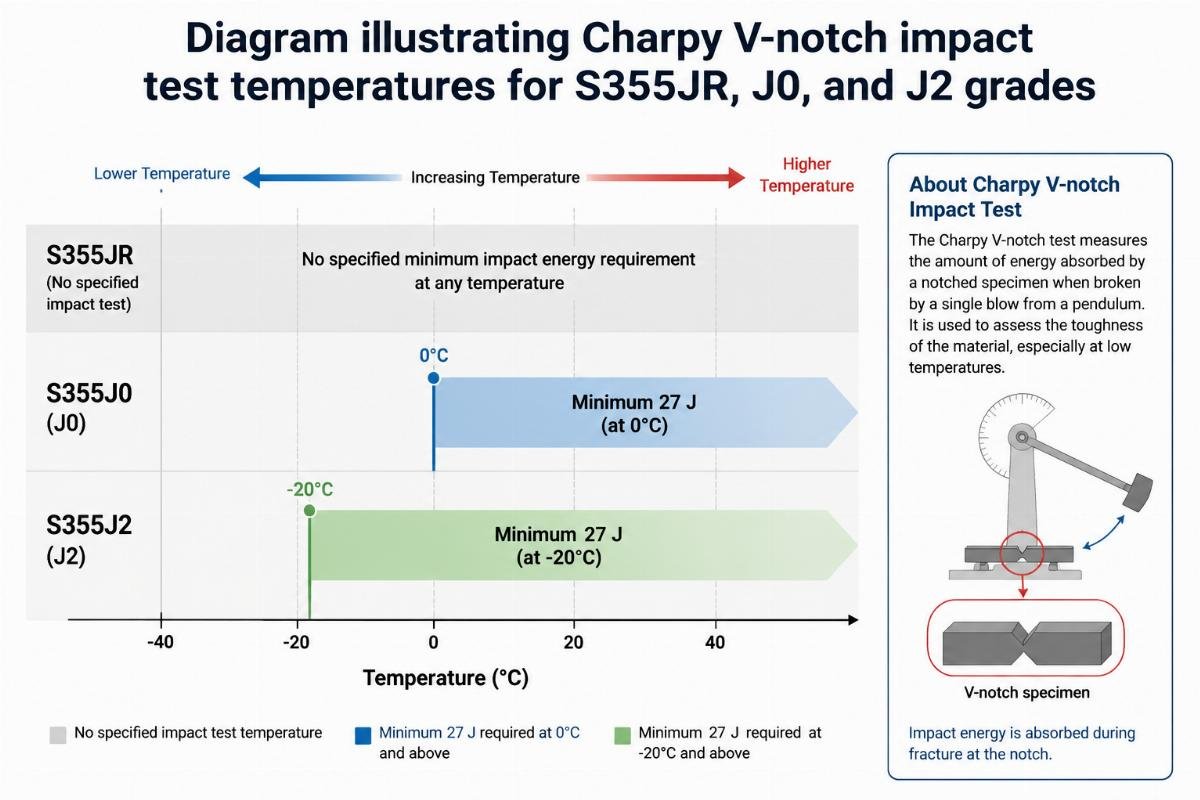
When sourcing Cold-Formed Structural Tubes S355J0/JR/J2, always cross-reference the project’s environmental data with the grade’s impact rating. Do not rely solely on tensile strength metrics.
Why HS Code Accuracy Matters for Structural Tubes
Customs clearance is often treated as a paperwork formality, but for steel products, the HS code determines duty rates and regulatory checks. A common mistake is using a generic code for “structural tubes” without distinguishing between cold-formed and hot-finished products.
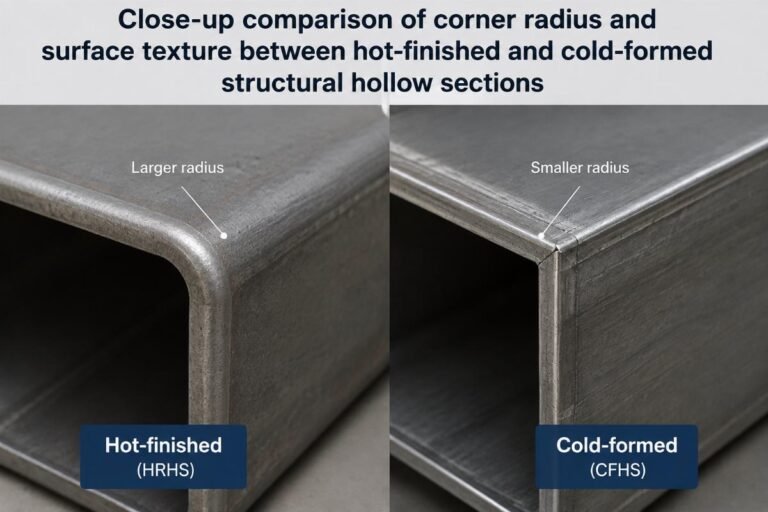
Cold-formed hollow sections are manufactured at room temperature, which alters their mechanical properties and dimensional tolerances compared to hot-finished tubes. Customs authorities in many jurisdictions have specific codes for cold-formed profiles. Declaring them under hot-rolled codes can trigger inspections for misdeclaration, leading to delays. [NEED_CITE: international customs tariff schedules for cold-formed vs hot-finished steel sections]
In one instance, a shipment was held for inspection because the declared HS code did not match the physical characteristics of the cold-formed tubes. The packaging indicated cold-formed processing, but the documentation referenced a hot-rolled category. Resolving this required submitting mill certificates and production records to prove the nature of the goods, causing significant logistical friction.
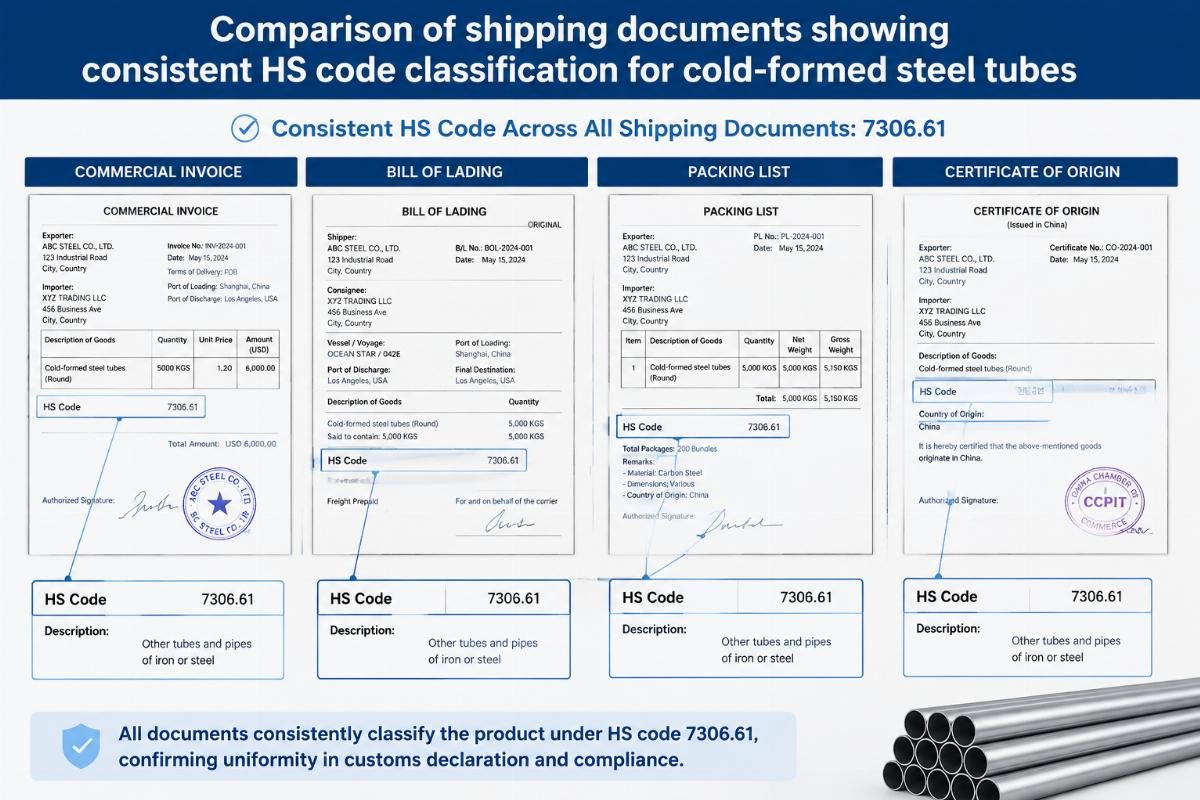
To avoid this, ensure your supplier provides the correct HS code based on the manufacturing method. Verify that the commercial invoice, packing list, and certificate of origin all align with the specific description of Cold-Formed Structural Tubes S355J0/JR/J2. Consistency across documents is the first line of defense against customs detention.
S355JR vs. J0 vs. J2: Which One Do You Really Need?
Selecting the right grade involves more than checking a box; it requires understanding the structural load and environmental exposure. While S355JR is the most commonly available and cost-effective option, it is not universally applicable.
For projects in Southeast Asia or tropical regions, S355JR is often sufficient. However, for infrastructure in Europe, North America, or high-altitude regions, S355J0 or S355J2 may be mandated by local building codes. The key differentiator is the risk of brittle fracture. Steel becomes more brittle as temperatures drop. If the service temperature falls below the impact test threshold of the selected grade, the material loses its ability to absorb energy, increasing the likelihood of sudden failure.
| Factor | S355JR | S355J0 | S355J2 |
|---|---|---|---|
| Impact Energy Requirement | Standard | Higher | Highest |
| Temperature Threshold | +20°C | 0°C | -20°C |
| Cost Implication | Lowest | Moderate | Higher |
| Availability | High | Medium | Variable |
A fabrication shop in Northern Europe faced assembly issues when they substituted S355JR for S355J2 to save costs. During winter installation, several components cracked under standard handling loads. The investigation revealed that the ambient temperature had dropped below the +20°C threshold of the JR grade, triggering brittle behavior. Replacing the entire batch resulted in a mid-six-figure loss, far exceeding the initial savings. [NEED_CITE: case studies on brittle fracture in structural steel due to incorrect grade selection]
When requesting quotes for Cold-Formed Structural Tubes S355J0/JR/J2, specify the exact grade required by your engineering team. Do not accept substitutions without written approval from your structural engineer.
How to Verify EN10219 Compliance Before Shipping
EN10219 is the European standard for cold-formed welded structural hollow sections. Compliance ensures that the tubes meet specific requirements for dimensional tolerances, mechanical properties, and chemical composition. Verifying this compliance before shipment prevents receiving non-conforming goods.
The primary document for verification is the Mill Test Certificate (MTC), specifically EN 10204 3.1 or 3.2 depending on the inspection level. This certificate should detail the chemical analysis, mechanical test results, and impact test values for the specific batch. Check that the heat number on the certificate matches the markings on the tubes.
Additionally, inspect the dimensional tolerances. EN10219 specifies tighter tolerances for outer dimensions and wall thickness compared to general market standards. Cheap imports often fail to meet these tolerances, causing alignment issues during fabrication. [NEED_CITE: EN10219 dimensional tolerance limits for square and rectangular hollow sections]
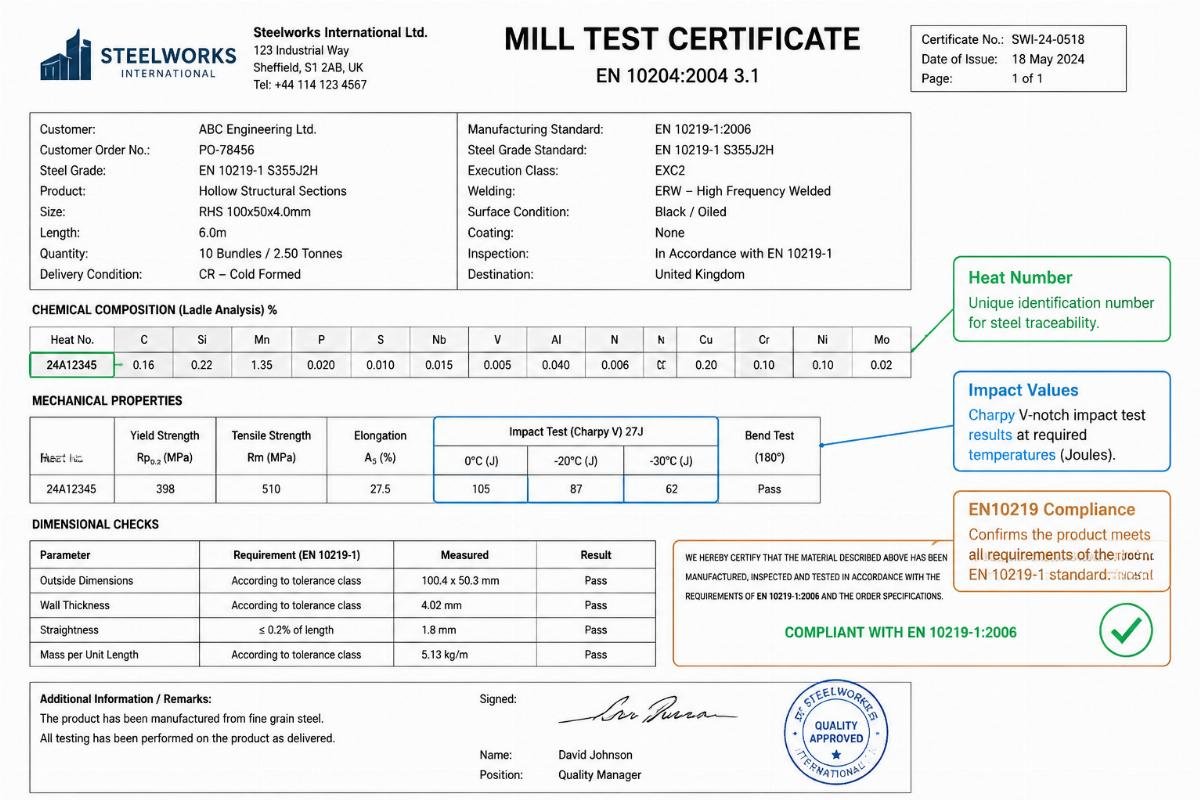
At our production facilities, we maintain an in-house laboratory to conduct regular quality checks on yield strength, tensile strength, and impact resistance. This internal verification process ensures that every batch of Cold-Formed Structural Tubes S355J0/JR/J2 meets the stringent requirements of EN10219 before it leaves the factory. Third-party inspection agencies can also be engaged for pre-shipment verification, providing an additional layer of assurance for large orders.
Common Procurement Pitfalls and How to Avoid Them
Procuring structural steel involves navigating several potential pitfalls that can disrupt project timelines and budgets. Awareness of these common errors allows buyers to implement preventive measures.
One major pitfall is ignoring surface treatment requirements. Cold-formed tubes are often used in exposed structures, making corrosion protection critical. Ensure that the specified surface treatment, such as galvanizing or painting, is applied correctly and documented. Poor surface preparation can lead to premature rusting, compromising structural integrity.
Another issue is inconsistent wall thickness. Some suppliers may provide tubes with wall thicknesses at the lower end of the tolerance range, which can affect load-bearing capacity. Always specify the acceptable tolerance range in your purchase order and verify it upon receipt.
Finally, do not overlook the importance of proper packaging. Cold-formed tubes are susceptible to damage during transit if not adequately protected. Use sturdy packing materials and secure loading methods to prevent deformation. [NEED_CITE: best practices for packaging and transporting structural steel hollow sections]
By focusing on these details, you can ensure that your procurement process runs smoothly and that the delivered materials meet your project’s rigorous standards.
Conclusion
Correct grade selection and accurate customs classification are non-negotiable for structural integrity and logistical efficiency.
Sourcing Cold-Formed Structural Tubes S355J0/JR/J2 demands attention to detail beyond price. Verify EN10219 compliance through detailed Mill Test Certificates, ensure HS codes reflect the cold-formed manufacturing process, and select the appropriate grade based on environmental impact requirements. These steps mitigate the risk of customs delays, material rejection, and structural failure, ensuring your project proceeds without costly interruptions.
Tags
Share this article
- LinkedIn -- share "S355J0/JR/J2 Cold-Formed Structural Tubes Manufacturer for Sale" on LinkedIn
- X -- share "S355J0/JR/J2 Cold-Formed Structural Tubes Manufacturer for Sale" on X
- Facebook -- share "S355J0/JR/J2 Cold-Formed Structural Tubes Manufacturer for Sale" on Facebook
- WhatsApp -- share "S355J0/JR/J2 Cold-Formed Structural Tubes Manufacturer for Sale" on WhatsApp
- Email -- share "S355J0/JR/J2 Cold-Formed Structural Tubes Manufacturer for Sale" on Email

Written by
author
Editor covering global sourcing, supplier verification, and industrial product knowledge. Content is compiled from manufacturer specifications, industry standards, and hands-on experience with international B2B buyers. Every article is fact-checked before publishing to help procurement professionals make informed decisions.
All posts by author