EN10219 vs EN10210 Steel Pipe: EU-Certified Manufacturer for Sale
Avoid costly customs delays and structural failures by understanding the critical differences in EN10219 vs EN10210 steel pipe. Learn how cold-formed and hot-finished processes impact tolerances, residual stress, and SONCAP compliance for African imports to ensure seamless project execution.
- Published
- Updated
- Read time
- 7 min
- Comments
- 0
EN10219 vs EN10210 Steel Pipe: EU-Certified Manufacturer for Sale
Seamless is not always superior for structural integrity.
EN10219 covers cold-formed welded hollow sections with broader dimensional tolerances, while EN10210 specifies hot-finished seamless or welded pipes with tighter wall thickness control and superior corner radii for heavy-load applications. Selecting the wrong standard triggers customs detention in regulated markets like Nigeria due to SONCAP mismatches and causes structural fit-up failures on site.
The distinction between these two European standards dictates not just the manufacturing process, but the entire lifecycle of a steel structure from fabrication to final inspection. [NEED_CITE: fundamental differences in manufacturing processes between cold-forming and hot-finishing]. When I managed documentation for a shipment bound for Lagos, the bill of lading listed EN10219 square hollow sections, but the SONCAP certificate required specific mechanical property declarations aligned with hot-finished expectations. The mismatch halted clearance at Tincan Port for weeks. This was not a failure of quality, but a failure of specification alignment. Understanding the technical divergence between EN10219 vs EN10210 steel pipe prevents such costly administrative and engineering errors.
Transitioning from document verification to physical inspection reveals why these standards exist separately. The choice impacts weldability, residual stress, and aesthetic finish.
What Are the Core Differences Between EN10219 and EN10210?
The manufacturing method defines the application scope.
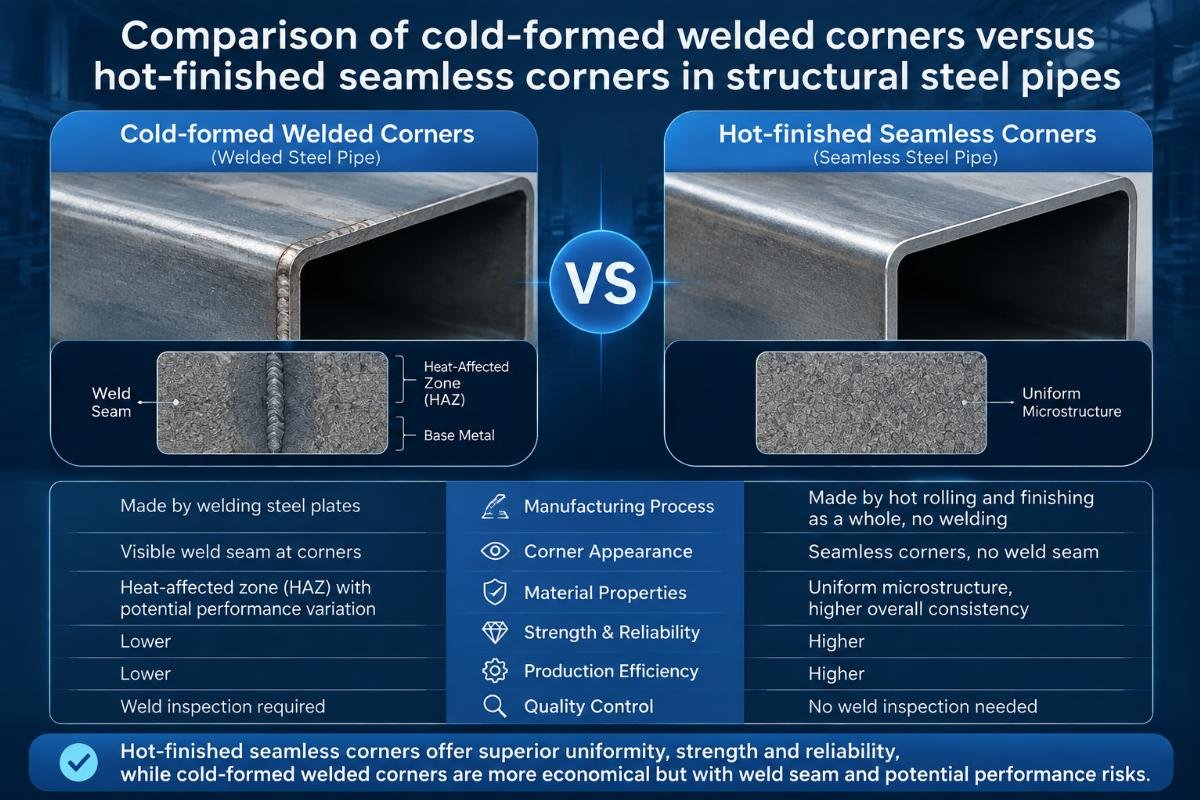
EN10219 applies to cold-formed welded structural hollow sections. The steel strip is formed at room temperature and welded, resulting in sharp corners and consistent surface finishes ideal for architectural exposure. [NEED_CITE: mechanical properties of cold-formed steel sections per EN10219]. In contrast, EN10210 covers hot-finished seamless or welded structural hollow sections. The forming occurs at high temperatures, which relieves internal stresses and produces rounded corners with superior ductility.
| Feature | EN10219 (Cold-Formed Welded) | EN10210 (Hot-Finished Seamless/Welded) |
|---|---|---|
| Forming Process | Cold rolling and welding at ambient temperature | Hot forming at elevated temperatures |
| Corner Radius | Sharp, defined corners | Rounded, natural corners |
| Residual Stress | Higher residual stress due to cold working | Lower residual stress due to heat treatment |
| Surface Finish | Smooth, uniform, ideal for painting | Slightly scaled, requires blasting for coating |
| Primary Application | Lightweight frameworks, architectural structures | Heavy-load columns, high-stress infrastructure |
A procurement manager in Addis Ababa once switched a non-critical bracing system from EN10210 to EN10219. The decision saved significant material costs without compromising safety because the load cases did not require the enhanced ductility of hot-finished steel. However, this substitution must be engineered and approved. Using EN10219 for a primary column in a high-seismic zone without recalculating the buckling resistance would be a critical error. [NEED_CITE: structural design implications of residual stress in cold-formed sections].
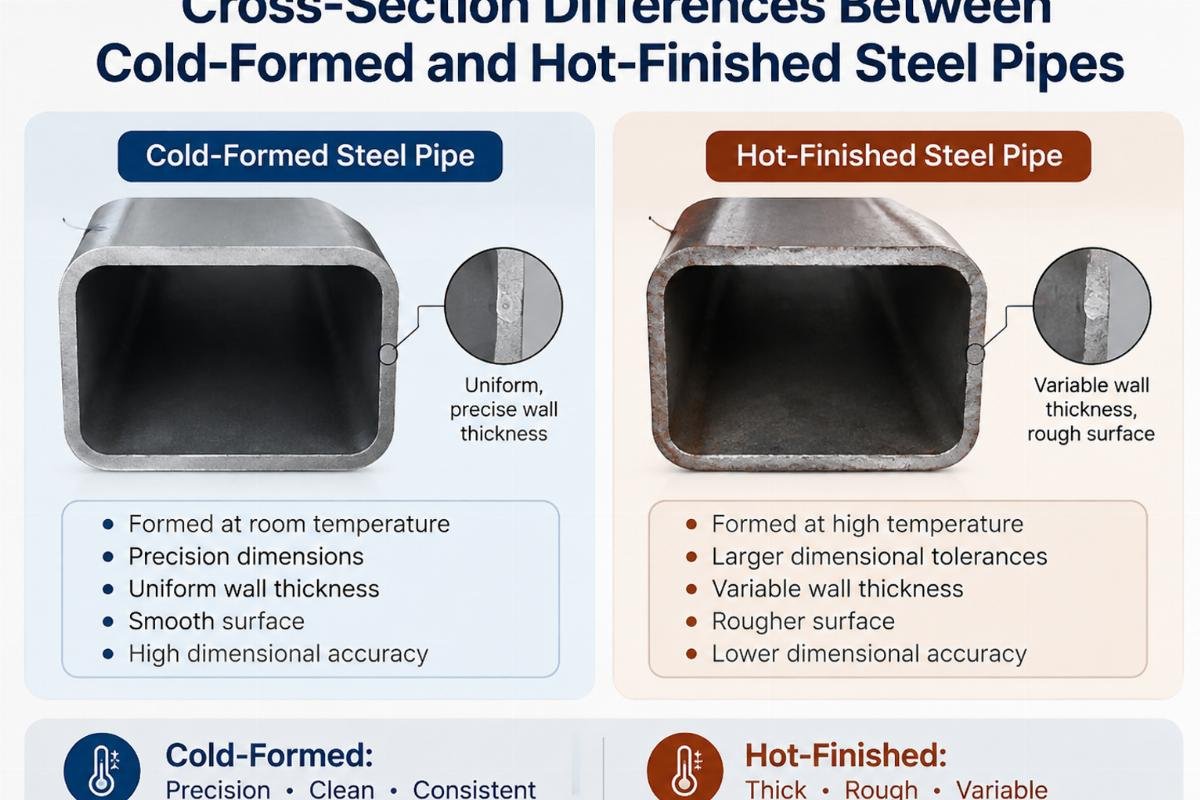
The visual difference is immediate. EN10219 sections offer crisp lines that architects favor for exposed structures. EN10210 sections provide robustness where load transfer is complex. Misidentifying EN10219 vs EN10210 steel pipe in tender documents leads to fabricators receiving materials that do not match their welding procedures or design assumptions.
How Do Tolerances Affect Your Project Fit?
Tolerance ranges are not universal across standards.
Buyers often assume wall thickness tolerance is a fixed industry constant. It is not. EN10210 allows tighter tolerances on heavy walls compared to EN10219, which is critical for high-load bearing columns where every millimeter of steel contributes to capacity. [NEED_CITE: tolerance classes for structural hollow sections per EN standards].
In Dar es Salaam, a buyer requested quotes based on EN10210 seamless specifications but accepted an EN10219 welded quote to reduce lead time. During warehouse inspection, the wall thickness variation exceeded the project’s strict acceptance criteria. The EN10219 standard permits a wider deviation in wall thickness for larger diameters. The discrepancy nearly caused a full rejection of the batch.
| Parameter | EN10219 Tolerance Characteristic | EN10210 Tolerance Characteristic |
|---|---|---|
| Outer Diameter | Standard commercial tolerance | Tighter precision for large diameters |
| Wall Thickness | Broader allowance, especially in thin walls | Stricter control for heavy walls |
| Straightness | Good, but subject to cold-forming springback | Superior due to hot-forming stability |
| Length | Standard cutting tolerance | High-precision cutting available |
For EPC contractors, this means that switching standards mid-project requires a re-evaluation of fit-up gaps. If a design assumes the tight outer diameter tolerance of EN10210, substituting EN10219 may result in alignment issues during assembly. [NEED_CITE: impact of dimensional tolerances on structural assembly].
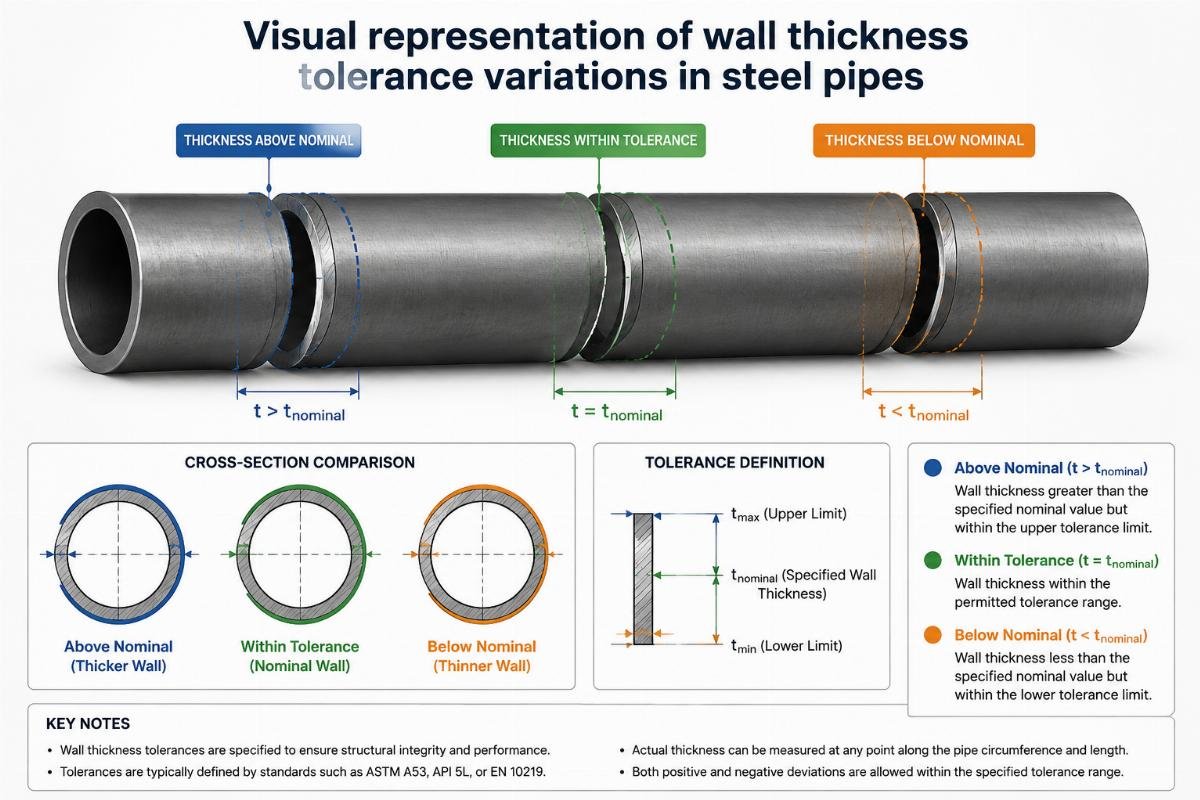
When specifying EN10219 vs EN10210 steel pipe, always cross-reference the tolerance class with the fabrication drawings. A slight deviation in outer diameter can prevent bolted connections from aligning, forcing expensive on-site modifications.
Why Does Documentation Matter for African Imports?
Paperwork discrepancies cause more delays than physical defects.
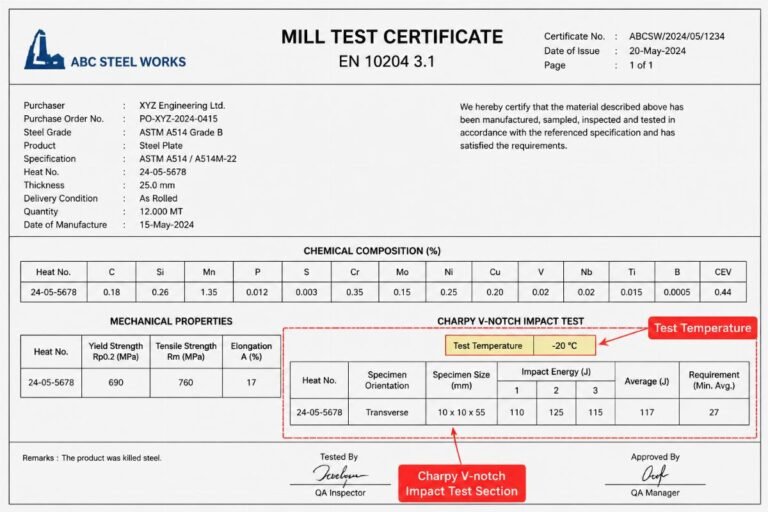
Customs authorities in markets like Nigeria and Kenya rely heavily on standardized descriptions. The SONCAP certification process in Nigeria requires exact matches between the product description on the certificate and the bill of lading. If the mill test certificate cites EN10219 but the import permit specifies EN10210, customs officials may detain the cargo for technical verification.
I recall a shipment where the mill certificate correctly identified the material as S355J2 under EN10219. However, the client’s local agent had filed the SONCAP request using generic “structural pipe” terminology without referencing the specific standard. The lack of precise standard code alignment triggered a manual inspection. The delay lasted two weeks, incurring demurrage charges that exceeded the freight cost. [NEED_CITE: common customs clearance issues for steel imports in West Africa].
To avoid this, ensure that all export documents—commercial invoice, packing list, bill of lading, and mill test certificate—uniformly reference the correct standard. Whether it is EN10219 vs EN10210 steel pipe, consistency is key. Manufacturers experienced in exporting to these regions prepare certificates that explicitly state the standard, grade, and heat number to facilitate smooth clearance.
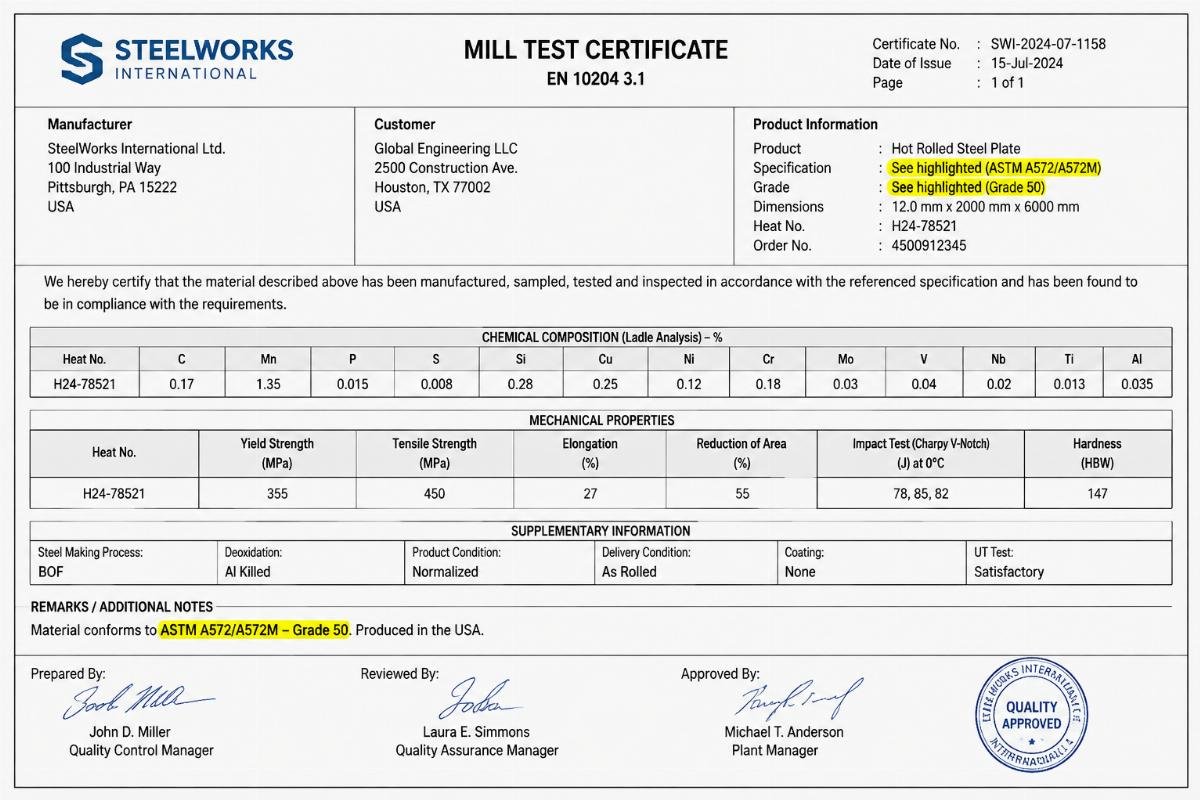
Procurement teams should verify that their suppliers understand these regional requirements. A factory-direct manufacturer with export experience will format documentation to meet local regulatory expectations, reducing the risk of port detention.
Which Standard Should You Choose for Structural Safety?
Load requirements dictate the standard, not availability.
For lightweight frameworks, such as mezzanine floors or non-load-bearing partitions, EN10219 offers sufficient strength and cost efficiency. Its cold-formed nature provides high yield strength due to work hardening, making it ideal for applications where weight savings are prioritized. [NEED_CITE: yield strength enhancement in cold-formed steel].
Conversely, for primary structural elements like bridge piers or high-rise building columns, EN10210 is preferable. The hot-finishing process eliminates residual stresses that can lead to unpredictable behavior under dynamic loads. The rounded corners also reduce stress concentrations, enhancing fatigue resistance.
| Application Scenario | Recommended Standard | Reason |
|---|---|---|
| Architectural Facades | EN10219 | Sharp corners, smooth finish |
| Heavy Load Columns | EN10210 | Tighter tolerances, lower residual stress |
| Scaffolding Systems | EN10219 | Cost-effective, sufficient strength |
| Bridge Structures | EN10210 | Superior ductility and fatigue performance |
| Warehouse Racking | EN10219 | High strength-to-weight ratio |
A European wind farm operator once specified EN10210 for tower bracing due to high cyclic loading concerns. Substituting EN10219 would have compromised the fatigue life of the structure. [NEED_CITE: fatigue performance of hot-finished vs cold-formed steel].
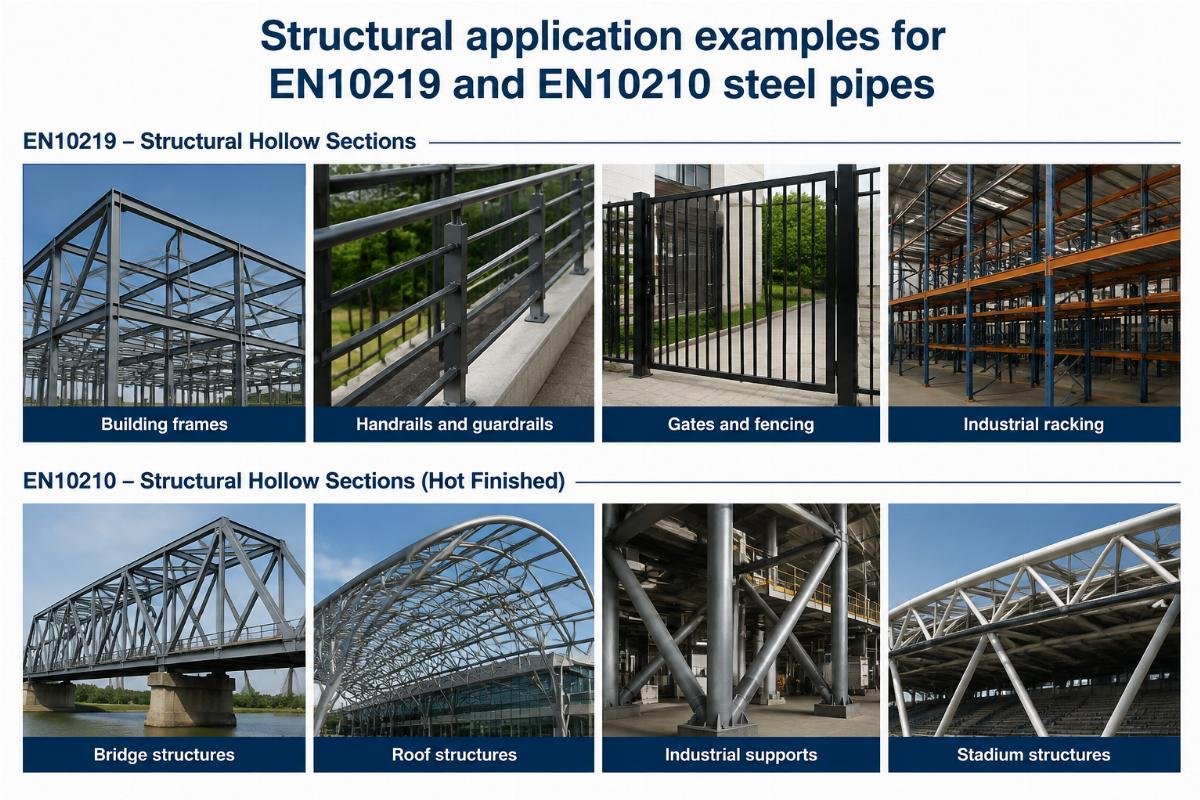
When evaluating EN10219 vs EN10210 steel pipe, consult with structural engineers to match the material properties to the load case. Do not default to the cheaper option without verifying its suitability for the specific stress environment.
Conclusion
Correct standard selection prevents technical and logistical failures.
EN10219 and EN10210 serve distinct structural roles defined by their manufacturing processes. EN10219 excels in architectural and lightweight applications with its sharp corners and cost efficiency, while EN10210 provides the robustness and tight tolerances required for heavy-load infrastructure. Aligning documentation with local import regulations ensures smooth customs clearance, particularly in strict markets like Nigeria. Choosing the right standard safeguards both structural integrity and project timelines.
Tags
Share this article
- LinkedIn -- share "EN10219 vs EN10210 Steel Pipe: EU-Certified Manufacturer for Sale" on LinkedIn
- X -- share "EN10219 vs EN10210 Steel Pipe: EU-Certified Manufacturer for Sale" on X
- Facebook -- share "EN10219 vs EN10210 Steel Pipe: EU-Certified Manufacturer for Sale" on Facebook
- WhatsApp -- share "EN10219 vs EN10210 Steel Pipe: EU-Certified Manufacturer for Sale" on WhatsApp
- Email -- share "EN10219 vs EN10210 Steel Pipe: EU-Certified Manufacturer for Sale" on Email

Written by
author
Editor covering global sourcing, supplier verification, and industrial product knowledge. Content is compiled from manufacturer specifications, industry standards, and hands-on experience with international B2B buyers. Every article is fact-checked before publishing to help procurement professionals make informed decisions.
All posts by author