Description
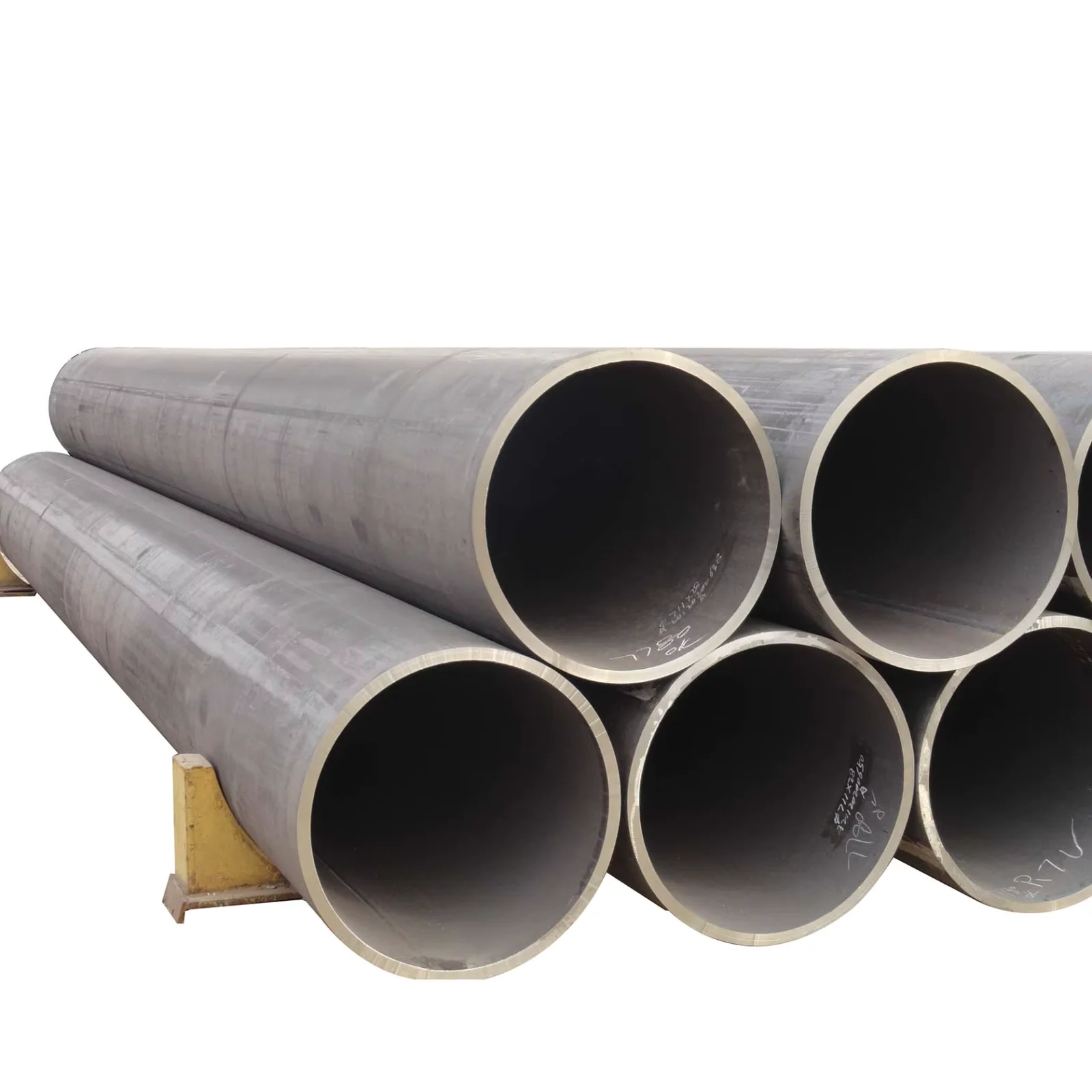
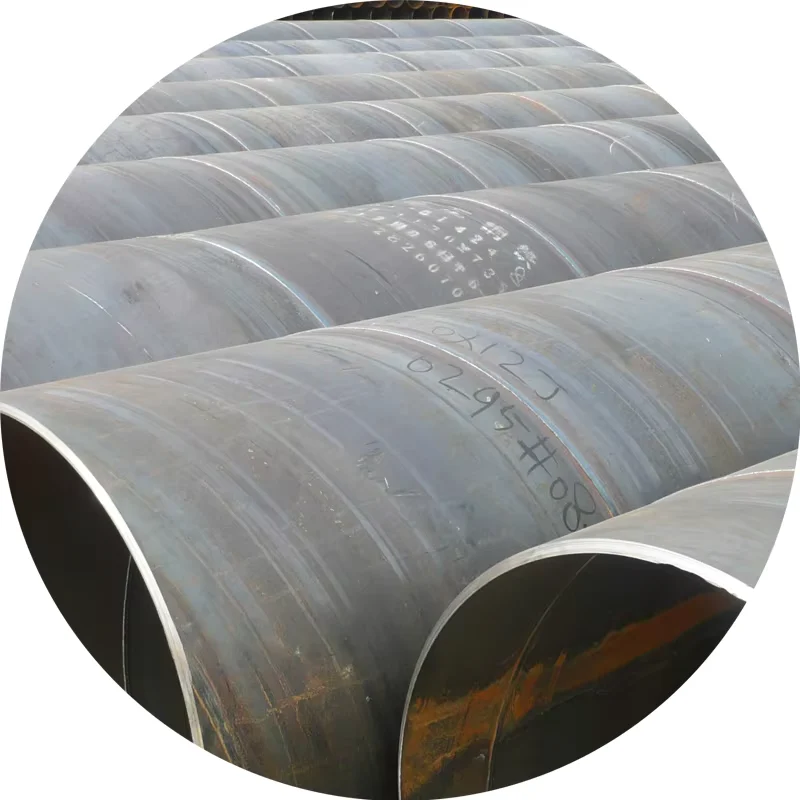
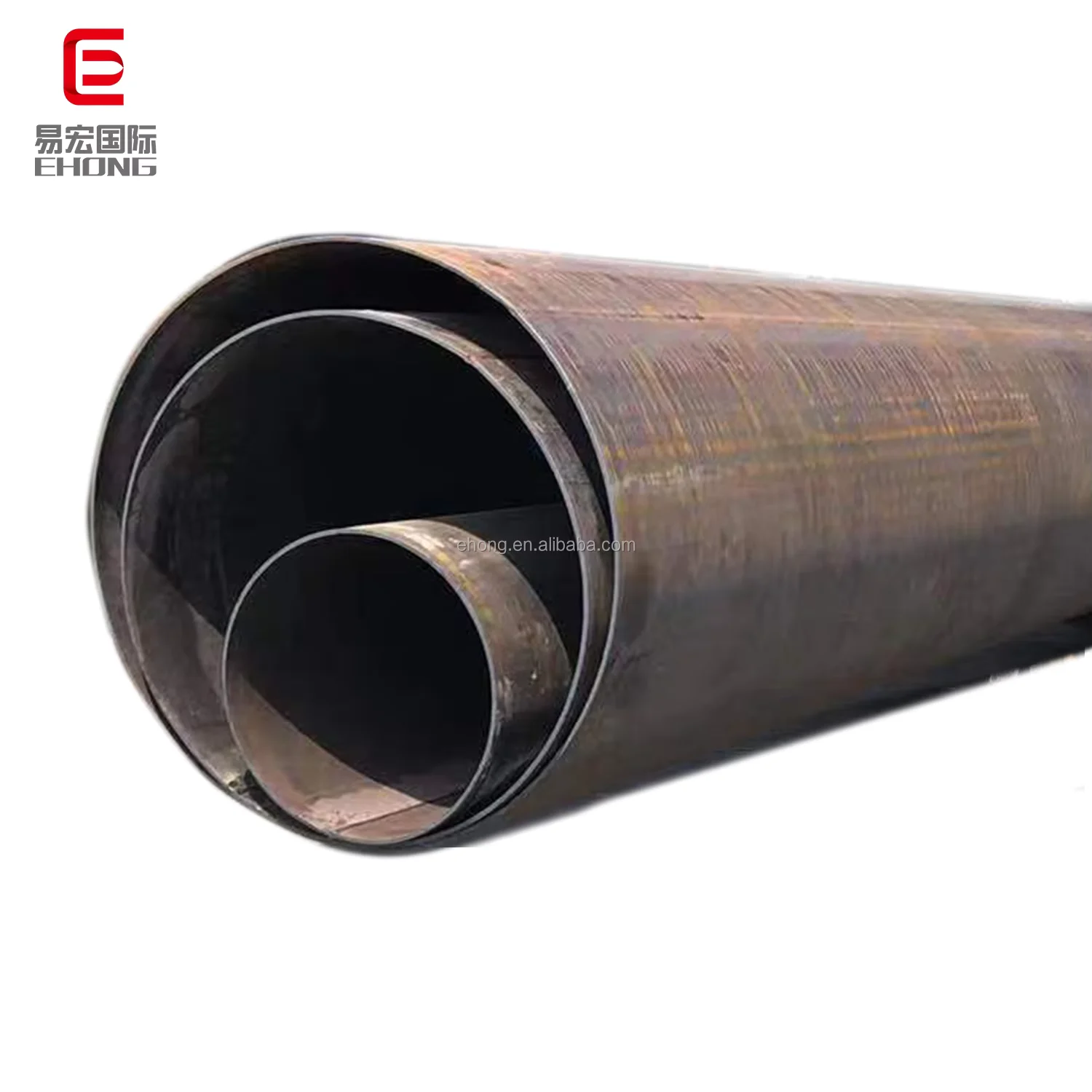
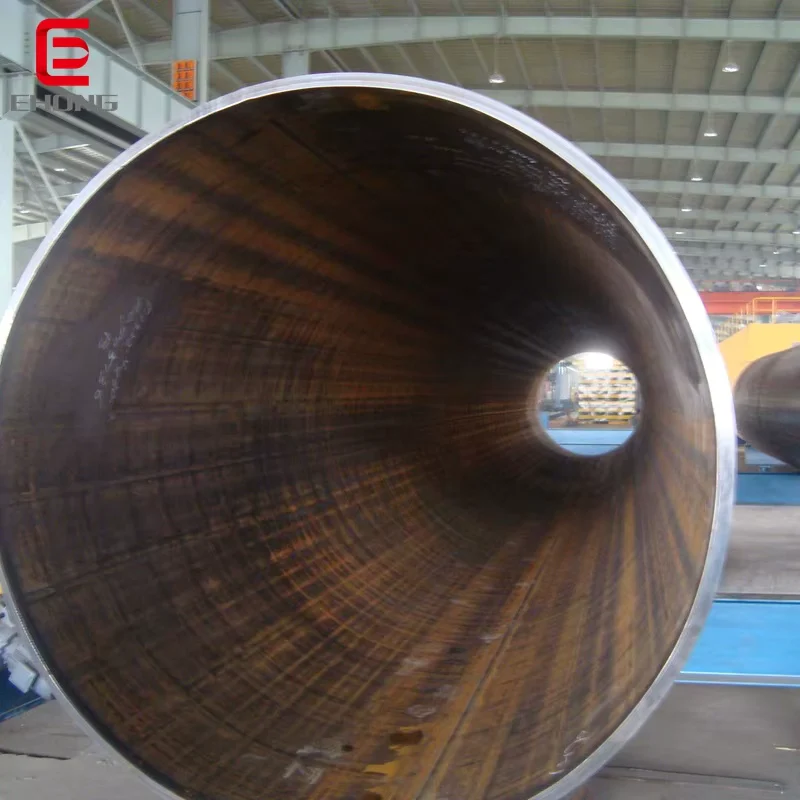
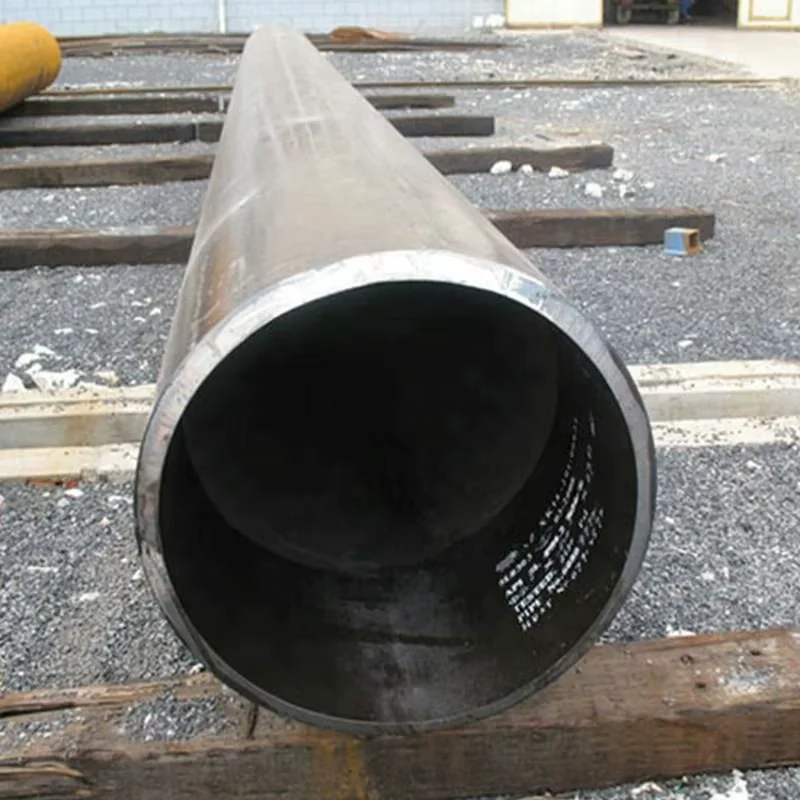
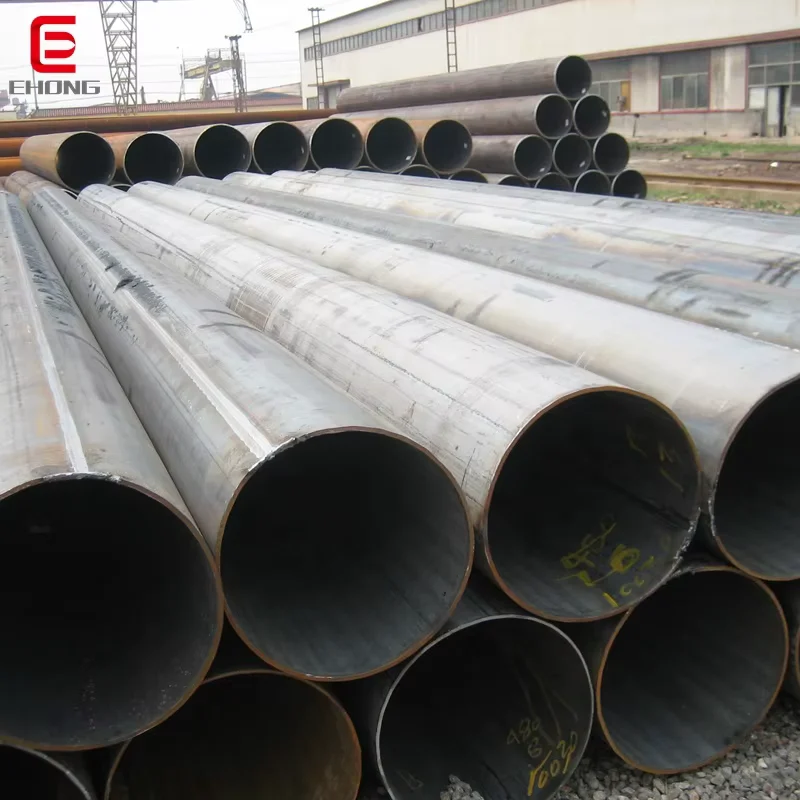
Direct Factory Supply for Large-Diameter LSAW Pipes — In-house JCOE/LSAW production line delivering OD 406–1524 mm round steel pipes with wall thickness up to 60 mm, shipped with EN 10204 3.1 mill test certificates per heat number.
Technical Specifications
| Parameter | Value |
|---|---|
| Designation | LSAW Round Steel Pipe |
| Product Type | Round Steel Pipe (JCOE/LSAW Welded Pipe) |
| Steel Grade | Q235B, S235JR, S235JOH, SS400, A36, A500 Gr.A, A500 Gr.B, A500 Gr.C, S275, S355, Q195, Q235, Q345 |
| Standard | EN10219, EN10210, EN39, BS1387, ASTM A53, ASTM A500, ASTM A36, API 5L, ISO 65, JIS G3444, DIN 3444, ANSI C80.1, AS 1074, GB/T 3091 |
| Section Shape | Round |
| Size Range | Outer Diameter 406–1524 mm |
| Wall Thickness | 8–60 mm |
| Length | 3–12 m (customizable) |
| Technique | LSAW (Longitudinal Submerged Arc Welded) |
| Surface Treatment | Oiled / Black Paint / Varnish Lacquer / Epoxy Painting / FBE Coating / 3PE Coating |
| Pipe End | Plain End / Bevel End |
| Tolerance | ±1% |
| Invoicing | By Actual Weight |
| Processing Service | Welding, Punching, Cutting, Bending |
| Application | Fluid transport, Gas pipeline, Oil pipeline, Structural applications, Large-diameter pipeline projects, Long-distance transmission pipelines |
| MOQ | Trial orders accepted via LCL |
| Origin | Shandong, China |
Application Suitability
| Industry | Typical Applications |
|---|---|
| Oil & Gas EPC | Onshore and offshore transmission pipelines, gathering lines, trunk pipelines for crude oil and natural gas |
| Municipal Infrastructure | Large-diameter water supply mains, sewage transfer lines, industrial cooling water circuits |
| Structural & Civil Engineering | Bridge foundation piles, piling columns for high-rise buildings, offshore platform support legs |
| Industrial Plant Construction | Process piping for petrochemical plants, power station boiler feed lines, mining slurry transport |
Where API 5L Certification Determines Whether Your Pipeline Shipment Clears Customs
Missing or incorrect API 5L grade marking on large-diameter LSAW pipes triggers customs rejection in regulated markets — not at the port of loading, but at destination inspection.
Procurement teams ordering LSAW steel pipe for oil and gas transmission frequently discover that the mill test certificate references an outdated API 5L edition, or that the heat number traceability does not match the physical stamping on the pipe. In Middle East and West African ports, customs authorities cross-check the EN 10210 or API 5L certificate against the packing list before releasing cargo. A single discrepancy — wrong grade designation, missing Charpy impact test data for S355JOH, or absent third-party inspection stamp — can hold an entire shipment for weeks. [NEED_CITE: API 5L specification requirements for line pipe steel grades]
How Large-Diameter LSAW Pipes Match High-Pressure Pipeline and Piling Requirements
LSAW steel pipe supplier capabilities matter most when project specifications demand wall thickness beyond what ERW lines can produce. The JCOE forming process used for OD 406–1524 mm pipes allows single-pass submerged arc welding on both inner and outer seams, producing weld integrity suitable for working pressures encountered in gas transmission and deep foundation piling. For offshore platform legs and bridge piles driven into seabed or riverbed substrates, the 8–60 mm wall range covers both structural load-bearing and corrosion allowance requirements without requiring field welding of thinner sections.
Engineering Compliance: Load-Bearing Standards, Corrosion Protection, and Certification Alignment
Structural piling and pipeline projects must comply with design codes such as EN 1993 for steel structures or API RP 2A for offshore platforms. The LSAW steel pipe supplier must provide test certificates confirming compliance with the specified standard — EN 10210 for hot-formed hollow sections in European structural work, API 5L for line pipe in oil and gas, or ASTM A500 for structural hollow sections in North American construction. Surface treatment selection depends on the operating environment: 3PE coating provides mechanical damage resistance for buried pipelines, FBE offers chemical resistance for industrial plant piping, and epoxy painting suits above-ground structural columns in moderate corrosion zones. Bevel-ended pipes facilitate field welding for pipeline continuity, while plain ends serve piling applications where driving caps are used. [NEED_CITE: EN 10210 hot-finished structural hollow sections technical delivery conditions]
Steel Grade Selection and LSAW Welding Process Fundamentals
The LSAW steel pipe supplier produces pipes across multiple steel grade systems — Q-series (Chinese GB), S-series (European EN), and ASTM grades (North American) — each with distinct yield strength tiers. S235JR serves general structural applications where moderate load capacity suffices, while S355 and Q345 provide higher yield strength for heavy-load piling and pressure-containing pipeline segments. API 5L Gr.B and X42/X52 grades address oil and gas transmission requirements with specified minimum yield strengths and mandatory Charpy impact testing for low-temperature service. The submerged arc welding process deposits filler metal under granular flux, producing deep penetration and low hydrogen content in the weld zone — critical for avoiding cold cracking in thick-wall pipes exceeding 25 mm. Surface treatment options including 3PE (three-layer polyethylene), FBE (fusion-bonded epoxy), and epoxy painting address different corrosion environments, from buried sour service pipelines to above-ground structural columns in coastal atmospheres.
The Hidden Cost of Negative Tolerance Abuse in Large-Diameter Pipe Procurement
Ordering LSAW steel pipe by theoretical weight while accepting unrestricted negative tolerance creates a cascade of problems: actual wall thickness falls below design minimum, structural load capacity drops, and third-party inspection at destination rejects the shipment. In piling applications, under-wall pipes buckle during driving; in pressure pipelines, they fail hydrostatic testing. The cost of replacing rejected pipes — including demurrage, re-shipping, and project delay penalties — far exceeds the initial price saving from tolerance abuse. [NEED_CITE: EN 10210 dimensional tolerance requirements for hot-finished structural hollow sections]
Why Project Procurement Teams Source LSAW Pipe From Our Jinan Facility
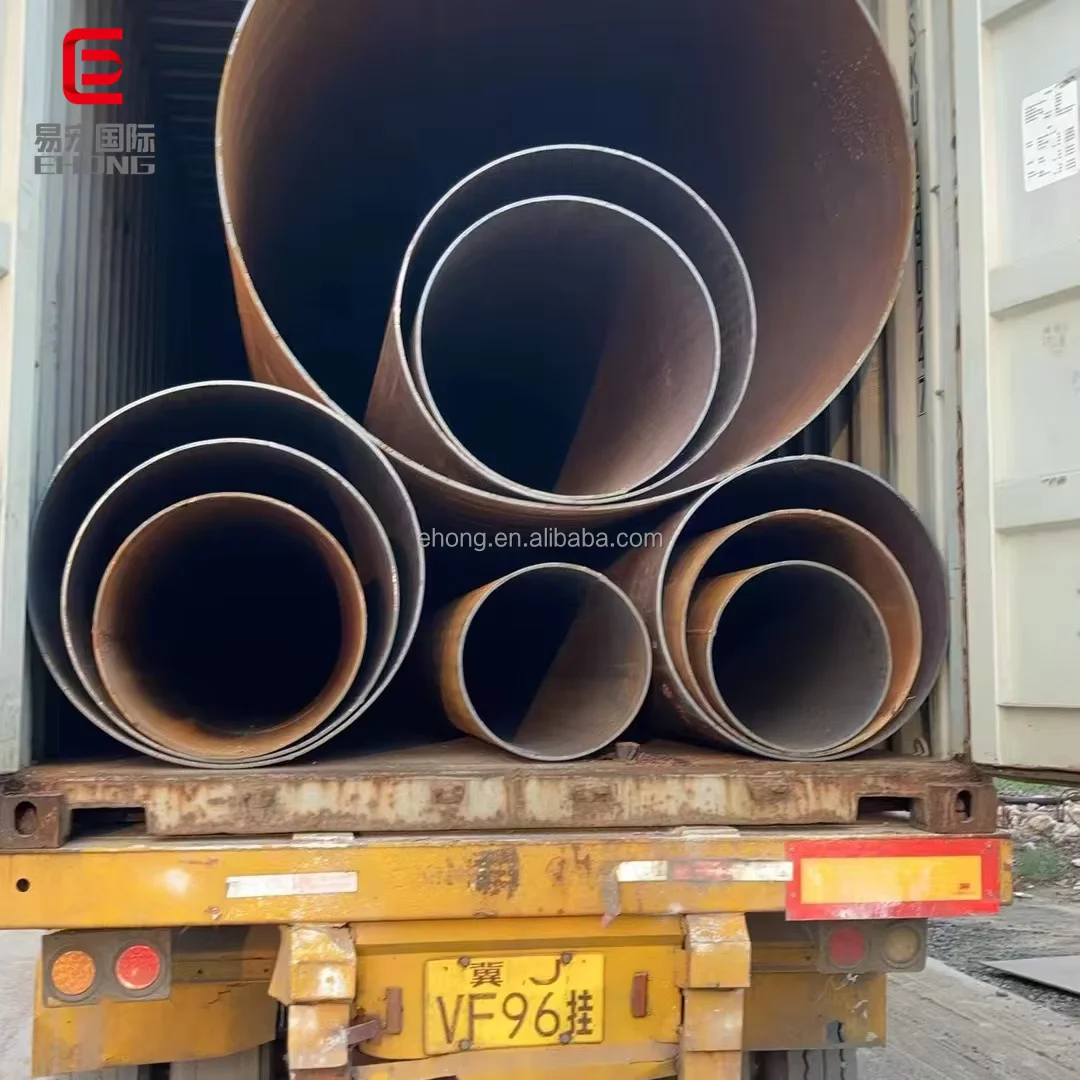
Our JCOE/LSAW production line covers the full OD 406–1524 mm and 8–60 mm wall thickness range, eliminating the need to split orders across multiple mills for different size segments. The in-house physical and chemical laboratory performs dimensional verification, tensile testing, Charpy impact testing, and chemical composition analysis before shipment — every heat number carries a corresponding mill test certificate. Full international certification including Lloyd’s CE marking to EN 10210/EN 10219, API 5L, and ISO 9001:2015 ensures customs clearance in EU, Middle East, and North American markets. Third-party inspection by SGS, BV, or Lloyd’s is arranged on request for projects requiring independent verification. Professional container and bulk vessel loading with anti-damage measures — including internal bracing for large-diameter pipes and edge protectors for coated surfaces — prevents transit damage that triggers destination rejection. Custom non-standard sizes, cut-to-length service, and bevel-end preparation reduce field fabrication time at the project site.
Documentation & Compliance
- Mill test certificate documenting Q345B chemical composition and yield strength per GB/T 1591, or S355JR mechanical properties per EN 10210, issued per heat number
- CE certificate confirming compliance with EN 10210 for hot-finished structural hollow sections, required for EU market construction projects
- API 5L certificate validating grade B or higher line pipe for oil and gas transmission pipelines, including PSL1 or PSL2 requirements
- ISO 9001:2015 quality management system certificate covering the full LSAW pipe production process
- SGS or BV third-party inspection report confirming dimensional accuracy, weld seam quality, and coating thickness for project-specific requirements
- Export customs documentation including packing list, bill of lading, and certificate of origin for destination clearance
Packaging, Loading & Delivery
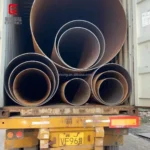
- Large-diameter LSAW pipes (OD 406–1524 mm) loaded in bulk vessel or flat-rack containers with internal steel bracing to prevent rolling and ovality during ocean transit
- 3PE and FBE coated pipes wrapped with protective film and separated by rubber pads to prevent coating abrasion from contact with adjacent pipes or steel straps
- Bevel-ended pipes fitted with plastic end caps to protect bevel geometry and prevent moisture ingress during storage and transport
- Cut-to-length service available for 3–12 m pipes, with bundle weight optimized for 20-foot and 40-foot container payload limits
- Heat number and steel grade stenciled on each pipe end, with bundle tags matching the mill test certificate for traceability at destination
- FOB Jinan/Qingdao, CIF destination port, or DDP project site delivery terms available, with full export documentation for customs clearance
Request Quotation With Mill Test Certificate for Your LSAW Pipe Specification
Submit your project specification including outer diameter, wall thickness, steel grade, surface treatment, quantity, and destination port to receive a detailed quotation with unit price, production lead time, and shipping terms. We provide mill test certificates and third-party inspection reports for review before contract signing, ensuring full compliance with your project’s technical and certification requirements.
Get Your LSAW Pipe Quote With Full Certification Package
Send your specification to admin@sdxjypipe.com or contact via WhatsApp at +86 188 5315 7756 for quotation and technical clarification within 12 hours.
Frequently Asked Questions
Q: What is the difference between API 5L Gr.B and ASTM A53 Gr.B for LSAW pipe?
A: API 5L Gr.B is specified for line pipe service in oil and gas transmission, with mandatory hydrostatic testing and optional Charpy impact requirements for low-temperature service. ASTM A53 Gr.B covers general structural and low-pressure fluid conveyance, with less stringent testing requirements. For high-pressure gas pipelines, API 5L Gr.B or higher grades (X42, X52) are required; for structural piling or water mains, ASTM A53 Gr.B or S235JR suffices.
Q: Can you produce LSAW pipes with 3PE coating for buried sour service pipelines?
A: Yes, we provide 3PE (three-layer polyethylene) coating for LSAW pipes in OD 406–1524 mm and wall thickness 8–60 mm. The 3PE system includes FBE primer, copolymer adhesive, and polyethylene outer layer, providing mechanical damage resistance and cathodic disbondment protection for buried pipelines in sour service environments. Coating thickness and adhesion testing per DIN 30670 or CSA Z245.21 is included in the mill test certificate.
Q: What is the maximum wall thickness your LSAW line can produce?
A: Our JCOE/LSAW production line covers wall thickness up to 60 mm for OD 406–1524 mm pipes. For wall thickness exceeding 40 mm, single-pass submerged arc welding on both inner and outer seams ensures full penetration and weld integrity. Heavy-wall pipes in Q345B, S355, or API 5L X52 grades are suitable for deep-water piling, high-pressure gas transmission, and offshore platform structural applications.
Q: Do you provide third-party inspection for LSAW pipe orders?
A: Yes, we arrange third-party inspection by SGS, BV, or Lloyd’s at our facility before shipment. The inspection covers dimensional verification, visual weld seam examination, coating thickness measurement, and review of mill test certificates. Inspection reports are issued directly to the buyer and included in the export documentation package for customs clearance at destination.
Q: How do you handle negative tolerance for LSAW pipes?
A: We produce LSAW pipes to the dimensional tolerance specified in the applicable standard — EN 10210 for structural hollow sections, API 5L for line pipe, or ASTM A53 for general service. Wall thickness tolerance is controlled to ensure minimum thickness meets the design requirement, not just nominal thickness. For projects requiring strict tolerance control, we provide ultrasonic thickness measurement reports for every pipe, confirming actual wall thickness at multiple points around the circumference.