

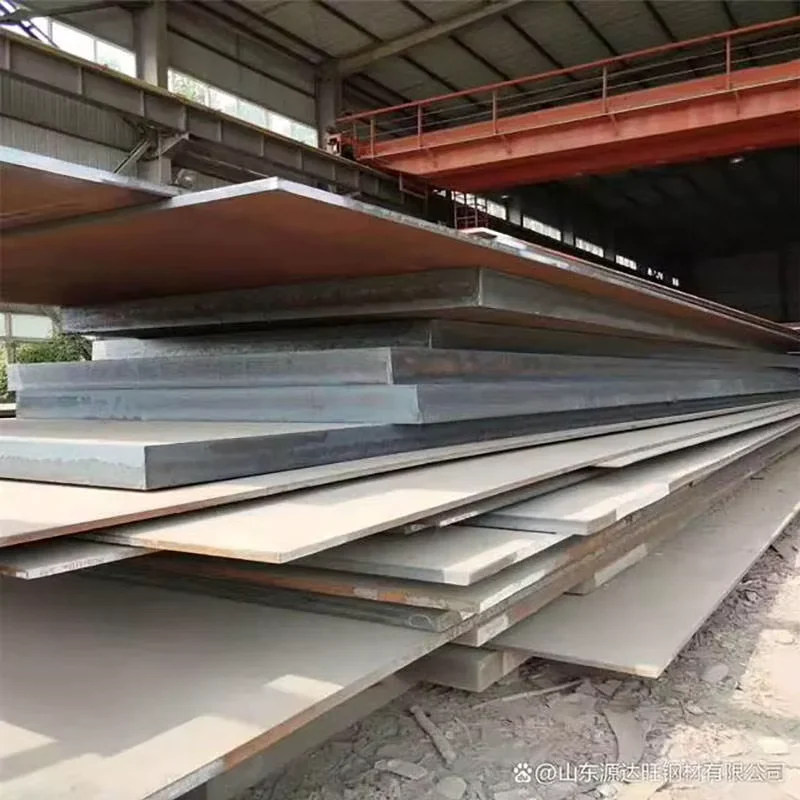



Description
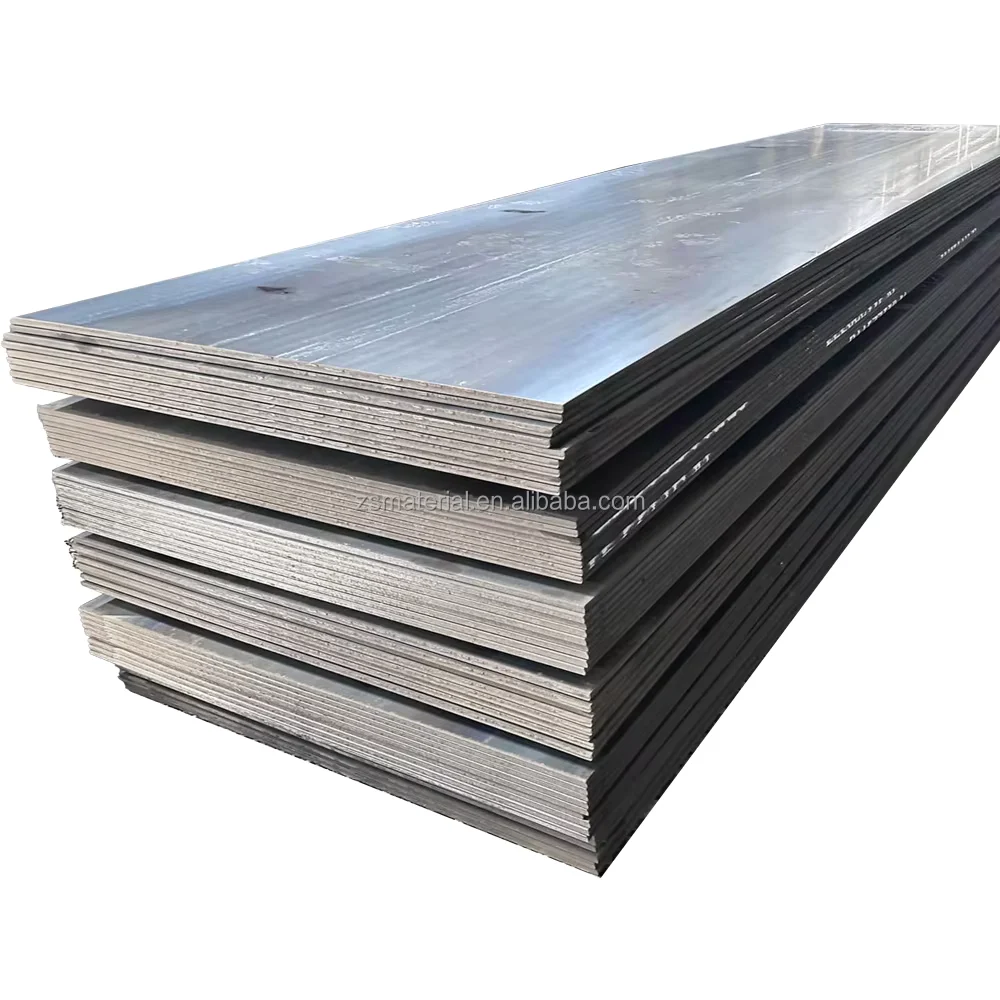
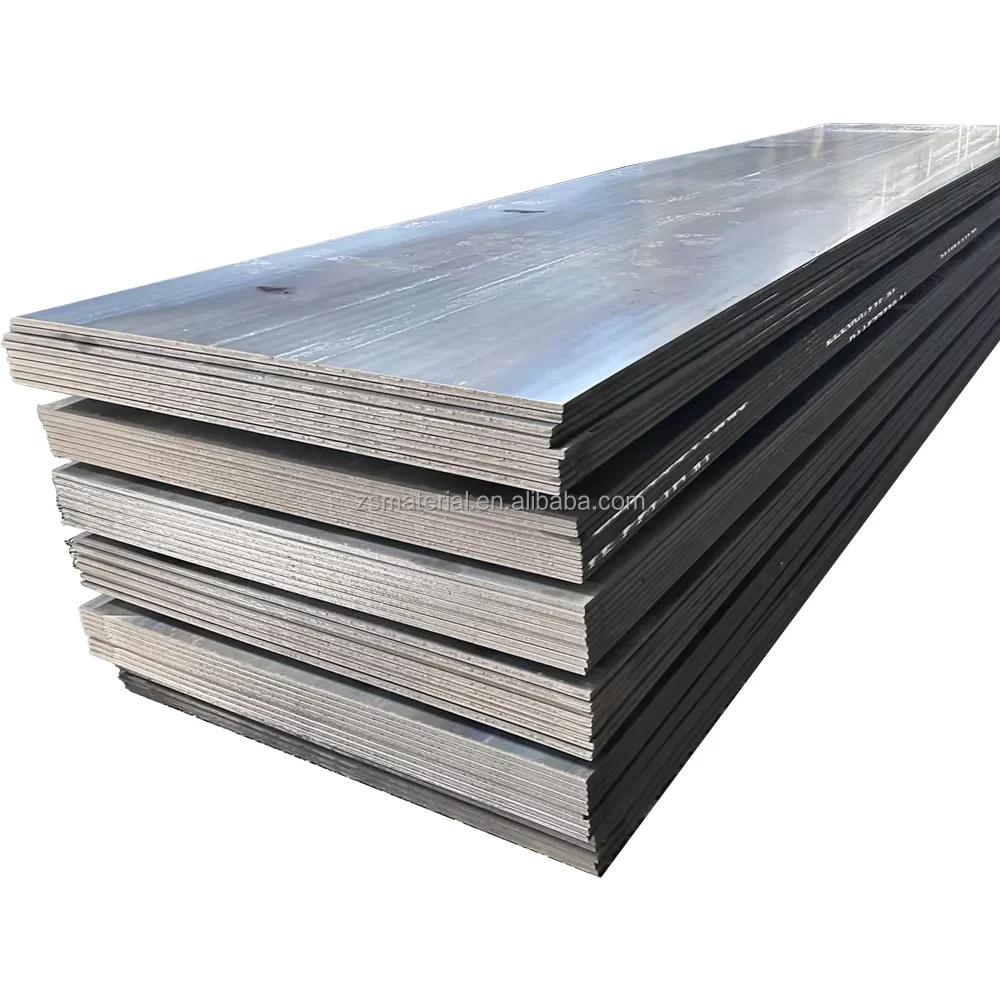
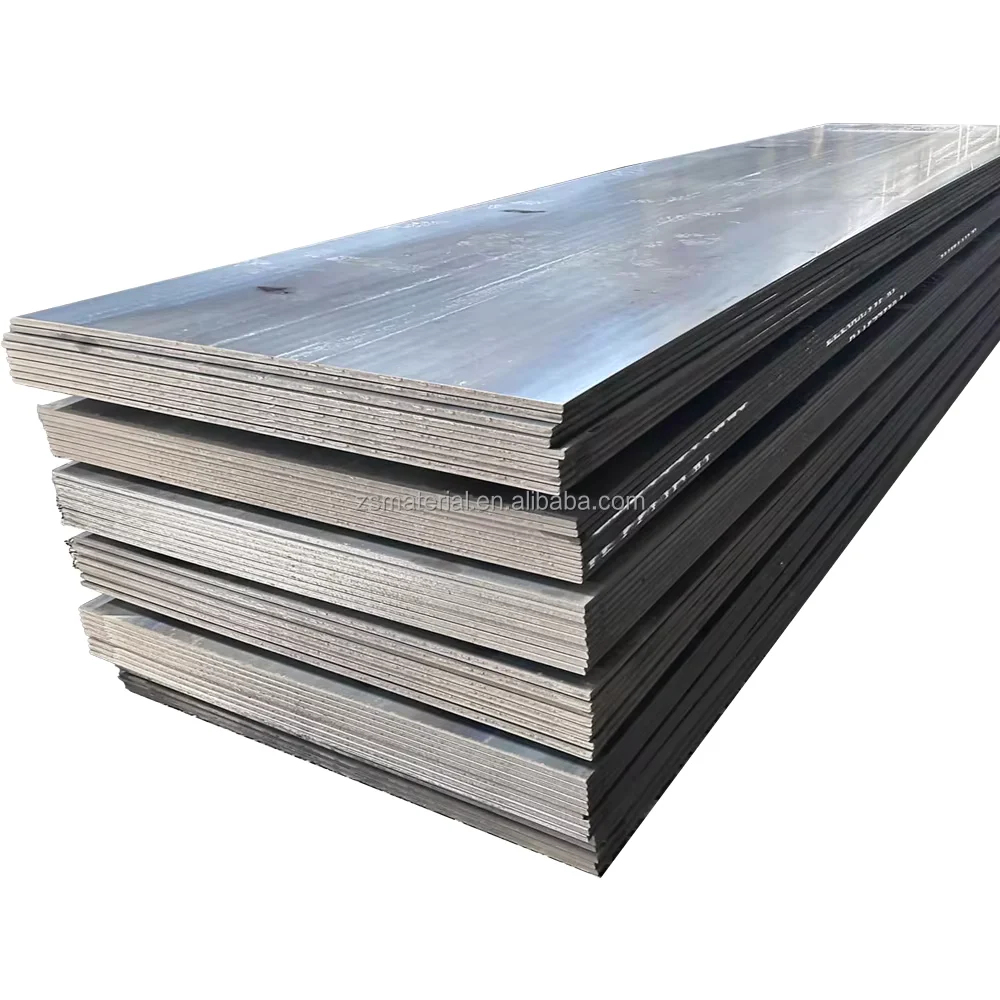
Factory-direct hot rolled plates — In-house physical and chemical laboratory verifies every heat number against JIS G3101, GB/T 700, and ASTM A36 before shipment.
Technical Specifications
| Parameter | Value |
|---|---|
| Designation | SS400/Q235/A36 Hot Rolled Carbon Steel Plate |
| Product Type | Steel Plate |
| Steel Grade | SS400, Q235, A36, St52 |
| Standard | JIS G3101 (SS400), GB/T 700 (Q235), ASTM A36, DIN EN 10025 (St52) |
| Thickness | 3–200 mm |
| Width | 1500 mm |
| Length | 6000 mm |
| Technique | Hot Rolled |
| Surface Treatment | Hot Rolled (mill scale) |
| Application | Shipbuilding, structural fabrication, welding & cutting processing |
| Custom Sizes | Available upon request |
| Origin | Shandong, China |
Application Suitability
| Industry | Typical Applications |
|---|---|
| Shipbuilding | Deck plating, bulkhead frames, marine structural members |
| Construction & Infrastructure | Column base plates, bridge gusset plates, building frame connections |
| Machinery Manufacturing | Equipment base plates, crane boom sections, press brake beds |
| Steel Fabrication | Welded I-beam flanges, bracket plates, gusset and node plates |
Why Chemical Composition Verification Matters More Than Grade Labels on Carbon Plates
A mill test certificate showing actual heat-by-heat chemistry is the only reliable proof that SS400 is not secretly Q235B.
Ordering hot rolled carbon steel plates across different standard systems creates a persistent risk: suppliers label material as SS400 or A36 based on mechanical test results alone, while the actual carbon and manganese content may fall into a lower grade range. I once handled a shipment of SS400 plates destined for Jebel Ali — SGS re-inspection at the port revealed the carbon-manganese chemistry only satisfied Q235B requirements, and the entire container was rejected. The buyer lost a port authority contract because nobody verified the chemistry against the declared standard before loading. When sourcing a SS400 Q235 A36 hot rolled carbon steel plate supplier, the critical question is not what grade is stamped on the plate, but what the mill test certificate actually shows for each heat number [NEED_CITE: chemical composition requirements for SS400 vs Q235 equivalence].
Matching Plate Thickness and Grade to Structural Load Paths
Hot rolled carbon steel plates in the 3–200 mm thickness range cover virtually every structural demand from light bracing brackets to heavy column base plates. For shipbuilding applications, SS400 plates in the 6–20 mm range provide adequate formability for curved deck sections while meeting JIS G3101 tensile requirements. In structural fabrication, Q235 and A36 plates above 20 mm thickness serve as welded connection nodes where through-thickness loading demands verified chemistry. As a SS400 Q235 A36 hot rolled carbon steel plate supplier with in-house testing capability, we verify every heat number against the declared standard before release — no reliance on supplier word alone.
Engineering Compliance and Certification Requirements
Structural plates for export projects must satisfy both the material standard and the destination market’s regulatory framework. Plates conforming to ASTM A36 require proper documentation for North American projects, while SS400 plates under JIS G3101 are specified across Southeast Asian and Middle Eastern infrastructure works [NEED_CITE: steel grade equivalence between JIS, GB, and ASTM systems]. For European buyers, St52 plates under DIN EN 10025 must carry CE marking with EN 10204 3.1 type certificates. Thickness tolerance compliance becomes critical when plates above 40 mm are used in moment connections — undersized plates compromise bolt preload and weld throat dimensions. Our physical and chemical laboratory tests every batch for dimensional accuracy, tensile properties, and chemical composition before issuing the mill test certificate.
Understanding Grade Equivalence Across SS400, Q235, A36, and St52
These four grades represent the most commonly ordered hot rolled carbon steel plates globally, yet they belong to different national standard systems with subtly different chemistry and mechanical thresholds. SS400 under JIS G3101 specifies minimum tensile strength of 400 MPa with no explicit yield point requirement, making it suitable for general structural use where forming matters more than precise yield control. Q235 under GB/T 700 defines yield strength at 235 MPa for thicknesses up to 16 mm, with decreasing values for heavier plates — a critical distinction often overlooked in cross-border orders. A36 under ASTM specifies 250 MPa minimum yield with 400–550 MPa tensile range, while St52 under DIN EN 10025 offers higher strength at 355 MPa yield for demanding structural applications. Selecting the correct SS400 Q235 A36 hot rolled carbon steel plate supplier who understands these distinctions prevents material substitution errors at customs or on-site inspection.
Hidden Costs of Incorrect Grade Selection and Missing Documentation
Ordering plates without verified chemistry creates compounding risks: material that passes visual inspection at the mill may fail SGS re-testing at destination, triggering container rejection and demurrage charges. Plates supplied without proper EN 10204 3.1 certificates cannot clear EU customs, regardless of actual material quality. Thickness deviations beyond standard tolerance force on-site re-machining or structural redesign, delaying project timelines significantly [NEED_CITE: EN 10025 dimensional tolerance requirements for hot rolled plates]. The true cost of choosing the wrong SS400 Q235 A36 hot rolled carbon steel plate supplier is measured not in price per ton, but in rejected shipments, failed inspections, and lost contracts.
Procurement Confidence Through Verified Testing and Full-Chain Control
Our in-house physical and chemical laboratory performs spectrometer analysis, tensile testing, and Charpy impact testing on every heat — the same equipment that port SGS inspectors use. We hold ISO 9001:2015 certification, Lloyd’s Register CE marking for EN 10210/10219 products, and Singapore FPC certification, with SGS and BV third-party inspection available before shipment. Custom non-standard sizes are produced to order with full dimensional and chemical verification, eliminating the specification gaps that force buyers to source from multiple suppliers. Professional container loading with anti-damage measures ensures plates arrive without edge deformation or surface scoring — a detail that matters when plates must fit precision weld joints on arrival.
Documentation & Compliance
- Mill test certificate documenting SS400 chemical composition (C, Mn, Si, P, S) and tensile properties per JIS G3101, issued per heat number
- Mill test certificate for Q235 plates showing yield strength and elongation values per GB/T 700 with EN 10204 3.1 format
- A36 plates certified per ASTM A36/A36M with chemical composition and mechanical test results traceable to heat number
- St52 plates with CE declaration of conformity per EN 10025 and EN 10204 3.1 type inspection certificate
- SGS or BV third-party inspection report available upon request, covering dimensional checks, visual inspection, and witness testing
- Full export documentation set: commercial invoice, packing list, bill of lading, and certificate of origin
Packaging, Loading & Delivery
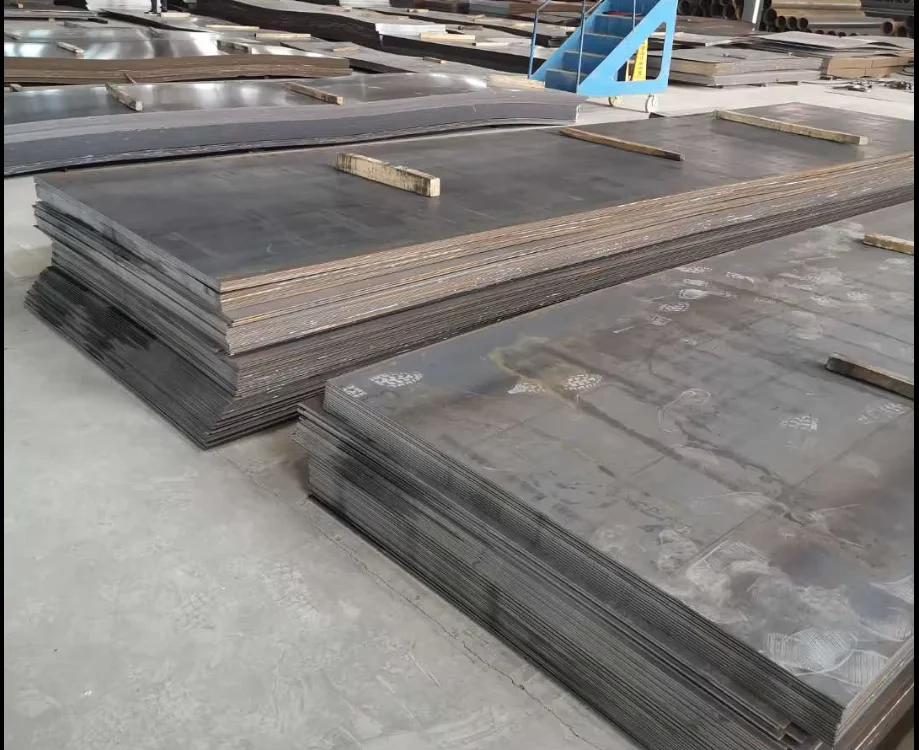
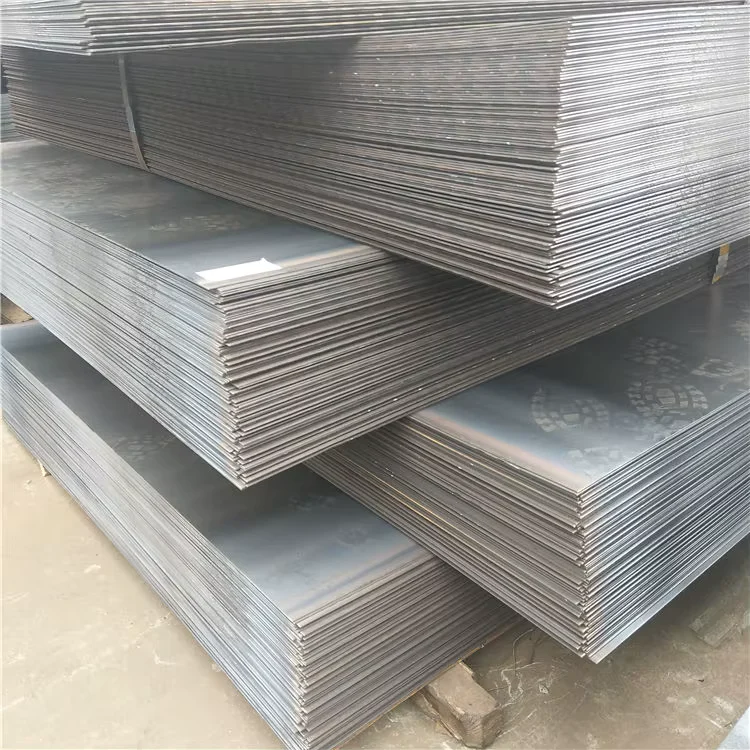
- Hot rolled plates bundled with steel strips and edge protectors to prevent mill scale spalling and edge damage during ocean transit
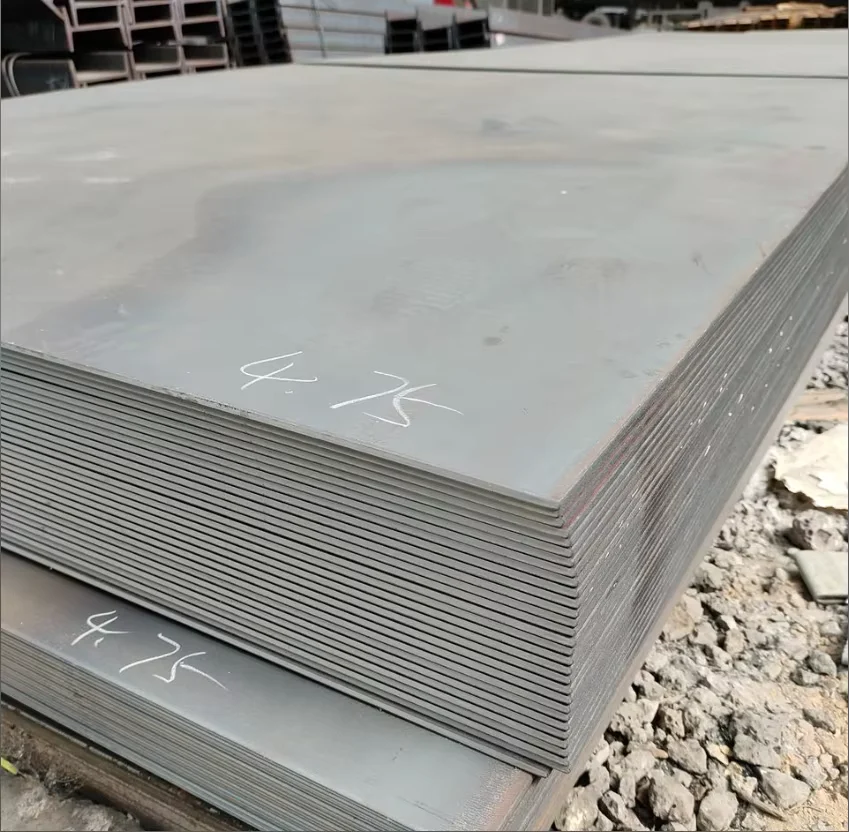
- Plates sorted by heat number and grade with stenciled identification on each piece for on-site traceability
- Custom-cut plates to specified dimensions reduce on-site processing waste and improve container utilization for 6000 mm standard lengths
- 1500 mm width plates loaded with timber dunnage separation to distribute weight evenly and prevent shifting in 20ft and 40ft containers
- Surface protection with anti-rust oil available upon request for plates requiring extended storage before fabrication
- FOB, CIF, and DDP shipping terms available with complete export documentation and container tracking until destination port
Getting Your Quote with Full Material Verification
Submit your plate specifications including grade (SS400, Q235, A36, or St52), thickness, width, length, quantity, and destination port — we respond within 12 hours with unit pricing, lead time, and shipping terms. For non-standard dimensions or heavy plates above 40 mm, we provide custom production schedules with mill test certificate samples for your approval before order confirmation. Third-party inspection by SGS or BV can be arranged at our facility before container sealing.
Frequently Asked Questions
Q: What is the difference between SS400, Q235, A36, and St52 in terms of chemical composition?
A: SS400 under JIS G3101 focuses on tensile strength (minimum 400 MPa) with no explicit yield requirement. Q235 under GB/T 700 specifies yield strength at 235 MPa for plates up to 16 mm. A36 under ASTM requires 250 MPa minimum yield with 400–550 MPa tensile range. St52 under DIN EN 10025 offers 355 MPa yield strength. Chemical composition limits for carbon, manganese, silicon, phosphorus, and sulfur vary across these standards, which is why heat-by-heat mill test certificates are essential for verification.
Q: Can you provide custom-cut plates to non-standard dimensions?
A: Yes, we produce custom sizes beyond the standard 1500 mm × 6000 mm format. Custom cutting is available for both width and length to reduce on-site processing waste. Non-standard thicknesses within the 3–200 mm range can be rolled to order with full dimensional and chemical verification.
Q: What mill test certificate format do you provide?
A: We issue mill test certificates per EN 10204 3.1 standard, documenting chemical composition and mechanical properties for each heat number. Certificates are available for all grades including SS400, Q235, A36, and St52, with full traceability from raw material to finished plate.
Q: Do you offer third-party inspection before shipment?
A: Yes, SGS and BV third-party inspections are available upon request. Inspections cover dimensional verification, visual surface inspection, witness testing, and documentation review. Inspection reports are provided before container sealing.
Q: What is the minimum order quantity for custom sizes?
A: MOQ varies by grade and thickness. Standard sizes in SS400, Q235, A36, and St52 are available from stock with flexible quantities. Custom sizes and non-standard thicknesses may require minimum production tonnage — please submit specifications for exact MOQ confirmation.
Get Your SS400 Q235 A36 Hot Rolled Carbon Steel Plate Quote with Mill Test Certificates
Send your plate specifications, grade requirements, and destination port to receive pricing, lead time, and sample mill test certificates within 12 hours.
Company: Shandong Xin Jiyuan Special Steel Tube Co., Ltd
Tel: +86 531 8573 6315
Mobile/WhatsApp/WeChat: +86 188 5315 7756
Email: admin@sdxjypipe.com