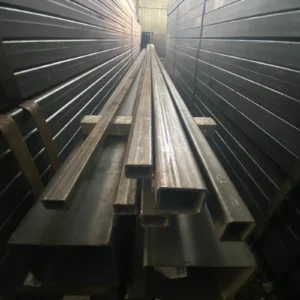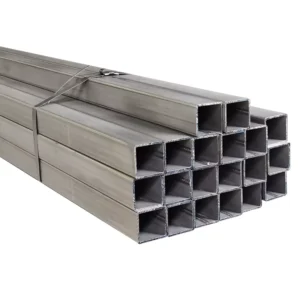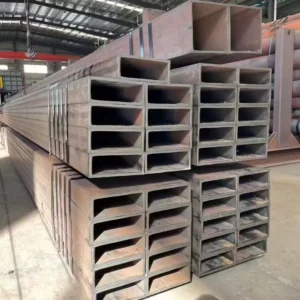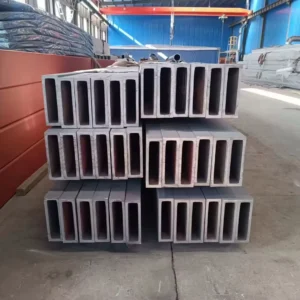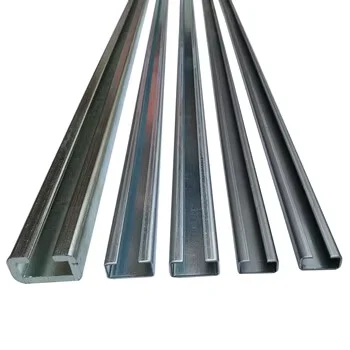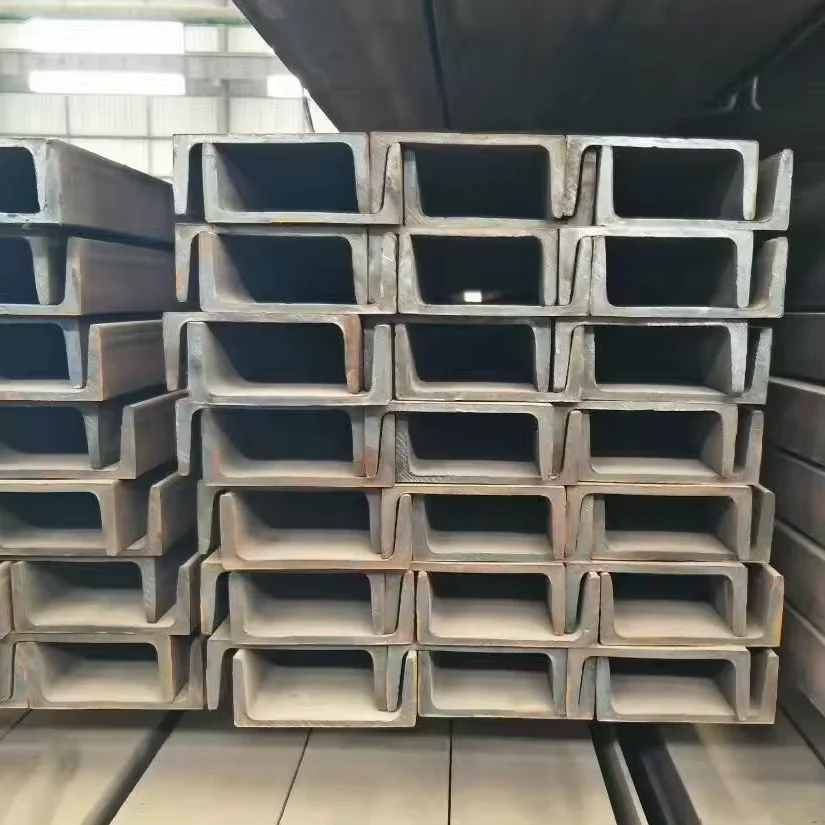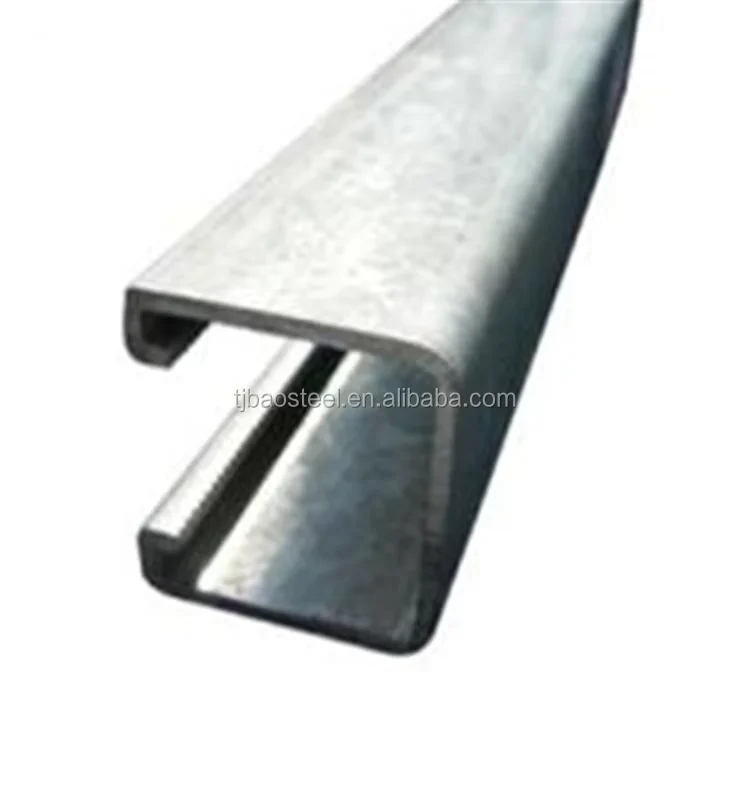
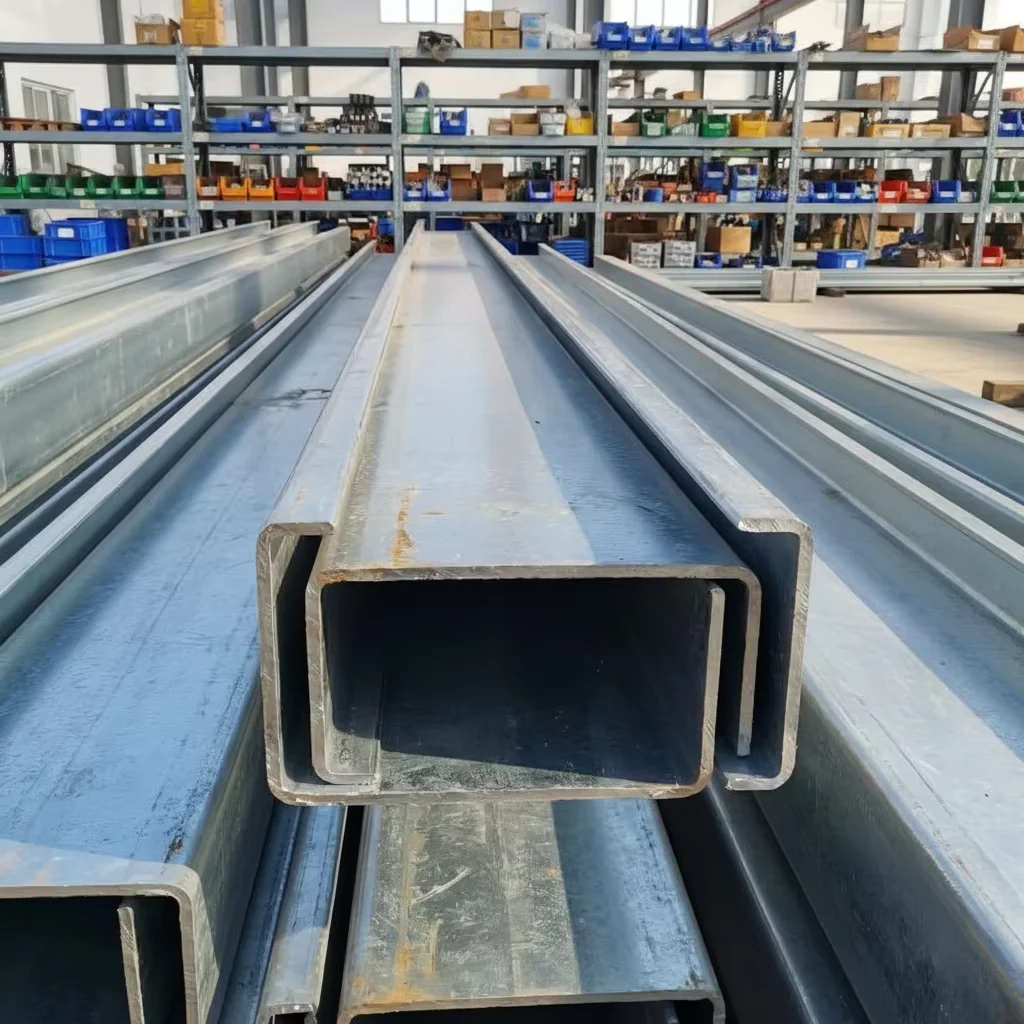


Description
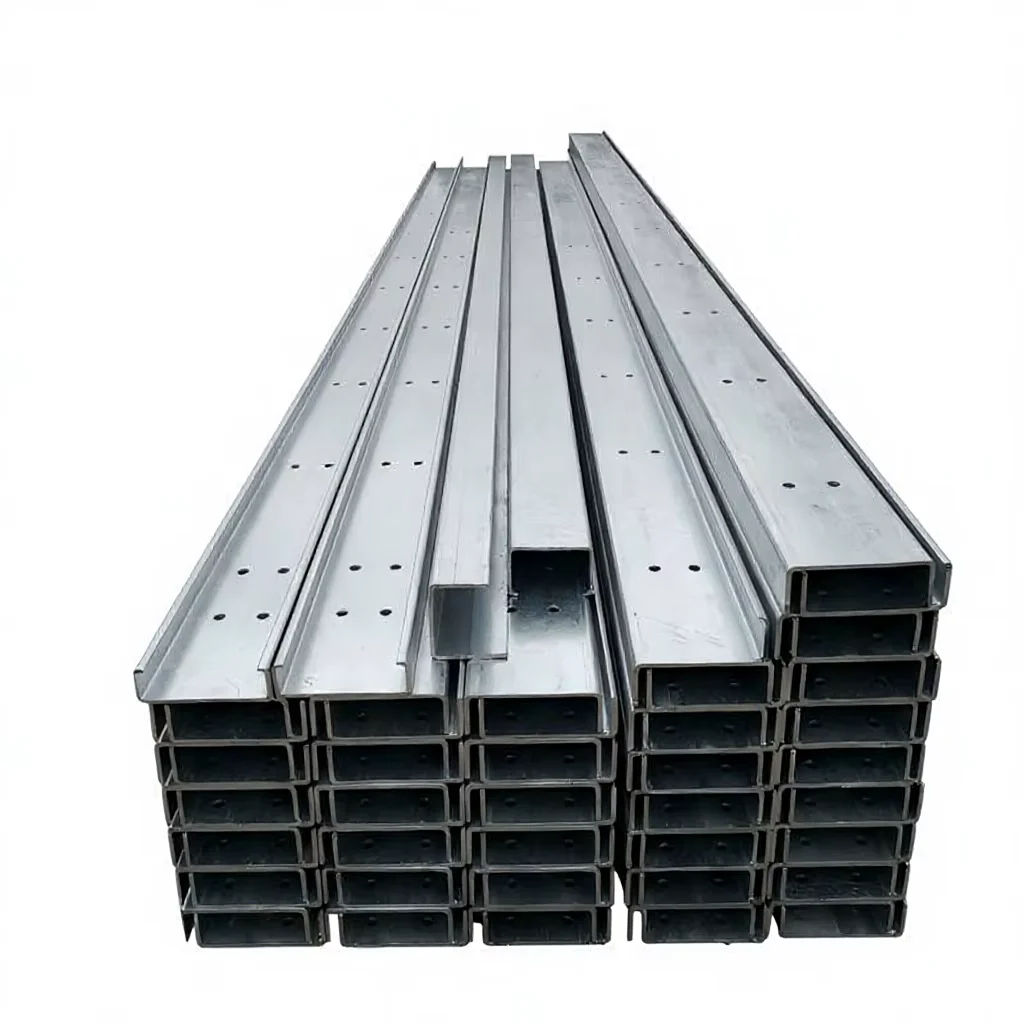
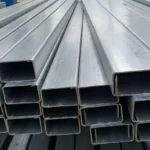
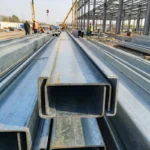
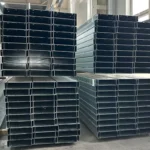
Factory-Direct Galvanized C Channel Steel — Q235B and Q355B sections cold-formed in-house with hot-dip galvanizing monitored at every coating stage.
Technical Specifications
| Parameter | Value |
|---|---|
| Designation | Q235B/Q355B Galvanized C Channel Steel |
| Product Type | C Channel |
| Steel Grade | Q235B, Q355B |
| Standard | GB |
| Section Shape | C Channel |
| Size Range | C100 / C120 / C140 / C160 and others |
| Technique | Cold-formed, High-frequency welded |
| Surface Treatment | Hot-dip galvanized |
| Tolerance | ±1% |
| Processing Service | Welding, Cutting |
| Texture | Q235B / Q355B / Stainless Steel / Aluminum Alloy |
| Preservative Treatment | Hot-dip galvanized |
| Packaging | High anti-rust packaging |
| Color | Silver |
| Application | Steel structure / Warehouse / Workshop / Hangar / Garage / Building purlins / Steel structure supports |
| Origin | Shandong, China |
Application Suitability
| Industry | Typical Applications |
|---|---|
| Steel Structure Construction | Building purlins, secondary framing members, roof support systems |
| Industrial Facilities | Warehouse frames, workshop columns, hangar trusses |
| Civil & Commercial Buildings | Garage structures, mezzanine supports, canopy frameworks |
| Infrastructure & Energy | Solar mounting structures, equipment support platforms |
Where Galvanizing Consistency Determines Site Acceptance
A C channel that passes visual inspection at the mill can still fail third-party coating thickness tests at destination.
I have seen entire shipments of C channel returned because the zinc coating measured below spec on the inner flange — the outer surface looked fine, but the fold zones where cold-forming stretches the metal were thin. When a Galvanized C Channel Steel Supplier controls the galvanizing line directly, every batch gets dipped, drained, and cooled under the same parameters. [NEED_CITE: hot-dip galvanizing coating thickness requirements for structural steel] Inconsistent galvanizing means premature corrosion at weld points and bolt holes, which no amount of touch-up paint can fix once the structure is erected.
Matching C Channel Profiles to Purlin and Support Loads
Cold-formed C100 through C160 sections in Q235B serve standard warehouse purlin spans, while Q355B handles longer clear spans and heavier roof loads without increasing section depth. The ±1% dimensional tolerance ensures that bolt-hole patterns drilled at the fabrication shop align when members reach the site. A reliable Galvanized C Channel Steel Supplier provides cut-to-length service so that purlins arrive ready to install, eliminating on-site cutting that exposes bare steel and invites corrosion.
Structural Codes, Corrosion Environments, and Certification Paths
Engineering design to EN 1993 or local equivalents requires documented material properties; the Galvanized C Channel Steel Supplier must supply mill test certificates traceable to each heat number. [NEED_CITE: EN 10219 cold-formed hollow section requirements] For coastal or chemical-plant environments, hot-dip galvanizing provides sacrificial zinc protection that outlasts paint systems by decades — but only if coating thickness meets the project specification across all surfaces, including inner returns. EU-bound orders need CE marking under EN 10219, while domestic and Belt & Road projects typically follow GB standards with optional SGS or BV third-party inspection.
Steel Grade Selection and Cold-Forming Precision
Q235B offers adequate strength for standard purlin and girt applications at lower cost, while Q355B delivers higher yield strength for structures requiring reduced member sizes or longer spans. [NEED_CITE: steel grade equivalence between GB and international standards] The cold-forming process shapes flat strip into the C profile, and high-frequency welding seals the longitudinal seam — both operations must maintain tight tolerances to prevent web bow or flange twist that complicates erection. Hot-dip galvanizing after forming coats every surface uniformly, including the weld seam, providing full corrosion protection without post-fabrication touch-up.
Hidden Costs When Coating Thickness Falls Short
Specifying Q355B but receiving Q235B means the structure deflects more than designed — a problem discovered only after purlins are installed and roofing loaded. Missing or incomplete mill test certificates trigger customs holds and project delays. [NEED_CITE: structural steel certification requirements for international trade] Thin galvanizing at fold zones corrodes within months in humid or coastal climates, forcing expensive scaffolding and re-coating work while the building is in operation.
Procurement Confidence from Mill to Container
As the manufacturer running three production lines, we cold-form, weld, and galvanize in one facility — no broker adds margin or obscures the material source. Our in-house physical and chemical laboratory tests every heat for composition and mechanical properties before galvanizing, producing mill test certificates that travel with the shipment. With 2,800+ specifications across our product range, non-standard C channel depths or flange widths can be rolled to order with low minimum quantities. Full ISO 9001:2015, Lloyd’s CE, and Singapore FPC certifications clear customs in regulated markets, while professional container loading with edge protectors preserves the zinc coating during ocean transit.
Documentation & Compliance
- Mill test certificate documenting Q235B or Q355B chemical composition and mechanical properties per GB standard, traceable by heat number
- CE certificate confirming compliance with EN 10219 for cold-formed structural sections, required for EU market entry
- ISO 9001:2015 quality management certificate covering the full production process from forming to galvanizing
- SGS or BV third-party inspection report verifying coating thickness, dimensional tolerance, and surface quality
- Material traceability records linking each bundle to its heat number and galvanizing batch
- Complete customs documentation including packing list, bill of lading, and certificate of origin
Packaging, Loading & Delivery
- Cold-formed C channel sections bundled with high-strength steel strips and edge protectors to prevent zinc coating damage during handling
- Hot-dip galvanized surfaces wrapped in waterproof material with anti-rust treatment for ocean shipment
- Container loading optimized for C100–C160 lengths to maximize payload while preventing nesting and surface scratches
- Cut-to-length service available for custom purlin sizes, reducing on-site waste and installation time
- Each bundle marked with heat number, steel grade, size, and purchase order reference for site identification
- FOB, CIF, and DDP shipping terms available with professional loading supervision
Start Your Inquiry with Specifications in Hand
Submit your C channel size, steel grade, quantity, and destination port to receive a detailed quotation with lead time and shipping terms. We provide mill test certificates and third-party inspection reports before shipment, and our team confirms coating thickness and dimensional tolerance against your project specification.
Request a Quote for Galvanized C Channel Steel
Send your specifications to receive pricing, mill test certificates, and delivery schedules within 12 hours.
Company: Shandong Xin Jiyuan Special Steel Tube Co., Ltd
Website: www.sdxjypipe.com
Tel: +86 531 8573 6315
Mobile/WhatsApp/WeChat: +86 188 5315 7756
Email: admin@sdxjypipe.com
Address: No.11889, Jingshi West Road, Lulian Group, Jinan City, Shandong Province, China
Frequently Asked Questions
Q: What is the difference between Q235B and Q355B C channel steel for structural applications?
A: Q235B provides adequate strength for standard warehouse purlins and girts, while Q355B offers higher yield strength for longer spans or heavier loads, allowing smaller section sizes without sacrificing structural performance.
Q: Can you provide custom non-standard C channel sizes with low MOQ?
A: Yes, we produce custom C channel profiles beyond standard C100–C160 sizes with flexible minimum order quantities, supported by our in-house cold-forming lines and engineering team.
Q: How does hot-dip galvanizing compare to paint systems for corrosion protection?
A: Hot-dip galvanizing provides metallurgical zinc-iron bonding that covers all surfaces including inner returns and weld seams, offering decades of sacrificial protection in coastal or industrial environments where paint systems require frequent maintenance.
Q: What certifications do you provide for international market clearance?
A: We supply ISO 9001:2015, Lloyd’s CE marking under EN 10219, Singapore FPC, and arrange SGS or BV third-party inspection reports to meet destination country requirements.
Q: What is the typical production lead time for custom C channel orders?
A: Standard sizes ship from stock, while custom profiles and cut-to-length orders typically require typical production lead times depending on specification complexity and order volume.