



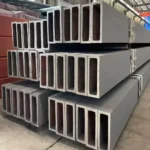
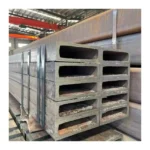

Description
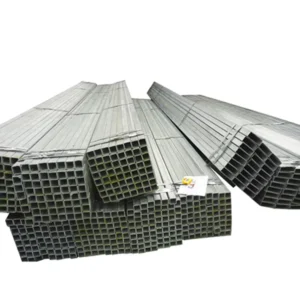
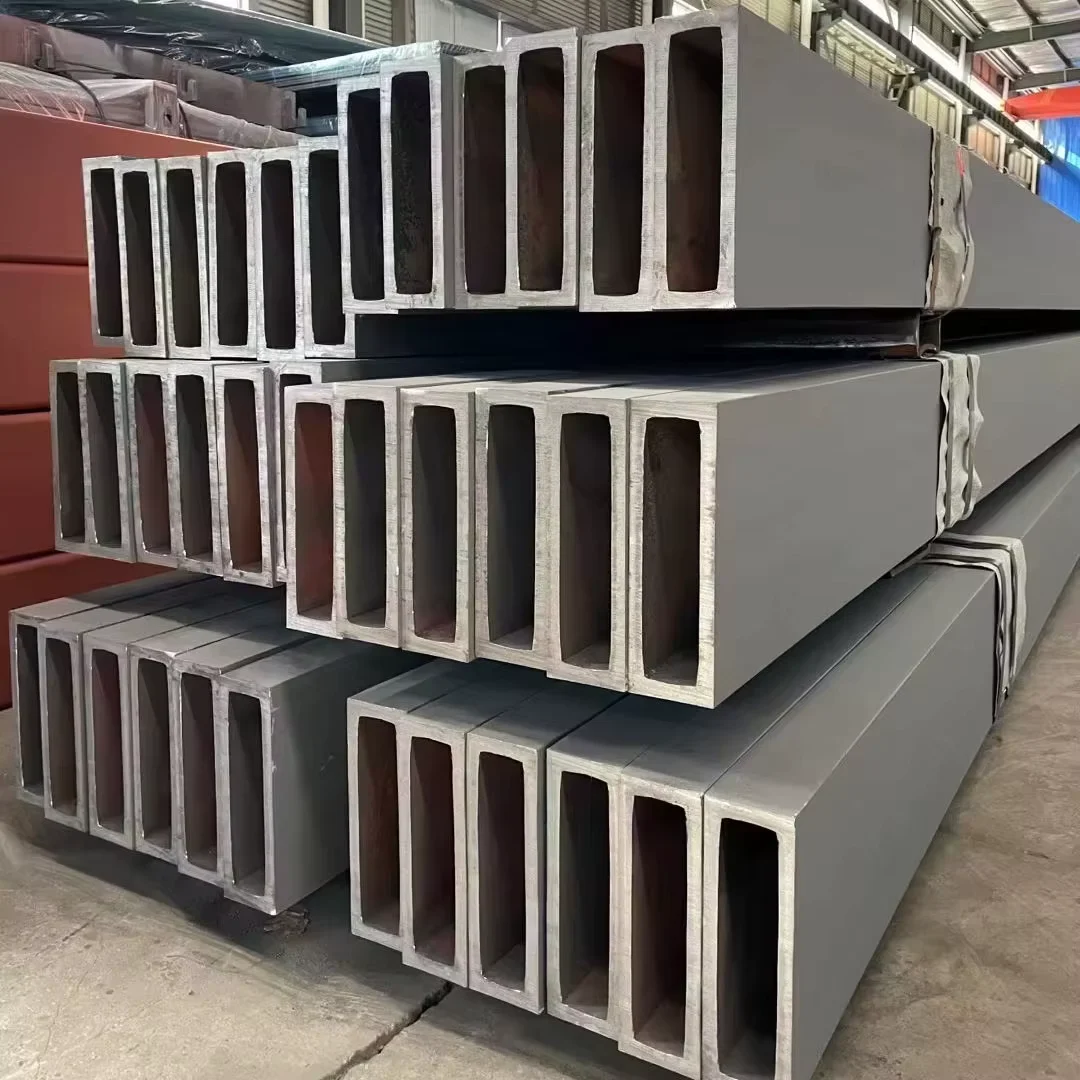
Factory-direct sharp-corner RHS — 41 invention patents behind every 90° corner we ship.
Technical Specifications
| Parameter | Value |
|---|---|
| Designation | Q235B/Q345B Sharp-Corner Rectangular Steel Tube |
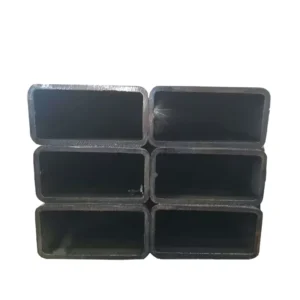
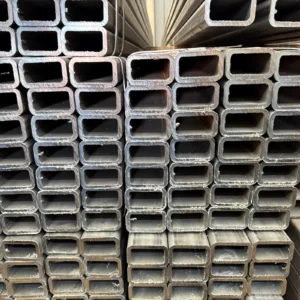
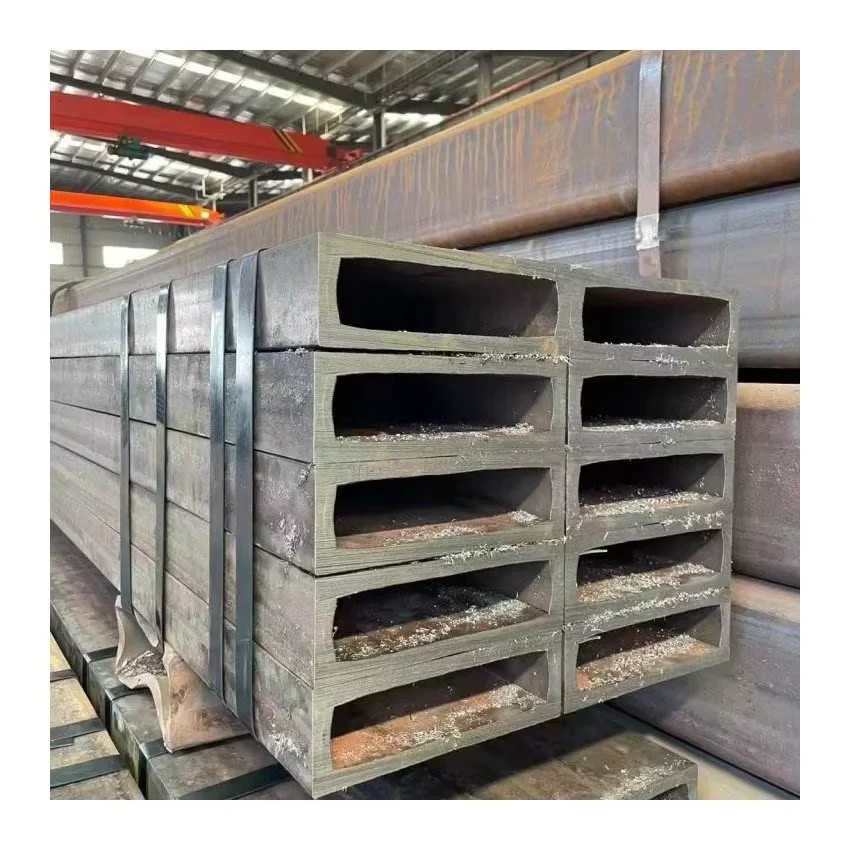
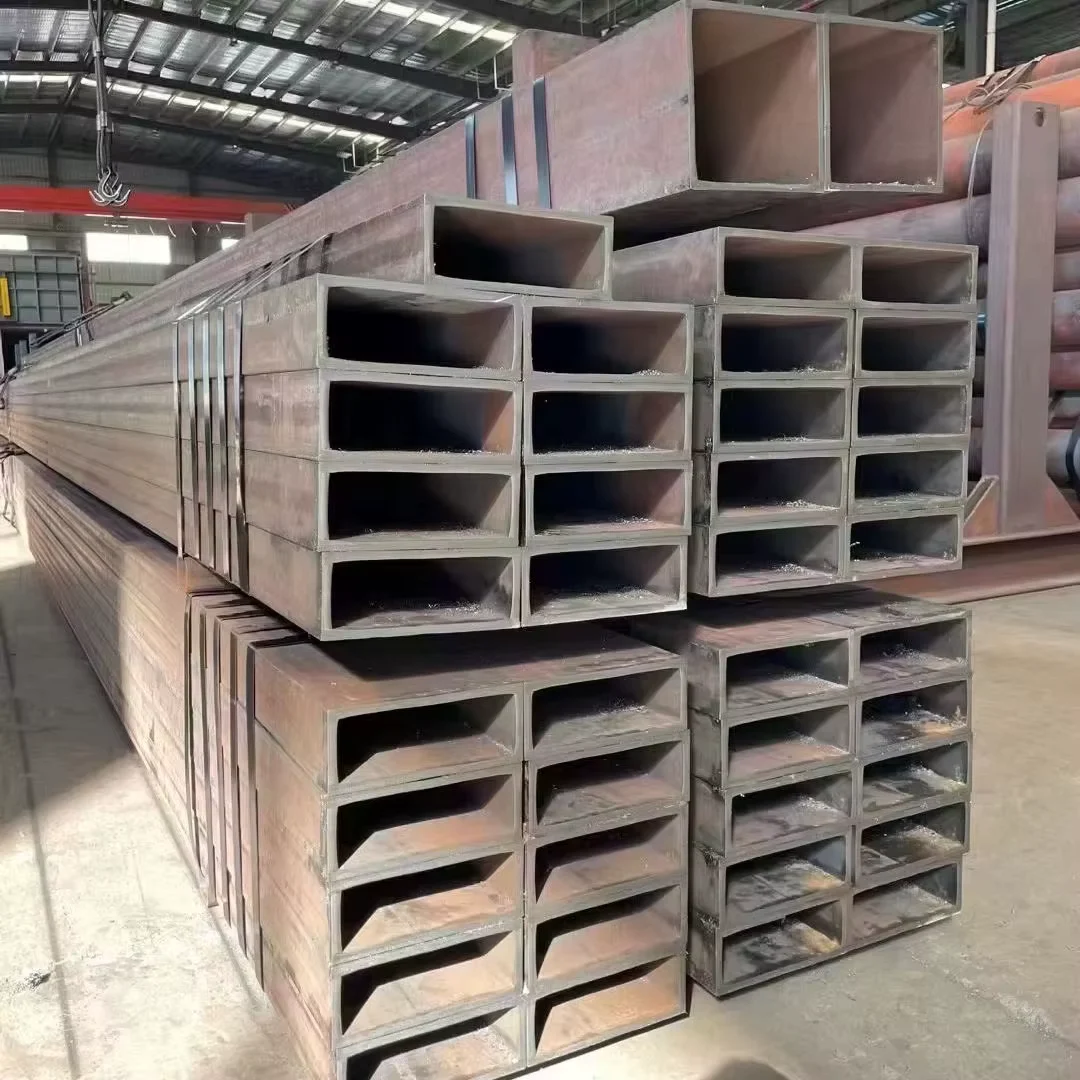
| Product Type | Sharp-Corner Rectangular Steel Tube (Right-Angle Square & Rectangular Hollow Section) |
| Steel Grade | Q235B, Q345B |
| Standard | GB/T 6728 |
| Section Shape | Square / Rectangular (Sharp-Corner / Right-Angle) |
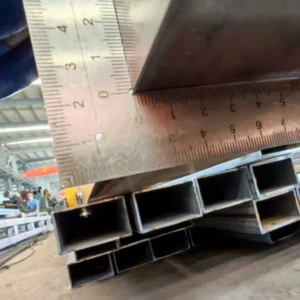
| Side Length | 150–625 mm |
| Length | 5–15 m (standard 5.8 m / 6 m / 12 m available) |
| Technique | ERW (Electric Resistance Welded) |
| Surface Treatment | Hot Rolled |
| Tolerance | ±1% |
| Ends | Plain / Beveled |
| Application | Construction building, Steel structures, Architectural facades, Glass curtain walls, High-end steel structure projects |
| Processing Service | Bending, Cutting, Decoiling, Punching, Welding |
| Origin | Shandong, China |
Application Suitability
| Industry | Typical Applications |
|---|---|
| Architectural Facade & Curtain Wall | Vertical mullion frames, horizontal transom members, glass pocket supports requiring flush 90° corners |
| Steel Structure EPC | Column-to-beam moment connections, bracing members, roof truss chords in commercial and industrial buildings |
| High-Rise Construction | Core wall framing, transfer girder stiffeners, elevator shaft bracing where corner precision affects cladding alignment |
| Machinery & Industrial Equipment | Equipment base frames, conveyor support structures, crane runway beams needing tight dimensional accuracy |
What Corner Radius Tolerance Costs on a Curtain Wall Order
A 2 mm corner deviation means the glass panel will not seat flush — and the entire container gets rejected at site inspection.
I spent three months on a Dubai facade job where the right-angle rectangular tubes arrived with corner radii far exceeding spec. The inspector pulled out calipers on the first piece pulled from the container. The tubes would not seat against the glass channel. The whole shipment was rejected on the spot. Since then, I check corner geometry personally before anything leaves the mill. Standard ERW rectangular tubes produce R≥2t rounded corners that look unfinished in architectural applications [NEED_CITE: cold-formed hollow section dimensional tolerance requirements]. Sourcing true sharp-corner tubes with verified right-angle geometry and full export documentation remains a persistent gap for facade contractors and steel structure fabricators working on premium projects.
How Sharp-Corner Geometry Matches Facade Engineering Demands
The 90° corner on a Q345B sharp-corner rectangular steel tube eliminates the visible gap between the steel frame and the glass channel — a detail that separates premium curtain walls from standard commercial builds. On a recent Middle East high-rise project, the facade contractor specified right-angle RHS specifically because the sharp corner allowed the aluminum glazing channel to sit flush without filler shims. Our patented sharp-corner forming process achieves R≤t on side lengths from 150 mm to 625 mm, covering the full range needed for mullion and transom framing. The ERW weld line is positioned and tested to maintain ±1% dimensional tolerance across the entire length, ensuring every piece fits the same on site.
Structural Code Compliance and Certification Pathways
Engineering specifications for architectural hollow sections typically reference EN 10219 for cold-formed welded structural hollow sections or EN 10210 for hot-formed sections, depending on the forming route [NEED_CITE: EN 10219 cold-formed hollow section requirements]. For projects targeting EU markets, CE certification under EN 10219/10210 is mandatory for customs clearance — missing the correct standard reference on the mill test certificate will block the shipment at the port. Q235B and Q345B under GB standards map to S235JR and S355JR under EN, and roughly to ASTM A500 Gr. B and Gr. C respectively, but the equivalence is not automatic — the chemical composition and mechanical test results must be documented per batch [NEED_CITE: steel grade equivalence between GB, EN, and ASTM standards]. For facade and curtain wall applications, the dimensional tolerance on corner radius and side flatness directly affects the structural connection design and must be verified against the project specification before ordering.
Steel Grade Selection and ERW Process Fundamentals
Q235B and Q345B represent the two most widely specified carbon structural grades under Chinese GB standards. Q235B offers good formability and weldability for general structural framing, while Q345B delivers higher yield strength for load-bearing members where weight optimization matters. The ERW (Electric Resistance Welded) process used for these sharp-corner tubes produces a longitudinal weld seam formed by resistance heating without filler metal — this results in a clean, consistent weld suitable for architectural applications where the tube may be left exposed or painted. Hot rolled surface treatment leaves a mill scale finish that provides a baseline corrosion resistance during storage and transit; for outdoor or humid environments, galvanizing or painting can be applied as secondary protection. The sharp-corner forming process itself is the critical differentiator — it reshapes the standard rounded-corner RHS into true right-angle geometry through a multi-pass cold-forming sequence, maintaining wall thickness integrity at the corner while achieving the R≤t profile that facade engineers require.
Hidden Costs of Specifying the Wrong Corner Profile
Ordering standard rectangular tubes when the drawing calls for sharp-corner RHS creates a cascade of failures at the job site: corners will not align with glazing channels, weld prep geometry will be wrong, and the structural engineer’s connection details will not transfer to the as-delivered product. Beyond the physical mismatch, missing or incorrect mill test certificates — wrong standard references, absent heat numbers, no chemical composition data — will trigger customs holds in regulated markets [NEED_CITE: import documentation requirements for structural steel in EU and Middle East markets]. The cost is never just the replacement material; it is the crane idle time, the delayed cladding crew, and the re-inspection fees that multiply the original mistake many times over.
Why Facade Contractors Source Sharp-Corner RHS from Xin Jiyuan
We hold 41 invention patents for sharp-corner rectangular tube technology, including China’s first patented right-angle RHS forming process — this is not a marketing claim but a verified technical portfolio that fills a gap in both domestic and international markets. Our three dedicated production lines cover 2,800+ specifications with side lengths from 150 mm to 625 mm and wall thicknesses up to 40 mm, meaning non-standard sizes that other mills cannot produce are routine orders for us. Every batch passes through our in-house physical and chemical laboratory for dimensional, mechanical, and chemical testing before shipment, with full mill test certificates issued per heat number. We carry complete international certifications including ISO 9001:2015, Lloyd’s CE under EN 10219/10210, and Singapore FPC, so customs clearance in EU and regulated markets proceeds without documentation disputes. For export orders, our loading team uses professional container loading procedures with anti-damage measures specifically designed for long-length tubes and sharp-corner profiles, preventing the bending and surface scratches that cause rejection at destination.
Documentation & Compliance
- Mill test certificate documenting Q235B/Q345B chemical composition and mechanical properties per GB/T 6728, with heat number traceability
- CE certificate under EN 10219/EN 10210 for sharp-corner rectangular hollow sections exported to EU markets
- ISO 9001:2015 quality management system certificate covering the full production and inspection process
- SGS or BV third-party inspection report available upon request, covering dimensional checks, corner radius verification, and weld seam quality
- Material traceability by heat number linking each tube to its raw material test record and production batch
- Full customs documentation package including packing list, bill of lading, and certificate of origin
Packaging, Loading & Delivery
- Hot rolled Q345B sharp-corner tubes bundled with steel strips and edge protectors to preserve corner geometry and surface finish during ocean transit
- Professional container loading optimized for 5.8 m / 6 m / 12 m standard lengths, with anti-damage bracing to prevent bending of sharp-corner profiles
- Custom cut-to-length service available for 5–15 m ranges, with cut ends deburred and marked per drawing specification
- Heat number and steel grade (Q235B/Q345B) stenciled on each tube for site identification and traceability
- FOB / CIF / DDP shipping terms available, with door-to-door logistics coordination for project sites in EU, Middle East, and Southeast Asia
How to Request a Quote for Sharp-Corner RHS
Submit your drawing dimensions — side length, wall thickness, length, steel grade, and quantity — along with the destination port, and we will respond within 12 hours with a detailed quotation including unit price, production lead time, and shipping terms. For non-standard sizes outside the 150–625 mm range, our engineering team will confirm feasibility and provide a custom production plan. We will also send sample mill test certificates and CE documentation for your review before contract signing, so you can verify compliance with your project specification.
Frequently Asked Questions
Q: What is the corner radius difference between sharp-corner RHS and standard rectangular tubes?
A: Standard rectangular tubes typically have corner radii of R≥2t (twice the wall thickness or more), which creates visible gaps in curtain wall and facade framing. Our patented sharp-corner process achieves R≤t, producing near 90° right-angle corners that allow glazing channels and cladding supports to seat flush without filler materials.
Q: How do Q235B and Q345B map to international steel grades?
A: Q235B roughly corresponds to S235JR under EN standards and ASTM A500 Gr. B, while Q345B maps to S355JR under EN and ASTM A500 Gr. C. However, grade equivalence must be confirmed by comparing the actual chemical composition and mechanical test results on the mill test certificate — it is not automatic.
Q: Can you produce non-standard sizes outside the 150–625 mm range?
A: Yes. We cover 2,800+ specifications across our three production lines, and custom non-standard sizes are available with low MOQ requirements. Production lead time for custom sizes is typically longer than stock items, and we will confirm the exact timeline during quotation.
Q: What surface treatment options are available for sharp-corner rectangular tubes?
A: Our standard offering is hot rolled finish with mill scale. For projects requiring additional corrosion protection, we can supply galvanized or painted sharp-corner tubes. The surface treatment choice depends on the installation environment — indoor architectural applications may only need hot rolled, while outdoor or coastal projects typically require galvanizing.
Q: How do you ensure corner quality during container loading?
A: Sharp-corner tubes are loaded with dedicated anti-damage measures including edge protectors, proper bracing, and weight distribution planning to prevent corner deformation and surface scratches during transit. Our loading team has specific training for right-angle profiles, as improper loading is a common cause of corner damage that leads to rejection at destination.
Get Your Sharp-Corner RHS Quotation
Send your specifications — dimensions, steel grade, quantity, and destination — to receive a detailed quotation with mill test certificate samples and CE documentation within 12 hours.
Shandong Xin Jiyuan Special Steel Tube Co., Ltd
Website: www.sdxjypipe.com
Tel: +86 531 8573 6315
Mobile/WhatsApp/WeChat: +86 188 5315 7756
Email: admin@sdxjypipe.com
Address: No.11889, Jingshi West Road, Lulian Group, Jinan City, Shandong Province, China