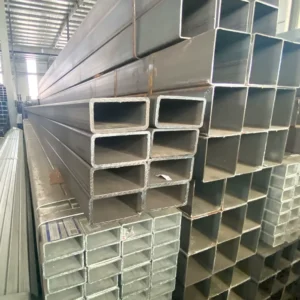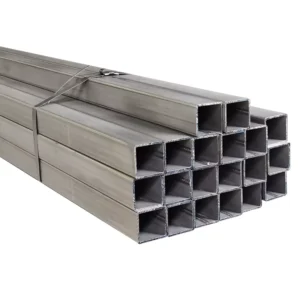
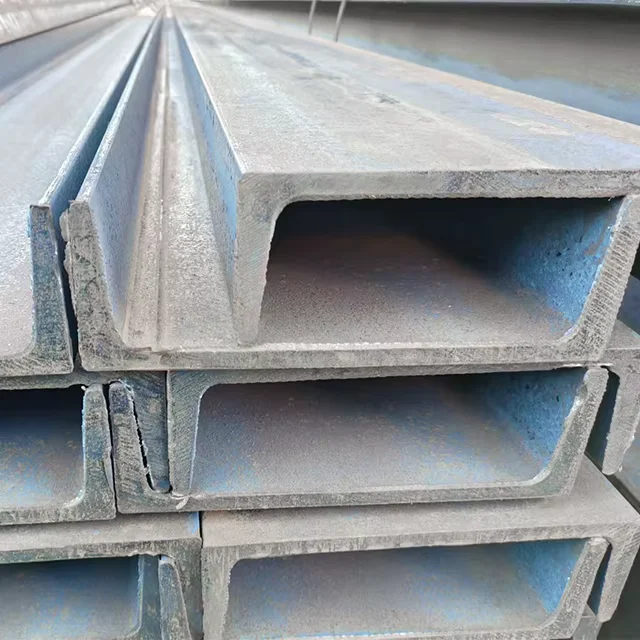
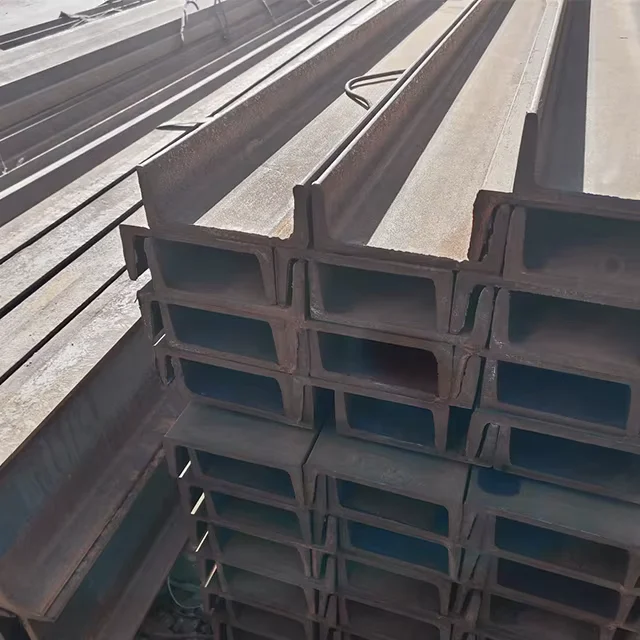
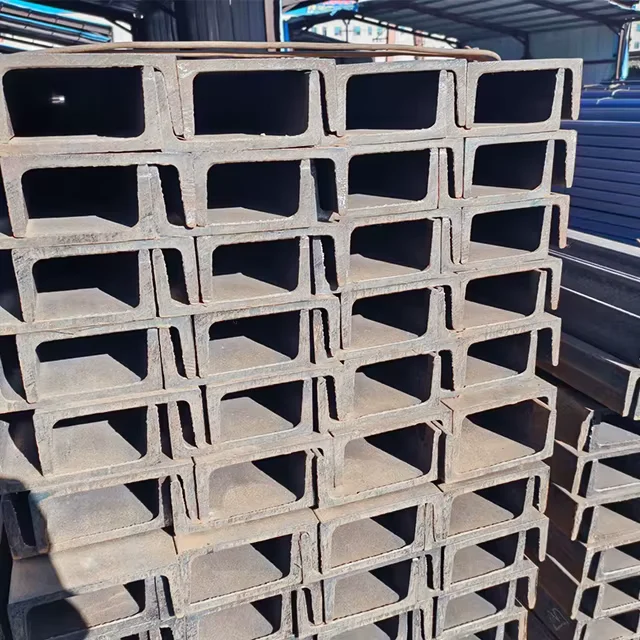
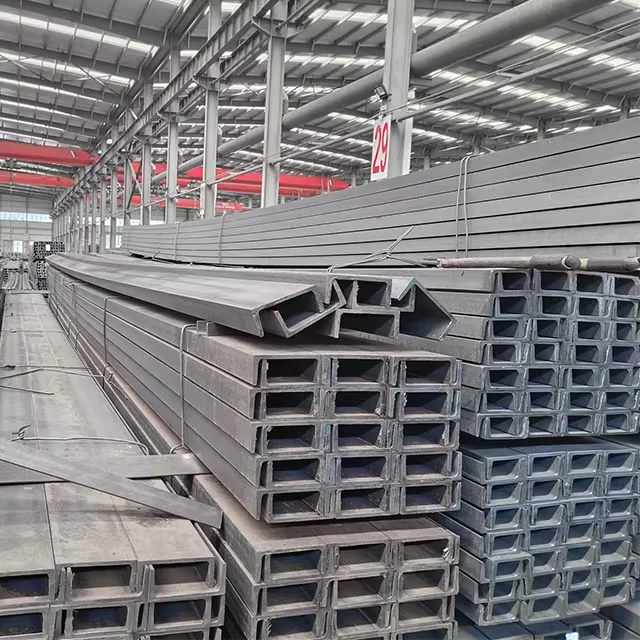


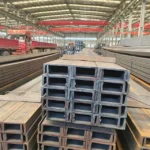
Description
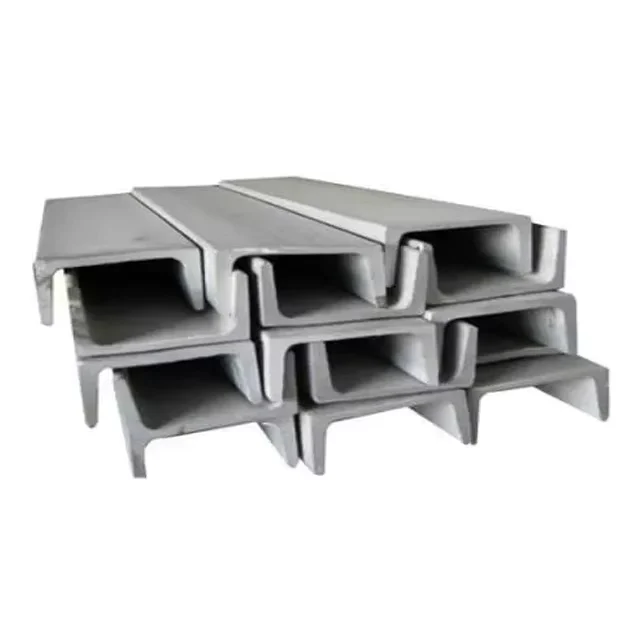
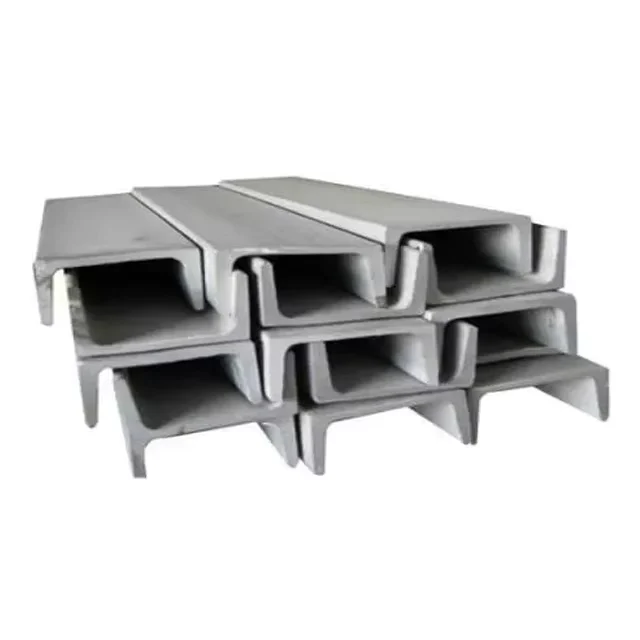
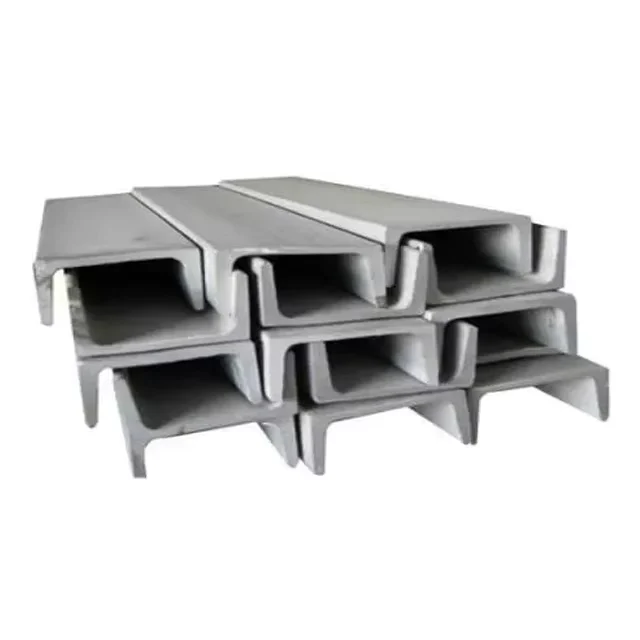
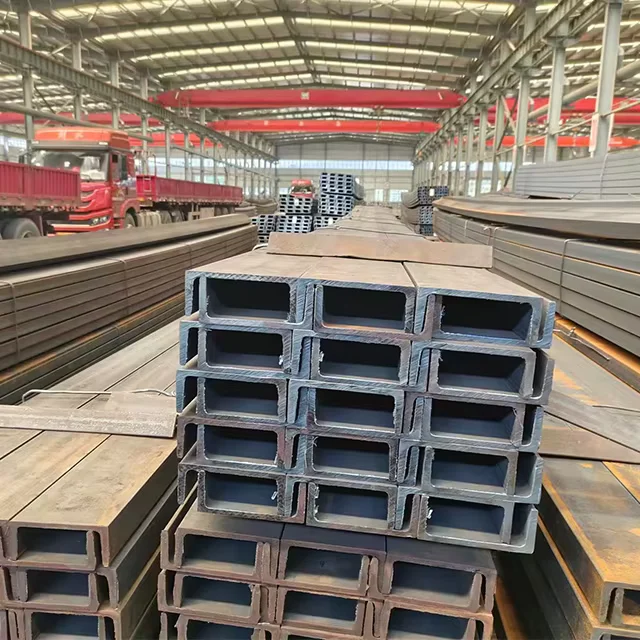
Mill-Direct U Channel Supply — Hot rolled Q235B and Q345B channels produced in-house with full GB and JIS size coverage, shipped with mill test certificates and third-party inspection available before loading.
Technical Specifications
| Parameter | Value |
|---|---|
| Designation | Q235B/Q345B U Channel Steel |
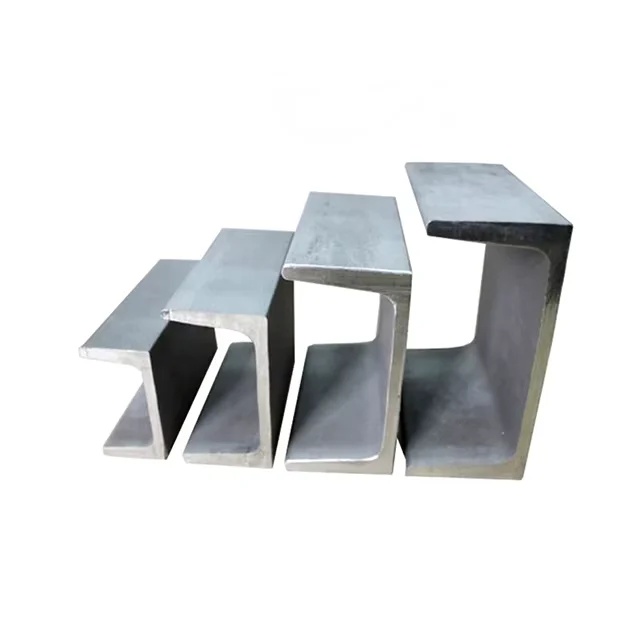
| Product Type | U Channel / C Channel |
| Steel Grade | Q235B, Q345B, SS400 |
| Standard | AISI, ASTM, BS, DIN, JIS, EN, GB |
| Section Shape | U / C Channel |
| Size Range | 50×25mm–400×102mm (JIS: 50×25mm–250×90mm; GB: 10#–40#) |
| Length | 1–12m / customized |
| Technique | Hot Rolled |
| Surface Treatment | Black / Bright / Galvanized / Painted |
| Tolerance | ±1% |
| Processing Service | Bending, Welding, Punching, Decoiling, Cutting |
| Application | Building structures, vehicle manufacturing, industrial structures |
Application Suitability
| Industry | Typical Applications |
|---|---|
| Construction & EPC | Structural framing for warehouses, portal frames, mezzanine platforms, roof purlin systems |
| Vehicle Manufacturing | Truck chassis cross-members, trailer side rails, equipment mounting frames |
| Industrial Structures | Conveyor support frames, piping rack bracing, crane runway beams |
| Infrastructure | Bridge walkway supports, solar mounting structures, transmission tower bracing |
Matching GB and JIS Channel Sizes from a Single Purchase Order
Mixing 10#–40# GB channels with JIS 50×25–250×90mm profiles in one order eliminates cross-referencing errors across three standard systems.
When a project specifies Q345B channels in GB dimensions but the fabrication drawings reference JIS profiles, procurement teams often split orders across two or three suppliers — each quoting different tolerances, surface finishes, and certificate formats. The result: mixed heat numbers on site, conflicting mill test reports, and customs agents flagging inconsistent EN/GB markings on the same container. A Hot Rolled Galvanized U Channel Steel Supplier producing both ranges under one quality system removes this fragmentation entirely. [NEED_CITE: steel grade equivalence between GB Q-series and JIS SS-series standards]
How Hot Rolled Channels Fit Structural Frame Connections
Hot rolled U/C channels in Q235B and Q345B grades carry primary and secondary loads in portal frames and industrial platforms where bolted or welded connections demand consistent web and flange geometry. The ±1% dimensional tolerance from hot rolling ensures that splice plates and gusset connections fit without on-site reaming — critical when a Hot Rolled Galvanized U Channel Steel Supplier delivers 12-meter lengths destined for bolted moment-resisting joints. Galvanized finish extends service life in coastal EPC sites where salt spray accelerates corrosion on bare steel framing.
Engineering Compliance and Surface Protection Selection
Structural channels used in load-bearing frames must comply with dimensional and chemical requirements under EN 10210 or equivalent GB/T 706 standards, depending on the project specification country. [NEED_CITE: EN 10210 hot finished structural hollow section dimensional tolerances] For outdoor or industrial corrosion environments, hot-dip galvanizing provides zinc coating thickness that outperforms painted finishes in 20-year service life — though painted Q345B channels remain cost-effective for indoor machinery frames. Steel grade selection between Q235B and Q345B directly affects load capacity: Q345B offers higher yield strength for heavier spans, reducing section weight and total tonnage on large infrastructure orders. Third-party inspection by SGS or BV before shipment confirms compliance for EU and regulated-market imports.
Steel Grade Equivalence and Hot Rolling Process
Q235B corresponds roughly to S235JR under EN standards and SS400 under JIS G3101 — all three share similar carbon-manganese chemistry suited to general structural welding and bolting. Q345B aligns with S355JR/S355J2, offering higher yield strength for bridges and heavy industrial frames where deflection limits are tighter. Hot rolling produces channels with uniform grain structure through the web and flange junction, giving better impact toughness than cold-formed alternatives at equivalent thickness. Surface options — black, bright, hot-dip galvanized, or painted — are selected based on the installation environment: galvanized for coastal and outdoor exposure, painted for indoor or temporary structures, black for projects where site-applied coating systems are specified.
Hidden Costs of Sourcing Channels Without Verified Certificates
Ordering Q345B channels from a trader without in-house testing means the mill test certificate may reference a different heat number than the material shipped — a discrepancy that triggers rejection during EN 10204 3.1/3.2 inspection at destination. Negative tolerance beyond the ±1% range reduces actual section modulus, forcing structural engineers to recalculate load capacity or reject the batch entirely. Missing CE documentation or incorrect standard references on certificates block EU customs clearance, stranding containers at port with daily demurrage charges accumulating. [NEED_CITE: EN 10204 inspection document types for steel structural sections]
Procurement Security from a Certified Mill-Direct Source
As the original inventor of sharp-corner rectangular tubes in China with 41 invention patents, Shandong Xin Jiyuan operates three production lines covering 2,800+ specifications — including the full GB 10#–40# and JIS channel ranges in Q235B, Q345B, and SS400. An in-house physical and chemical laboratory tests every heat for dimensional accuracy, mechanical properties, and chemical composition before issuing mill test certificates. Full international certifications — ISO 9001:2015, Lloyd’s CE (EN 10210/10219), Singapore FPC, and SGS/BV verification — ensure customs clearance across 50+ export destinations. Custom non-standard sizes, cutting to project-specific lengths, and professional container loading with anti-damage measures are standard on every export order.
Documentation & Compliance
- Mill test certificate documenting Q235B/Q345B chemical composition and mechanical properties per GB/T 706 or JIS G3101, with heat number traceability
- CE certificate under EN 10210/EN 10219 for hot rolled structural sections exported to EU markets
- ISO 9001:2015 quality management system certificate covering hot rolled channel production and testing
- SGS or BV third-party inspection report verifying dimensional tolerance, surface coating thickness, and visual quality before loading
- Material traceability by heat number stamped on each channel end, matching mill test certificate and packing list
- Export customs documents including packing list, bill of lading, and certificate of origin for destination-country clearance
Packaging, Loading & Delivery
- Hot rolled Q235B/Q345B channels bundled with steel strips at intervals matching 6m and 12m lengths, separated by timber spacers to prevent surface damage during ocean transit
- Galvanized channels wrapped with edge protectors and waterproof sheeting to preserve zinc coating integrity and prevent white rust formation in humid container environments
- Container loading optimized by nesting smaller JIS 50×25–150×75mm channels inside larger GB 25#–40# profiles, maximizing payload per 20ft and 40ft container
- Custom cutting to 1–12m project-specific lengths available, with cut ends deburred and marked with heat number, steel grade, and size designation
- Shipping terms FOB, CIF, or DDP with professional lashing and anti-roll bracing to prevent channel bending during vessel transit and truck delivery to site
Getting a Quote for Your Channel Steel Order
Submit your channel size range, steel grade preference, surface treatment requirement, total tonnage, and destination port to receive a detailed quotation with unit pricing, production lead time, and shipping terms within 12 hours. Mill test certificates and third-party inspection reports are available for review before contract signing. Custom non-standard sizes and cut-to-length services are quoted separately with confirmed production schedules.
Request Your Hot Rolled Channel Steel Quotation
Send your specifications — size, grade, finish, quantity, and destination — to receive pricing and mill test documentation within 12 hours.
Contact: Shandong Xin Jiyuan Special Steel Tube Co., Ltd
Tel: +86 531 8573 6315
Mobile/WhatsApp/WeChat: +86 188 5315 7756
Email: admin@sdxjypipe.com
Website: www.sdxjypipe.com
Frequently Asked Questions
Q: How do Q235B and Q345B channels compare to S235JR and S355JR under EN standards?
A: Q235B is chemically and mechanically similar to S235JR, both suitable for general structural welding and bolting. Q345B corresponds to S355JR/S355J2 with higher yield strength for heavier load applications. Full mill test certificates document actual chemical composition and mechanical properties for cross-referencing.
Q: Can you produce non-standard channel sizes outside the GB 10#–40# and JIS ranges?
A: Custom non-standard sizes are available with confirmed tooling and production schedules. Submit your required dimensions — web height, flange width, and thickness — for feasibility review and lead time confirmation. MOQ applies to custom profiles.
Q: What surface treatment is best for outdoor coastal construction projects?
A: Hot-dip galvanized finish provides the longest corrosion protection for coastal and outdoor environments, with zinc coating thickness verified by third-party inspection. Painted finish suits indoor or temporary structures. Black channels are supplied for projects requiring site-applied coating systems per project specification.
Q: Do your channels carry CE marking for EU import clearance?
A: All hot rolled structural sections carry CE certification under EN 10210/EN 10219, with Lloyd’s registration and Singapore FPC approval. Full export documentation including certificate of origin, packing list, and mill test certificates ensures smooth customs clearance across EU and regulated markets.
Q: How is theoretical weight calculated versus actual weight for invoicing?
A: Channels are invoiced by theoretical weight calculated from nominal dimensions and standard density, unless actual weight is agreed in contract. The ±1% dimensional tolerance ensures actual weight stays within acceptable range for structural design calculations.