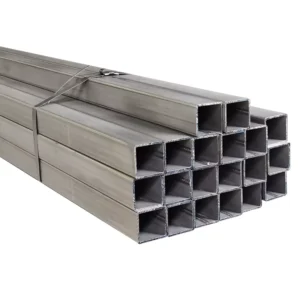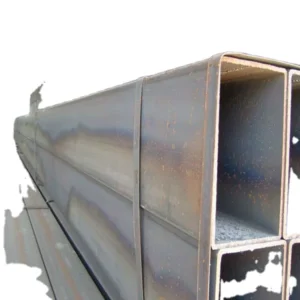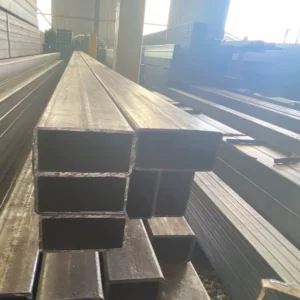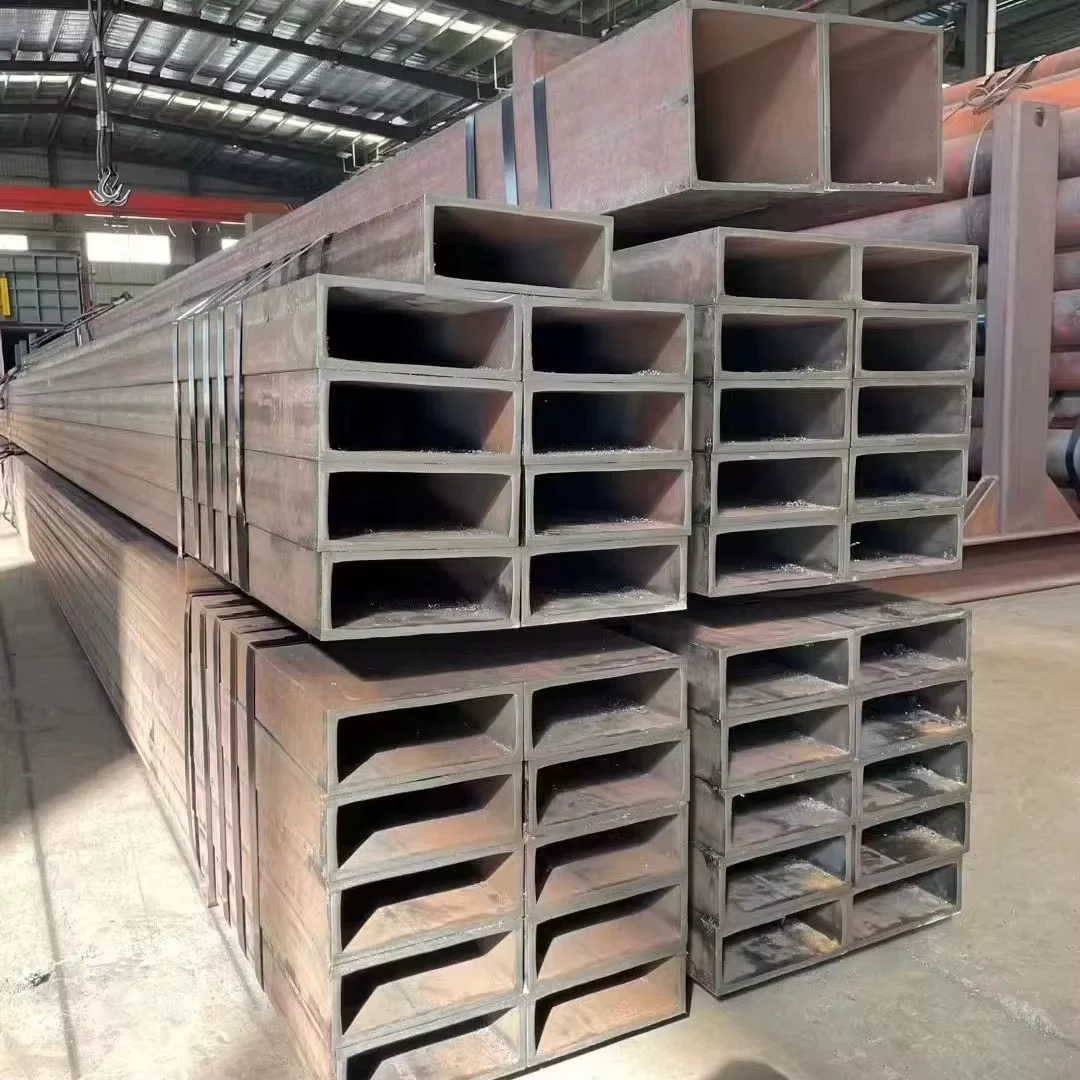



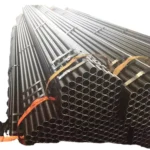

Description
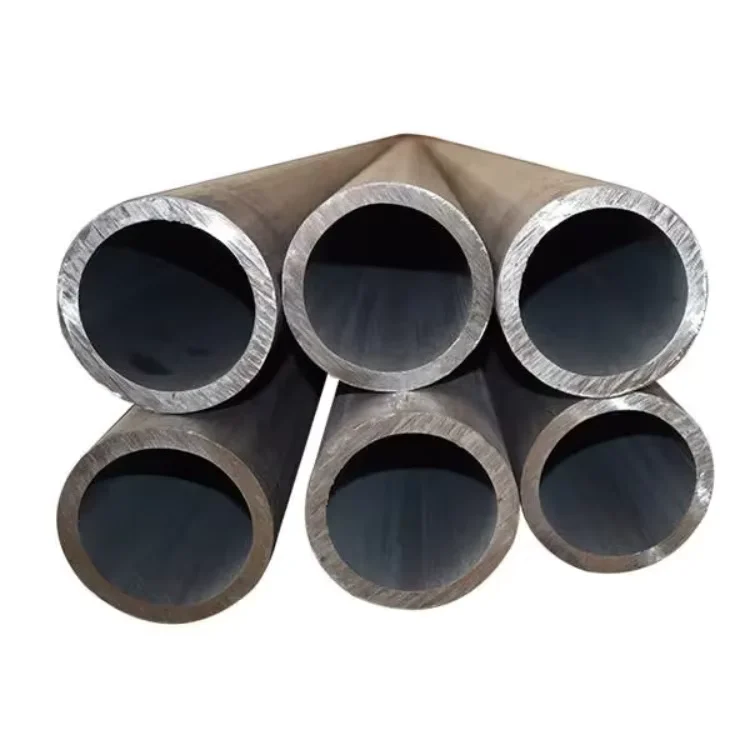
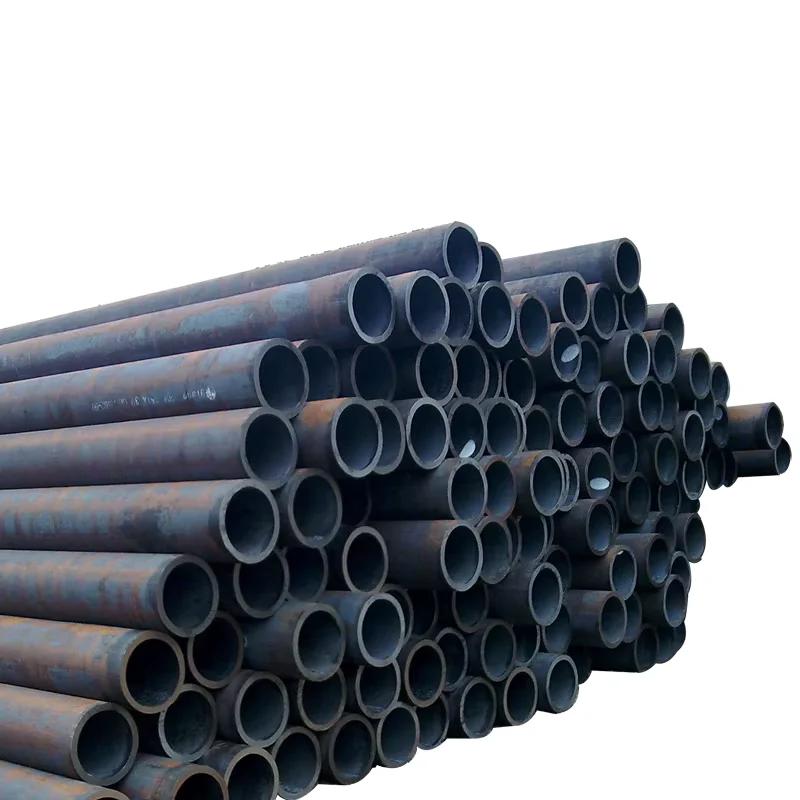
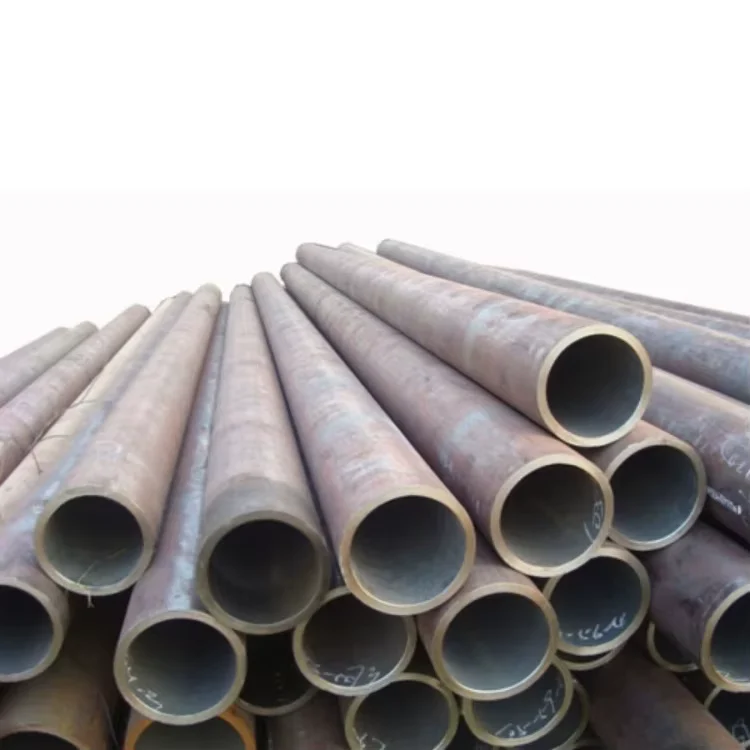
Factory-direct pricing with full mill certification — Every Q235B ERW welded round steel pipe rolls from our Jinan production lines with caliper-verified wall thickness and EN 10204 3.1 test certificates before container sealing.
Technical Specifications
| Parameter | Value |
|---|---|
| Designation | Q235B ERW Welded Round Steel Pipe |
| Product Type | ERW Welded Round Steel Pipe |
| Steel Grade | Q235B, Q195, Q215, Q235, Q345, S275JR, S275, A53, ST37, 20#, 45# |
| Standard | ASTM A53, EN 10219, EN 10210, JIS G3466, BS, GB/T 3091 |
| Section Shape | Round |
| Size Range | OD 10–3048 mm |
| Wall Thickness | 0.8–12.75 mm |
| Length | 1–12 m (customizable) |
| Technique | ERW (Electric Resistance Welded) |
| Surface Treatment | Cold Rolled / Oiled / Non-oiled / Customized |
| Tolerance | ±1% |
| Ends | Plain / Beveled / Threaded (customizable) |
| Application | Fluid transport, Structural frames, Fencing, Greenhouse structures, Building construction, Furniture, Daily appliances, Agricultural equipment |
| MOQ | 1 Ton |
| Origin | Shandong, China |
Application Suitability
| Industry | Typical Applications |
|---|---|
| Building Construction | Structural columns, roof trusses, scaffold uprights, load-bearing frames |
| Greenhouse & Agriculture | Greenhouse skeleton tubes, irrigation pipeline supports, equipment frames |
| Fluid & Gas Transport | Low-pressure water lines, pneumatic conveying pipes, drainage systems |
| Furniture & Daily Appliances | Table legs, shelving supports, appliance internal frames |
| Fencing & Infrastructure | Highway guardrail posts, boundary fencing uprights, sign pole foundations |
Where Wall-Thickness Tolerance Decides Site Acceptance for a Q235B ERW Welded Round Steel Pipe Order
A ±1% tolerance on a 6mm wall means 5.94–6.06mm — tight enough to pass caliper checks at destination without rejection.
I have watched entire containers get flagged at Lagos port because the wall thickness drifted below spec on random lengths. The SGS inspector does not average readings — he picks the thinnest spot. When a Q235B ERW welded round steel pipe supplier ships with uncontrolled negative tolerance, the buyer pays for re-rolling, air-freight replacements, or project standby. Dimensional consistency is not a premium feature; it is the baseline that keeps customs clearance and structural sign-off on schedule. [NEED_CITE: EN 10219 dimensional tolerance requirements for cold-formed welded hollow sections]
Matching OD and Wall Range to Structural and Fluid-Transport Demands
A Q235B ERW welded round steel pipe covering OD 10–3048 mm and wall thickness 0.8–12.75 mm serves two distinct engineering families. Thin-wall sections (0.8–3 mm) handle greenhouse framing, furniture, and light fencing where weight and cost dominate. Medium-to-heavy walls (4–12.75 mm) carry structural loads in building frames and fluid transport lines where internal pressure and buckling resistance matter. The ERW process produces a firm, high-hardness weld seam that survives flaring and bending without cracking — critical when site crews bend pipes on-site for custom offsets.
Engineering Compliance Across GB, ASTM, and EN Frameworks
Structural frames designed under EN 1993 require documented yield strength and traceable heat numbers; the same Q235B ERW welded round steel pipe shipped to North America must carry ASTM A53 marking for inspector sign-off. [NEED_CITE: steel grade equivalence mapping between GB Q235B, ASTM A53, and EN S275JR] Surface treatment choice — oiled for indoor storage, cold-rolled for painted finishes, or custom galvanized for coastal exposure — directly affects corrosion life and repaint cycles. Beveled or threaded ends eliminate secondary machining at the erection site, cutting labor hours on large-volume orders. Third-party inspection by SGS or BV before loading closes the documentation loop for regulated markets.
Steel Grade Selection and ERW Process Behavior
Q235B sits in the mild-carbon structural range, offering reliable weldability and formability at lower cost than Q345 or S275JR. When the structural design calls for higher load capacity, stepping up to Q345 or S275JR increases yield strength without changing the pipe geometry. The ERW welding process fuses the strip edges through electric resistance heating, producing a clean, narrow weld zone with minimal heat-affected softening — the seam holds up during subsequent bending and flaring operations that would split a poorly controlled weld. Cold-rolled surface finish delivers a smooth, scale-free exterior ready for powder coating or galvanizing, while oiled surfaces protect against transit rust without adding coating cost.
The Hidden Cost of Unverified Grade and Tolerance Claims
Ordering Q235B ERW welded round steel pipe against a price sheet without mill test certificate verification invites three failure modes: material substitution (Q195 shipped as Q235B), negative tolerance drift beyond ±1%, and missing CE or ASTM markings that block EU or North American customs. [NEED_CITE: consequences of missing EN 10204 3.1 certification on structural steel imports] Each failure triggers re-inspection, project delay, or — in the worst case — structural re-engineering after the pipe fails load testing. The cost of a caliper check and MTC review at the origin factory is a fraction of the cost of a rejected container at destination.
Why Engineering Procurement Teams Source from Shandong Xin Jiyuan
Every Q235B ERW welded round steel pipe leaving our Jinan factory passes through an in-house physical and chemical laboratory — dimensional checks with calibrated micrometers, tensile sampling per heat number, and chemical composition analysis before the pipe enters the bundling line. We hold Lloyd’s CE certification under EN 10210/EN 10219, ISO 9001:2015 registration, and Singapore FPC approval, covering the certification stack that EU, Middle East, and Southeast Asian customs authorities require. Our production lines cover 2,800+ specification combinations, so non-standard OD or wall thickness requests do not trigger minimum-run surcharges from a third-party mill. Professional container loading with anti-damage measures — including end protectors for beveled pipes and steel strip bundling at fixed intervals — prevents the bending and surface scoring that cause destination rejection. We export to 50+ countries with complete documentation packages tailored to each market’s import rules.
Documentation & Compliance
- Mill test certificate documenting Q235B chemical composition (C, Mn, Si, S, P) and yield/tensile strength per GB/T 700 and EN 10204 3.1 format
- CE certificate under EN 10219 for cold-formed welded structural hollow sections, required for EU market entry
- ISO 9001:2015 quality management system certificate covering the full ERW pipe production process
- SGS or BV third-party inspection report verifying OD, wall thickness, and surface quality before container sealing
- Heat number traceability linking each bundled length to its original slab chemistry and rolling record
- Full customs document set: commercial invoice, packing list, bill of lading, and certificate of origin
Packaging, Loading & Delivery
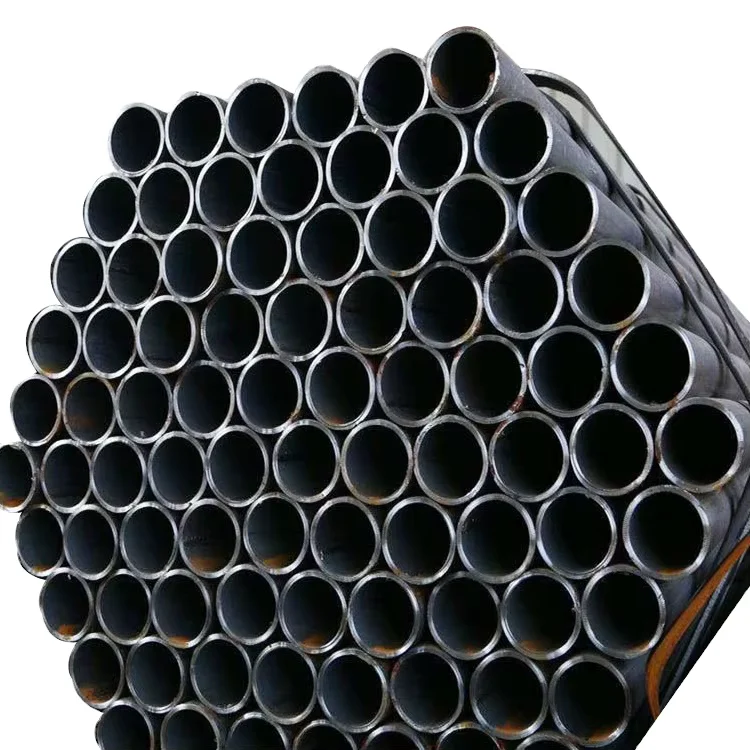
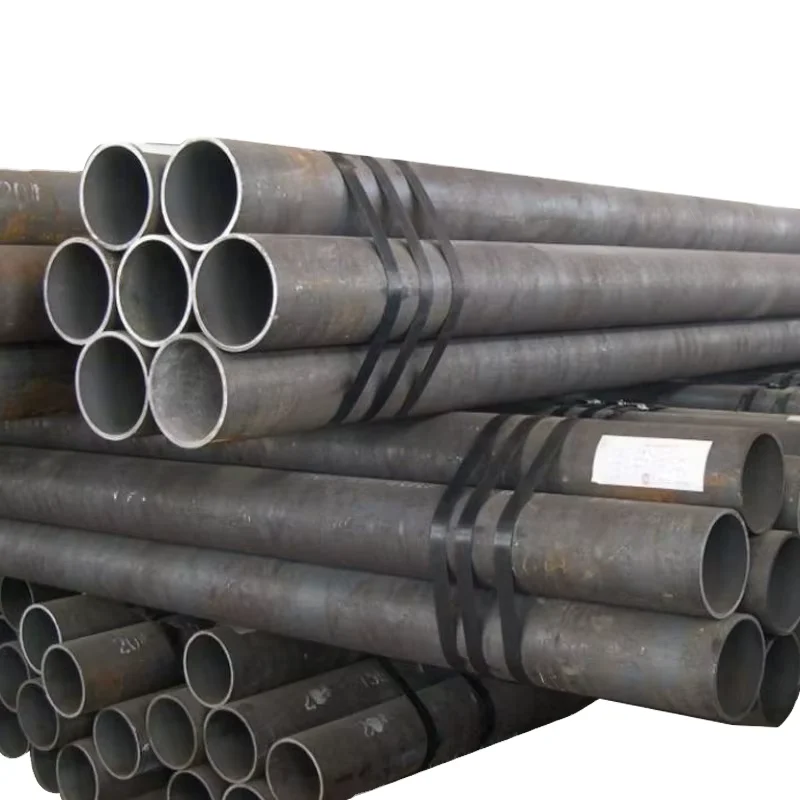
- Q235B ERW welded round steel pipes bundled with galvanized steel strips at 1.5 m intervals, with rubber edge protectors on beveled or threaded ends to prevent thread damage during transit
- Oiled surface pipes wrapped in waterproof woven cloth to prevent oil wipe-off and surface rust during ocean freight
- Container loading optimized for 6 m and 12 m lengths using nested nesting patterns for small-OD pipes (10–114 mm) and single-layer cradle loading for large-OD sections (≥219 mm) to prevent ovalization
- Custom cut-to-length service available for 1–12 m pieces, with each bundle labeled by heat number, steel grade Q235B, OD, and wall thickness
- Heat number and Q235B grade stenciled on every pipe end plus bundle tag, matching the mill test certificate for site inspector verification
- FOB Jinan/Qingdao, CIF destination port, or DDP door delivery with full export documentation and container tracking
Submit Specifications to Lock Pricing and Certification
Send your OD, wall thickness, length, steel grade, and destination port to receive a detailed quotation with unit price, production lead time, and the mill test certificate format for your market. Non-standard dimensions and end treatments are quoted within 12 hours of specification receipt.
Request Your Q235B ERW Pipe Quotation with Mill Test Certificate
Share your dimension schedule and target port — we return pricing, certification documents, and container loading plan within one working day.
Mobile/WhatsApp/WeChat: +86 188 5315 7756
Email: admin@sdxjypipe.com
Frequently Asked Questions
Q: How do Q235B, A53, and S275JR compare across GB, ASTM, and EN standards?
A: Q235B (GB/T 700) maps closely to ASTM A53 Grade A in carbon content and yield range, while S275JR (EN 10025) offers a higher minimum yield strength. We supply all three grades from the same ERW line and provide cross-reference documentation for your engineer’s approval.
Q: Can you provide EN 10204 3.1 mill test certificates and arrange third-party inspection?
A: Yes. Every Q235B ERW welded round steel pipe ships with an EN 10204 3.1 MTC covering chemical composition and mechanical properties per heat number. SGS or BV inspection is arranged at our factory before container loading at your request.
Q: What is the minimum order quantity for non-standard OD or wall thickness?
A: The standard MOQ is 1 Ton. Custom non-standard OD or wall thickness within our 10–3048 mm and 0.8–12.75 mm range is accepted at the same 1 Ton MOQ, with typical production lead times for made-to-order dimensions.
Q: What surface treatment options are available for ERW round pipes?
A: We offer cold-rolled (smooth, scale-free), oiled (transit rust protection), non-oiled (bare black surface), and custom galvanized or 3PE coating. The choice depends on your end-use environment — indoor structural, coastal exposure, or buried service.
Q: How do you protect pipe ends during container loading for overseas shipment?
A: Beveled and threaded ends receive rubber or plastic end protectors before bundling. Pipes are secured with galvanized steel strips at fixed intervals, and large-OD sections are loaded in single-layer cradles to prevent ovalization and end damage during ocean transit.