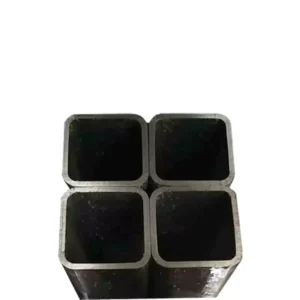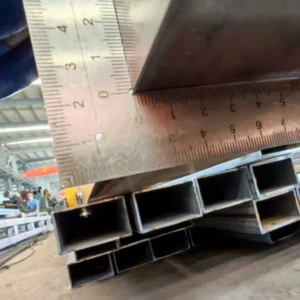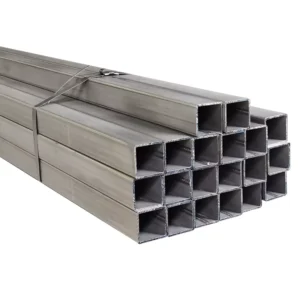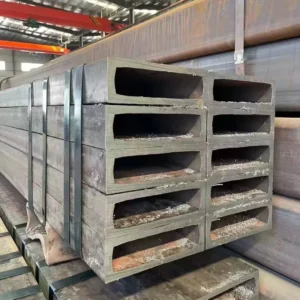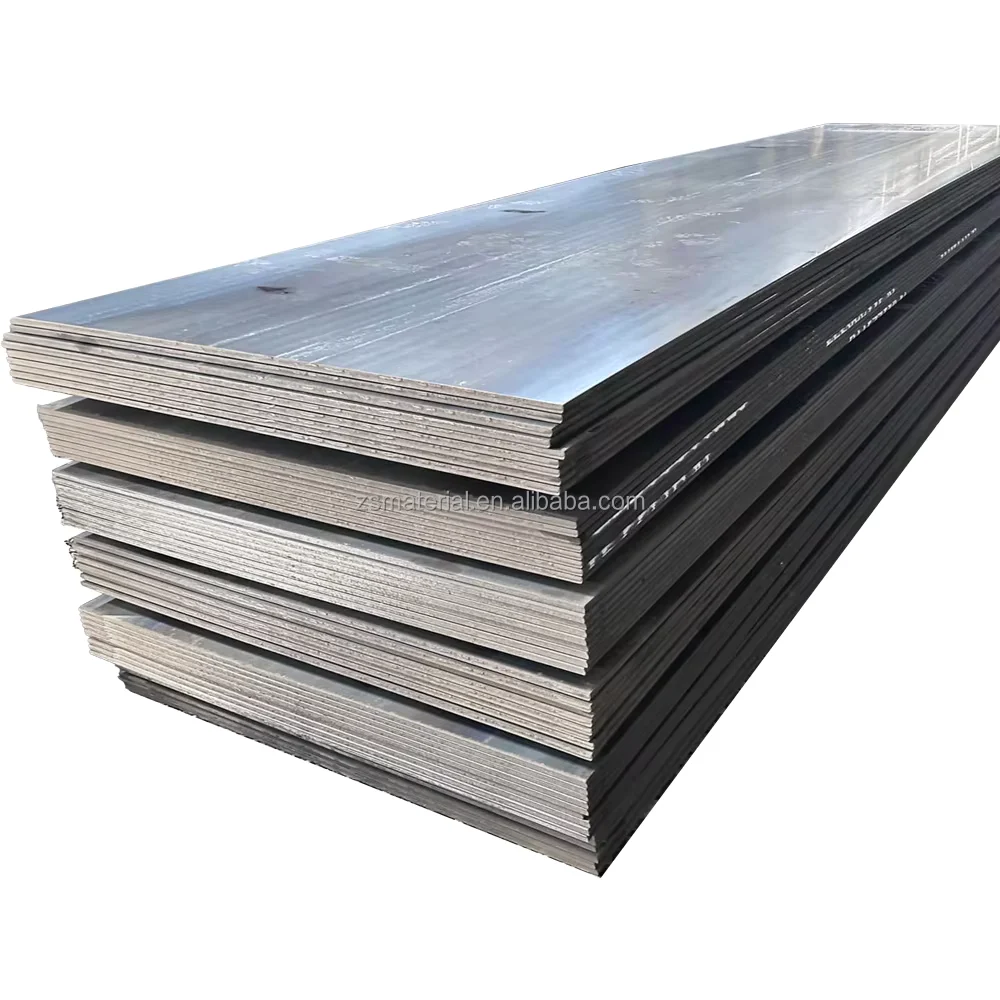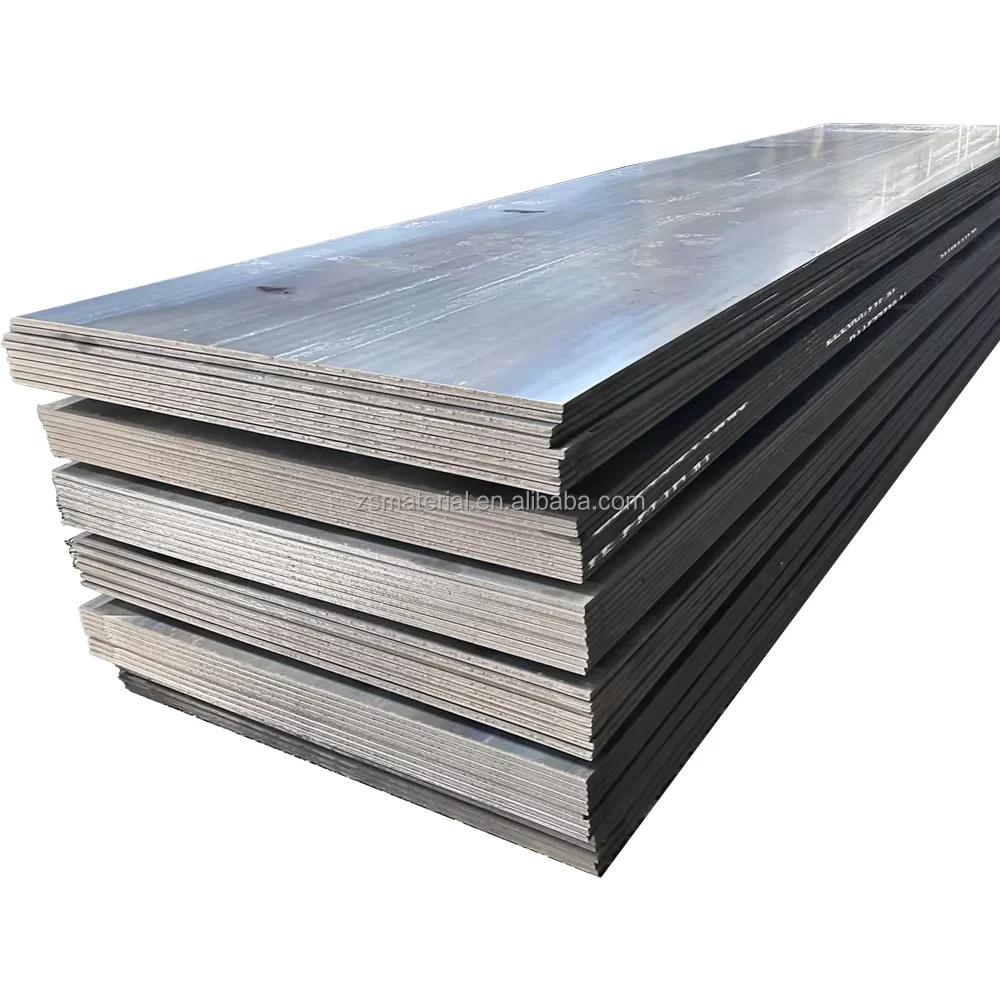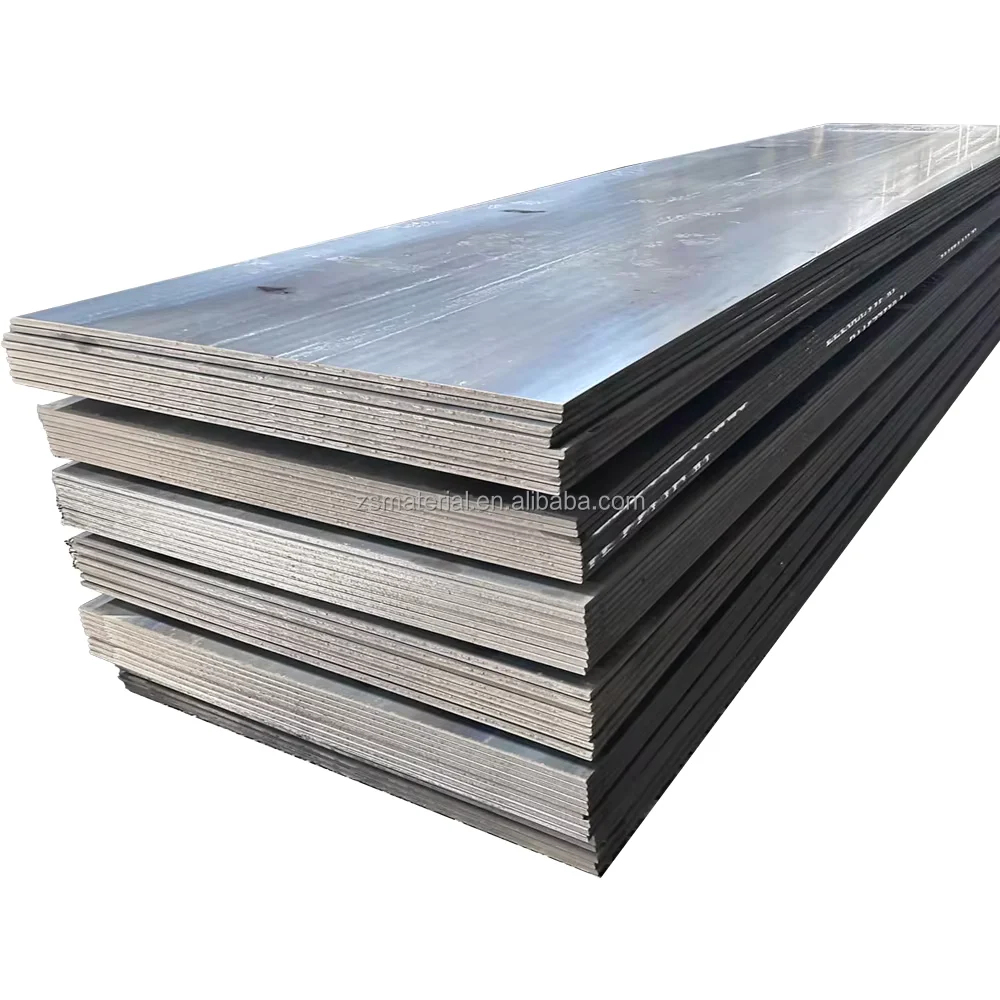

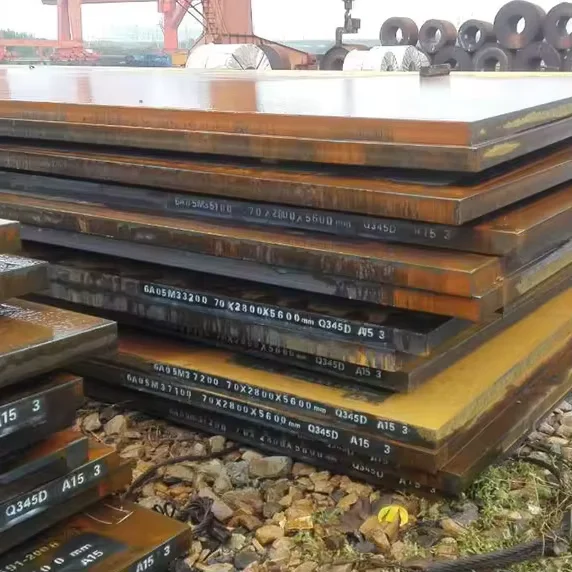

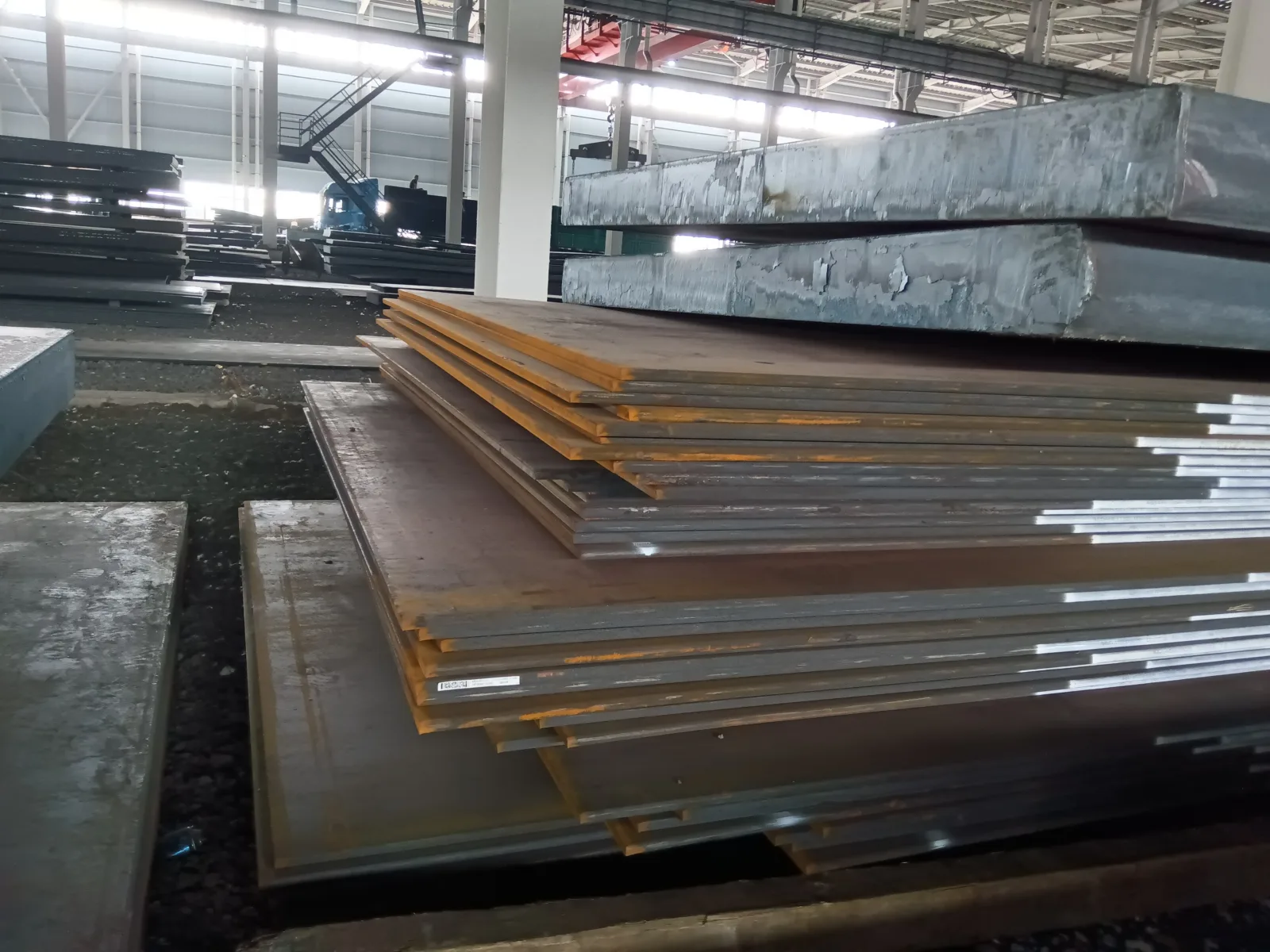
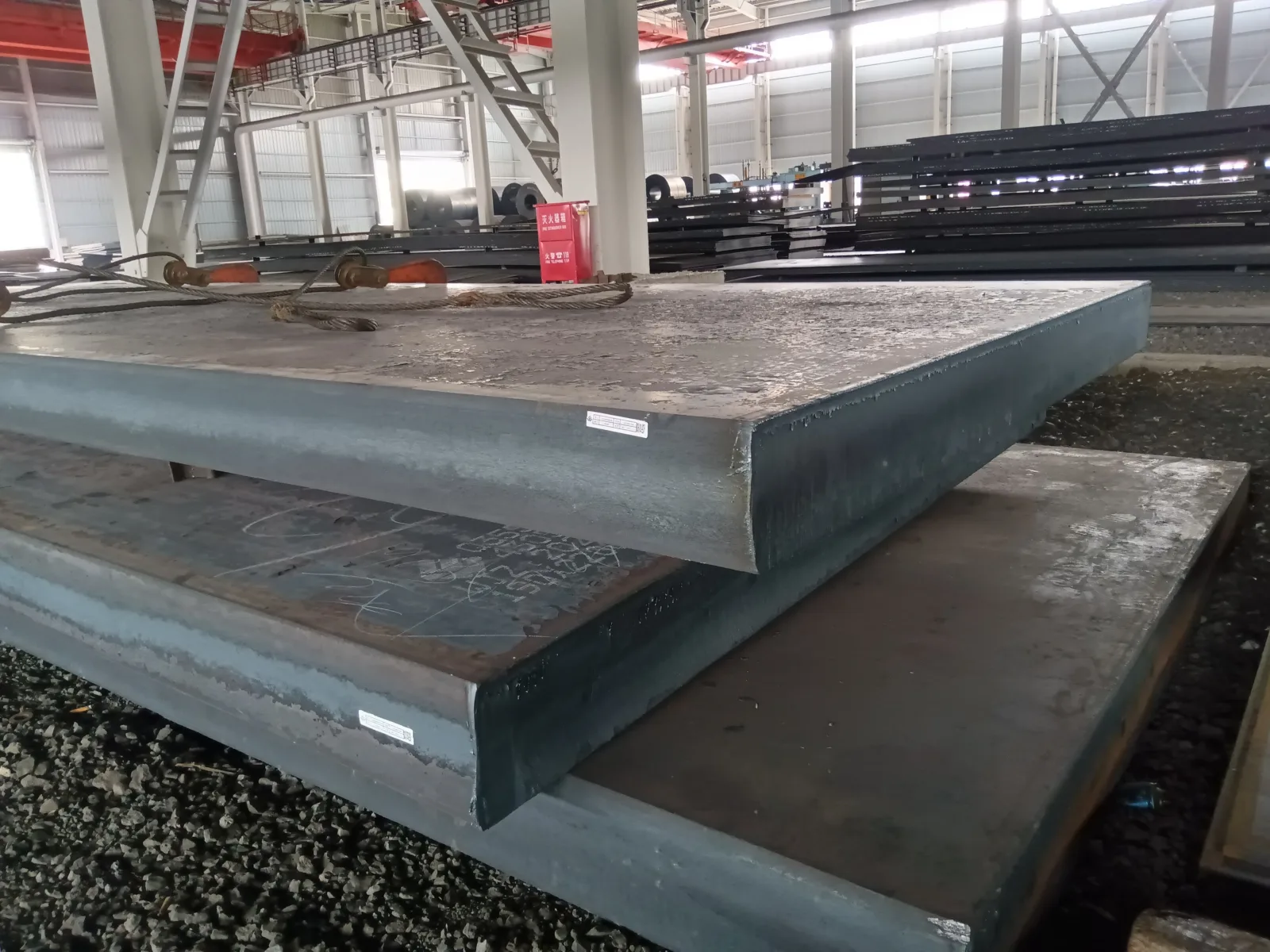
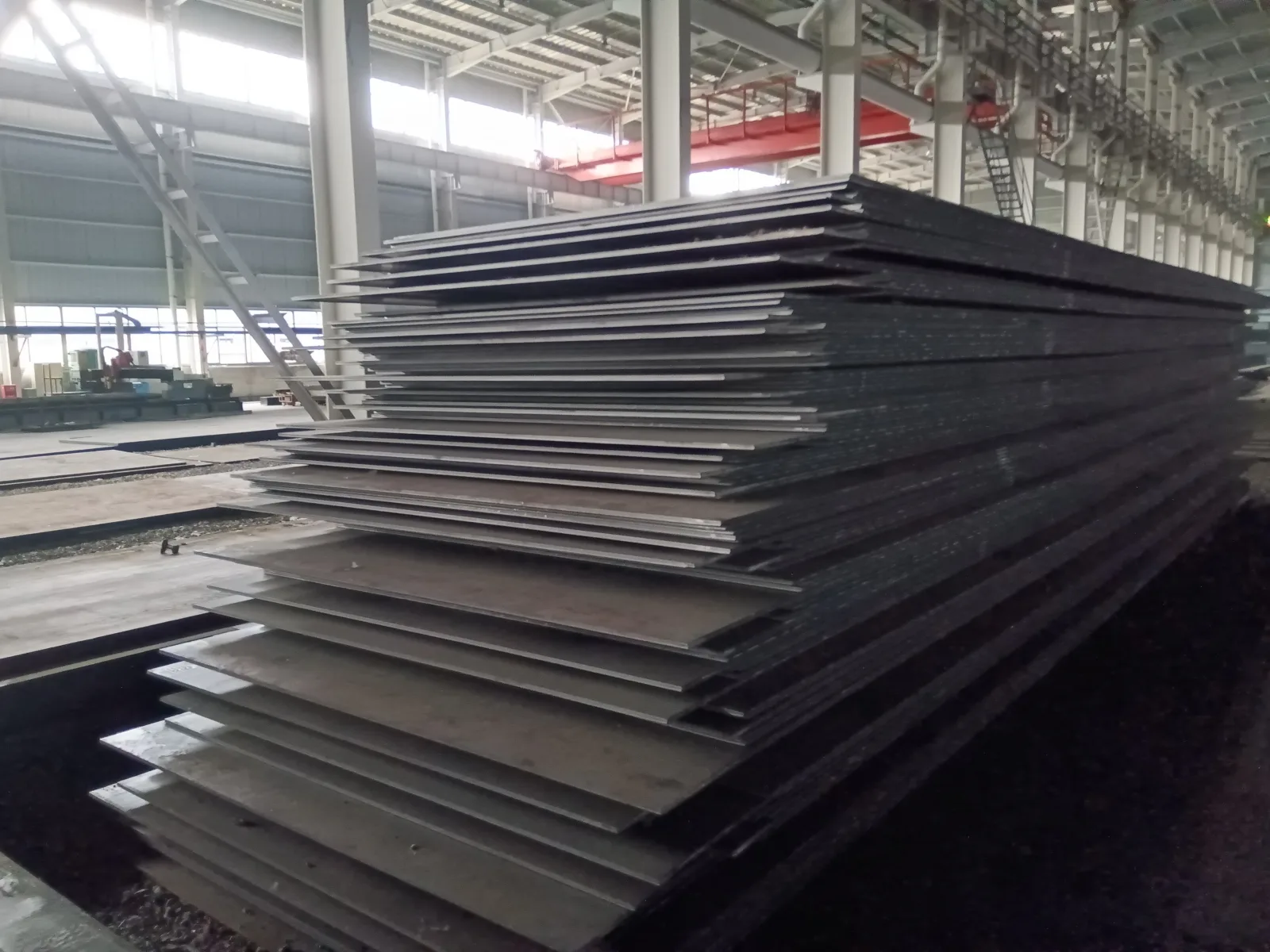
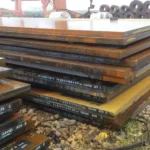
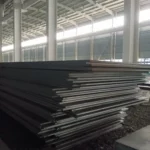
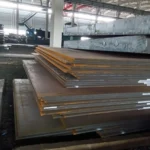
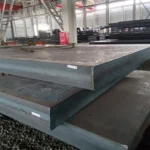
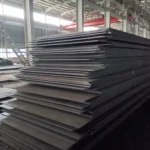
Description
Factory-Direct Q235B Plates — Each heat number is verified in-house before release, backed by full DIN compliance documentation.
Technical Specifications
| Parameter | Value |
|---|---|
| Designation | Q235B Wear Resistant Steel Plate |
| Product Type | Steel Plate |
| Steel Grade | Q235B |
| Standard | DIN |
| Technique | Hot Rolled |
| Surface Treatment | Hot Rolled |
| Tolerance | ±1% |
| Service | Bending |
| Application | Construction / Petrochemical / Machinery / Shipbuilding |
Application Suitability
| Industry | Typical Applications |
|---|---|
| Construction | Load-bearing base plates, column base connections, heavy-duty framework supports |
| Petrochemical | Pipe rack structures, platform grating supports, equipment skid frames |
| Machinery | Equipment base frames, conveyor side plates, wear-prone structural brackets |
| Shipbuilding | Hull reinforcement plates, deck plating, bulkhead stiffeners |
Why Thickness Tolerance Decides Fabrication Fit-Up on Q235B Hot Rolled Wear Resistant Steel Plate Orders
A ±1% tolerance on hot rolled Q235B plates means every piece arrives within dimensional spec — no on-site grinding, no rejected weld prep.
When project engineers receive plates with inconsistent thickness, the entire fabrication sequence stalls. Weld gaps widen beyond code limits, CNC cutting programs fail, and rework costs multiply. I have seen full container loads of steel plate rejected at destination because the mill allowed negative tolerance drift beyond acceptable range. For a Q235B hot rolled wear resistant steel plate supplier, controlling thickness variation is not optional — it is the baseline for structural integrity. Missing mill test certificates compound the problem: without verified chemistry and mechanical data, customs clearance stalls and third-party inspectors flag the shipment. [NEED_CITE: DIN standard dimensional tolerance requirements for hot rolled steel plates]
Matching Q235B Hot Rolled Wear Resistant Steel Plate to Structural and Industrial Demands
Hot rolled Q235B plates deliver the ductility and weldability required for heavy structural frames and machinery bases. The ±1% thickness tolerance ensures consistent load distribution across bolted and welded connections. For shipbuilding and petrochemical applications, the DIN standard alignment simplifies European market compliance. Bending service availability means plates can be pre-formed to project geometry before leaving the mill, reducing on-site fabrication time.
Engineering Compliance and Certification Requirements
Structural applications demand conformity with recognized engineering codes. Q235B plates produced under DIN standards meet European dimensional and material traceability expectations. For projects requiring third-party verification, SGS or BV inspection can be arranged prior to shipment. The hot rolled surface condition provides adequate corrosion resistance for indoor or coated applications, while outdoor or marine environments require supplementary surface protection. Material traceability by heat number ensures full chain-of-custody documentation for regulated markets. [NEED_CITE: EN 10025 structural steel plate requirements and testing protocols]
Understanding Q235B Grade and Hot Rolled Process Characteristics
Q235B belongs to the Chinese GB/T 700 carbon structural steel family, with the “B” designation indicating room-temperature impact testing at 20°C. This grade offers balanced strength and formability, making it suitable for general structural and machinery applications. The hot rolling process produces a mill scale surface that provides baseline corrosion protection during storage and transit. Compared to cold rolled alternatives, hot rolled Q235B plates offer superior thickness capacity and lower production cost for heavy-gauge requirements. The ±1% tolerance reflects controlled rolling practices that minimize thickness variation across the plate width and length. For bending operations, Q235B demonstrates predictable deformation behavior without cracking when minimum bend radii are observed.
Hidden Costs of Sourcing Q235B Hot Rolled Wear Resistant Steel Plate Without Verified Documentation
Purchasing plates without mill test certificates creates downstream risk: material chemistry may not match Q235B specifications, leading to weld failures or structural deficiencies discovered only during inspection. Negative tolerance abuse reduces actual plate weight and load capacity, compromising design safety margins. Missing DIN standard references trigger customs delays in European markets, while absent heat number traceability blocks third-party inspection approval. The cost of replacing rejected plates — including freight, duties, and project delays — far exceeds the price difference between verified and unverified supply. [NEED_CITE: consequences of non-conforming steel plate in structural applications]
Procurement Confidence Through In-House Testing and Full Certification
Every Q235B hot rolled wear resistant steel plate undergoes chemical composition and mechanical property testing in our in-house physical and chemical laboratory before release. Mill test certificates document actual heat-by-heat results, not generic specifications. Our facility holds ISO 9001:2015 certification, and third-party inspection through SGS or BV is available for projects requiring independent verification. With 2,800+ specifications in our production range, we maintain stock of common plate dimensions while offering custom cutting and bending services for non-standard requirements. Professional container loading with edge protection prevents transit damage, and complete export documentation ensures smooth customs clearance across 50+ destination countries.
Documentation & Compliance
- Mill test certificate documenting Q235B chemical composition and mechanical properties per GB/T 700, with heat number traceability
- DIN standard compliance certificate confirming dimensional tolerance and material designation
- ISO 9001:2015 quality management system certificate covering production and testing processes
- SGS or BV third-party inspection report available upon request for project-specific verification
- Material traceability documentation linking each plate to furnace heat number and test results
- Complete customs documents including packing list, bill of lading, and certificate of origin
Packaging, Loading & Delivery
- Hot rolled Q235B plates bundled with steel strips and edge protectors to prevent surface damage during ocean transit
- Mill scale surface preserved with anti-rust treatment suitable for container shipping without additional coating
- Custom cutting to project-specified lengths minimizes on-site waste and optimizes container load capacity
- Heat number and Q235B grade stenciled on each plate for on-site identification and traceability
- Professional loading with timber separators and steel wire securing prevents plate shifting during transit
- FOB, CIF, and DDP shipping terms available with full tracking until destination port arrival
Initiating Your Q235B Hot Rolled Wear Resistant Steel Plate Inquiry
Submit your plate dimensions, thickness requirements, quantity, and destination port to receive a detailed quotation with mill test certificate samples. Custom bending and cutting services are available for non-standard fabrication requirements. We confirm DIN standard compliance and third-party inspection availability before contract signing.
Request Q235B Plate Quotation with Full Certification
Provide your specifications, steel grade requirements, and destination to receive pricing and mill test certificate documentation within 12 hours.
Contact: Shandong Xin Jiyuan Special Steel Tube Co., Ltd
Website: www.sdxjypipe.com
Tel: +86 531 8573 6315
Mobile/WhatsApp/WeChat: +86 188 5315 7756
Email: admin@sdxjypipe.com
Address: No.11889, Jingshi West Road, Lulian Group, Jinan City, Shandong Province, China
Frequently Asked Questions
Q: What is the chemical composition and mechanical properties of Q235B steel?
A: Q235B is a carbon structural steel grade per GB/T 700 standard. The mill test certificate provides actual chemical composition including carbon, manganese, silicon, sulfur, and phosphorus content, along with yield strength and tensile strength test results for each heat number.
Q: Can you provide third-party inspection and material certificates for EU customs?
A: Yes, we arrange SGS or BV third-party inspection prior to shipment. Mill test certificates document DIN standard compliance and Q235B grade verification, supporting European customs clearance requirements.
Q: What is the minimum order quantity for custom thickness and dimensions?
A: MOQ varies by plate thickness and dimensions. Standard sizes may ship from stock, while custom cutting and bending services have typical production lead times. Contact us with your specific requirements for detailed MOQ information.
Q: Do you offer cutting, bending, or other fabrication services?
A: Yes, we provide custom cutting to specified lengths and bending services for Q235B plates. These services reduce on-site fabrication time and ensure dimensional accuracy for your project requirements.
Q: How do you ensure packaging prevents damage during ocean freight?
A: Hot rolled Q235B plates are bundled with steel strips, protected with edge guards, and loaded with timber separators. Professional container loading with steel wire securing prevents plate movement and surface damage during transit.
Secure Your Q235B Hot Rolled Wear Resistant Steel Plate Supply
Submit your plate specifications, quantity, and destination port to receive a detailed quotation with mill test certificate documentation and third-party inspection options.