


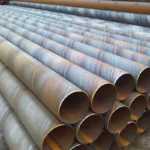

Description
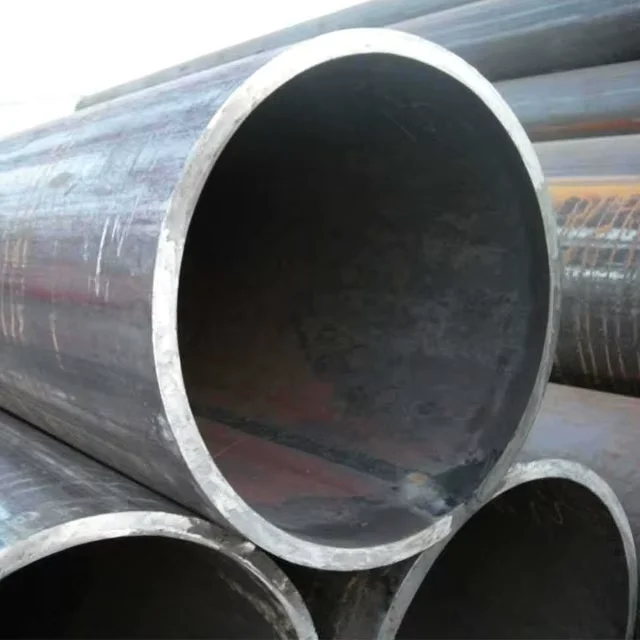
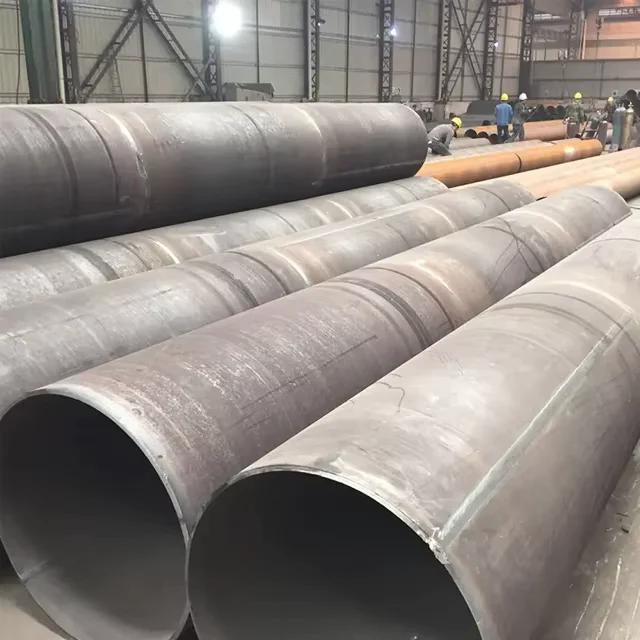
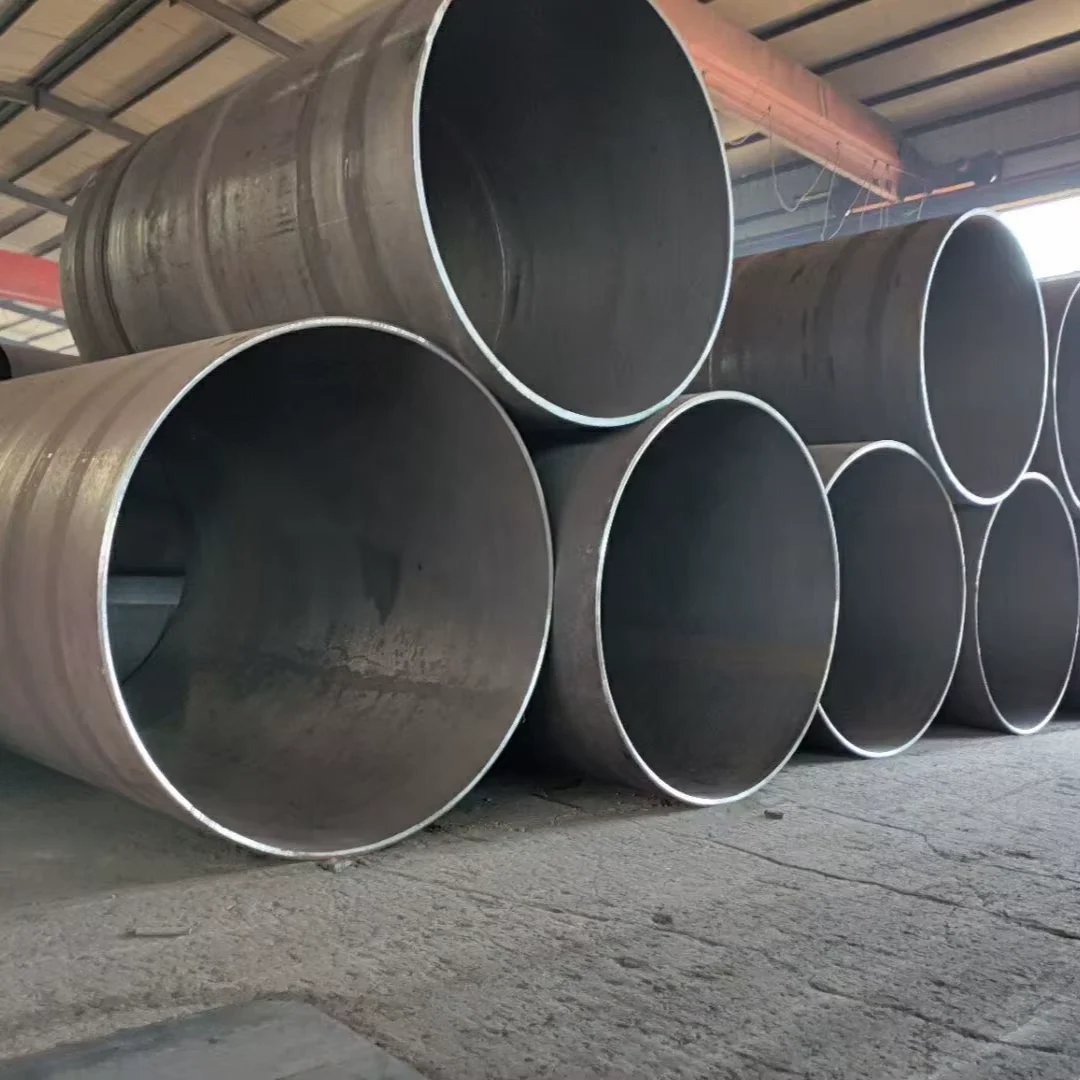
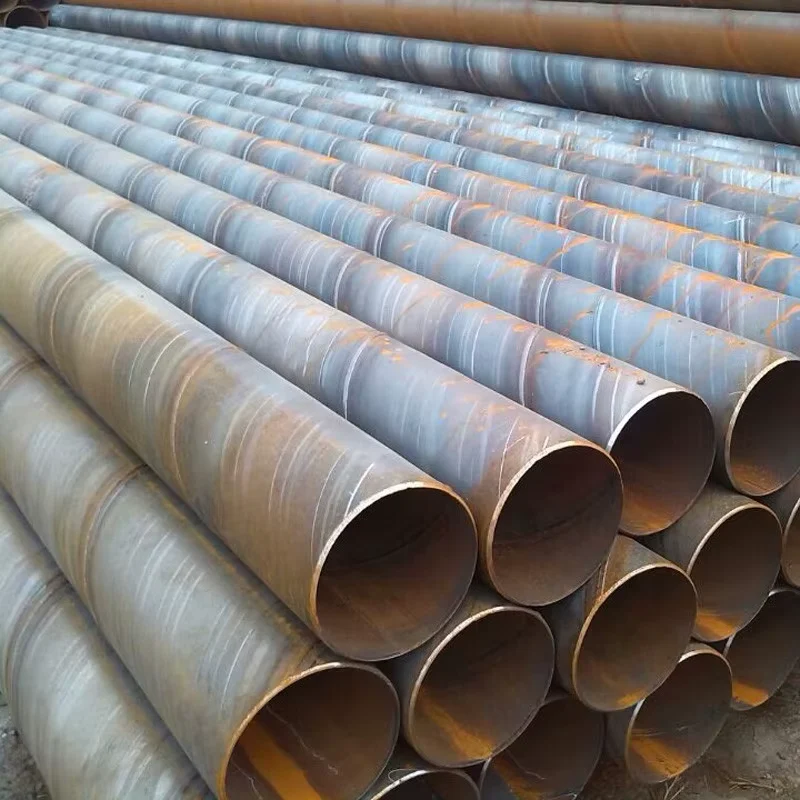
Direct Mill Supply for Large-Diameter Spiral Welded Pipes — Q235B SSAW pipes in 219–2220mm OD ship directly from our production lines with full mill test certificates and third-party inspection support.
Technical Specifications
| Parameter | Value |
|---|---|
| Designation | Q235B Spiral Welded Steel Pipe |
| Product Type | SSAW / Spiral Welded Steel Pipe |
| Steel Grade | Q235B |
| Standard | GB |
| Section Shape | Round |
| Size Range | 219–2220 mm OD |
| Wall Thickness | 5–22 mm |
| Length | 5.8–11.8 m (or as required) |
| Technique | SSAW / ERW |
| Surface Treatment | Antiseptical; External Coating: FBE, 2PE, 3PE, 3PP |
| Ends | Plain end / Beveled end / PVC covered and capped / Threaded and coupled |
| Tolerance | ±1% |
| Invoicing | By Theoretical Weight |
| Application | Piling / Water supply / Bridge casing / Heat-supply / Drainage / Gas transport / Mine slurry / Petroleum pipeline / Chemistry / Power engineering |
| Origin | Shandong, China |
Application Suitability
| Industry | Typical Applications |
|---|---|
| Infrastructure & Piling | Bridge foundation casing, highway sound barrier posts, retaining wall piles |
| Municipal Engineering | Industrial water supply mains, drinking water distribution, stormwater drainage |
| Oil & Gas | API5L petroleum transport lines, natural gas gathering pipelines, fuel gas distribution |
| Industrial & Energy | Heat-supply network pipes, power plant circulating water systems, mine slurry transport |
| Chemical Processing | Chemistry industry process piping, corrosive fluid conveyance with 3PE/FBE coating |
What Negative Wall Tolerance Does to a Piling Casing Order
A 12% negative tolerance on a 22mm wall spiral welded pipe turns a load-bearing casing into a liability before it even reaches the pile site.
When buyers source Q235B SSAW spiral welded steel pipe for piling or well casing projects, the most common failure point is not the steel grade itself — it is the wall thickness arriving below the specified minimum. On a large-diameter pipe running 2220mm OD with 22mm wall, even a small negative tolerance shift means the actual load-bearing cross-section drops significantly. Third-party inspectors at destination check every pipe with ultrasonic thickness gauges, and a single batch failing tolerance triggers full container rejection. [NEED_CITE: ultrasonic thickness testing requirements for spiral welded steel pipes in piling applications]
The second pain point is coating inconsistency. A 3PE or FBE coating that shows pinholes, uneven thickness, or poor adhesion on large-diameter SSAW pipes leads to premature corrosion underground — and replacement costs on an installed pipeline dwarf the original pipe price. End finish mismatches compound the problem: beveled ends that do not match the downstream welding specification force field rework, adding days to the project timeline.
Matching Large-Diameter SSAW Pipes to Piling and Pipeline Engineering
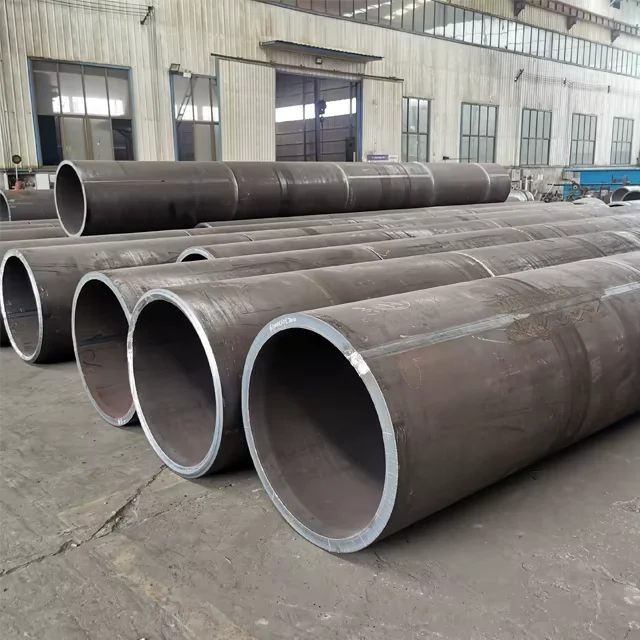
A Q235B SSAW spiral welded steel pipe in the 219–2220mm OD range covers the full spectrum from small-bore water distribution to major piling casing and gas transmission lines. The spiral welding technique allows continuous production in lengths up to 11.8m, reducing field weld joints on piling projects where every joint is a potential weak point. For underground water or gas pipelines, selecting the right external coating — FBE for high-temperature service, 3PE for standard buried conditions, 3PP for elevated temperature environments — directly determines service life. Our in-house coating lines handle each diameter range with dedicated parameters, ensuring consistent film thickness across the full pipe surface.
Engineering Compliance and Certification Requirements
Piling and pipeline projects across the Middle East, Southeast Asia, and Africa require documentation that satisfies both the engineering specification and customs authorities. Q235B grade under GB standard is widely accepted for structural casing and fluid transport, but buyers must confirm equivalence with local project specs when EN or ASTM references appear in tender documents. [NEED_CITE: steel grade equivalence mapping between GB Q235B and international standards] Mill test certificates must document chemical composition and mechanical properties per heat number. For projects specifying CE-marked products or requiring third-party inspection, having ISO 9001:2015 certification and pre-shipment SGS/BV inspection capability eliminates clearance delays at destination ports.
Q235B Grade and Spiral Welding Process Explained
Q235B is a carbon structural steel grade under the GB standard system, widely used for general structural and fluid conveyance applications where moderate strength and good weldability are required. The “Q” designation refers to yield strength, and the “235” indicates the minimum yield value — making it suitable for piling casing, water mains, and low-to-medium pressure pipeline applications. Compared to higher grades like Q345B or Q420, Q235B offers better formability and lower cost for applications where extreme pressure resistance is not the primary requirement.
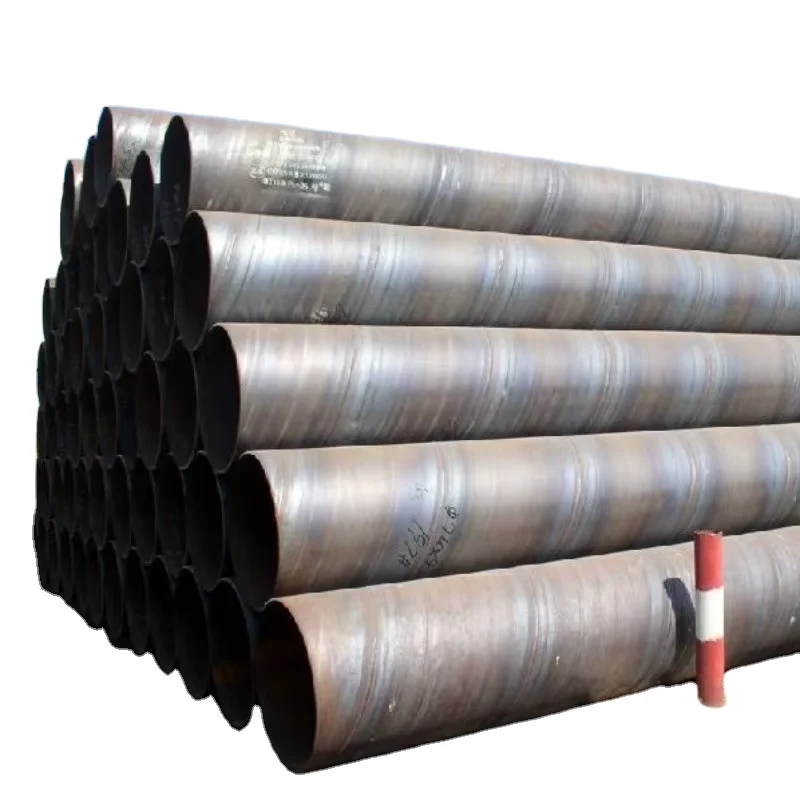
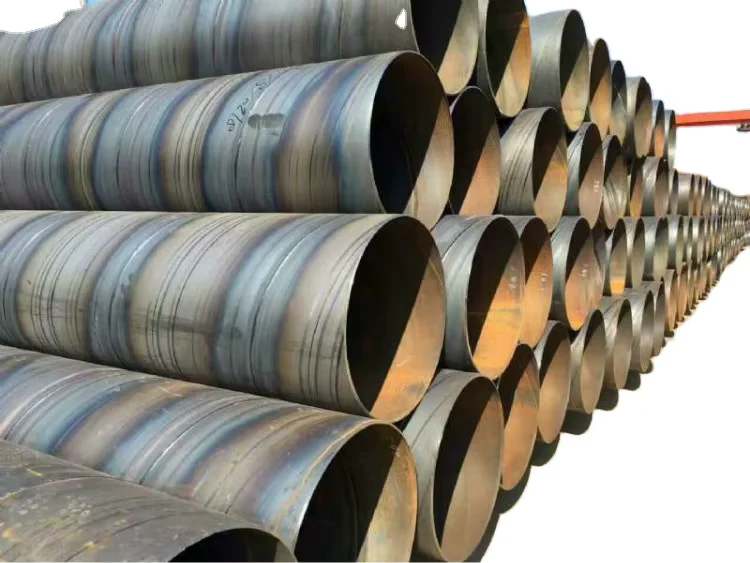
The SSAW (Submerged Arc Arc Welded) spiral welding process forms the pipe by helically winding steel coil and welding the seam submerged under flux. This method allows production of large diameters — up to 2220mm — from relatively narrow coil widths, which is economically efficient for long-length piling and casing orders. The spiral seam distributes stress differently from a straight longitudinal weld, and for piling applications where the pipe primarily承受 axial compression rather than internal pressure, SSAW provides adequate structural performance at competitive cost.
External coating selection follows the service environment. FBE (Fusion Bonded Epoxy) provides excellent adhesion and chemical resistance for high-temperature or chemically aggressive soils. 3PE (three-layer polyethylene) combines epoxy primer, adhesive copolymer, and polyethylene outer layer for mechanical protection during backfilling. 3PP (three-layer polypropylene) extends the temperature range for hot-service pipelines. Each coating type requires specific surface preparation and application parameters that our coating lines control per diameter and wall thickness range.
Hidden Costs of Sourcing the Wrong Spiral Welded Pipe
Incorrect wall tolerance, missing heat-number traceability, and non-conforming coating turn a low-unit-price purchase into a high-total-cost project failure.
When wall thickness falls below the specified minimum across a batch of piling casing pipes, the entire lot may fail ultrasonic inspection at destination — meaning demobilization costs, replacement shipping, and project delays that far exceed the original price difference between suppliers. Pipes arriving without proper end finishes force field crews to re-bevel or re-thread on site, adding labor costs and schedule risk. Coating that fails adhesion testing after installation requires excavation and recoating — an operation that costs multiples of the original pipe price per meter. [NEED_CITE: consequences of non-conforming wall thickness in structural piling applications]
Why Buyers Source Q235B SSAW Spiral Welded Steel Pipe From Our Mill
We produce Q235B SSAW spiral welded steel pipe directly in our own facility, meaning every order goes through our in-house physical and chemical laboratory before shipment. Our dimensional testing covers OD, wall thickness, and length on every pipe — not just sample pieces — and the mill test certificate reports actual measured values against heat number. For buyers needing external coating, our dedicated coating lines handle FBE, 2PE, 3PE, and 3PP application with thickness controlled per specification. We hold ISO 9001:2015, Lloyd’s CE certification, and Singapore FPC, and we arrange SGS or BV third-party inspection before loading. Our professional loading team handles large-diameter pipes with anti-damage measures including cradle supports and edge protectors, preventing the bending and coating damage that commonly occurs during ocean transit. Custom lengths, end finishes, and non-standard dimensions are available with typical production lead times for made-to-order specifications.
Documentation & Compliance
- Mill test certificate documenting Q235B chemical composition (C, Si, Mn, P, S) and mechanical properties per GB standard, traceable by heat number
- SGS or BV third-party inspection report covering dimensional verification, coating thickness measurement, and visual weld seam examination before shipment
- ISO 9001:2015 quality management certificate valid for SSAW steel pipe production
- Lloyd’s CE certificate and Singapore FPC for projects requiring international conformity marking
- Full export documentation set: commercial invoice, packing list, bill of lading, and certificate of origin for destination customs clearance
- Material traceability report linking each pipe to its heat number, coil batch, and production date
Packaging, Loading & Delivery
- Q235B SSAW pipes bundled with steel strip bands and separated by timber spacers to prevent coating contact damage during ocean transit
- External coating (FBE/3PE/3PP) protected with plastic wrap at pipe ends and edge protectors at bundle contact points to preserve film integrity
- Large-diameter pipes (above 1000mm OD) loaded individually with cradle supports and secured with nylon straps to prevent ovalization and coating crush
- Custom cutting to project-specific lengths within the 5.8–11.8m range, with cut ends deburred and temporarily capped to prevent moisture ingress
- Heat number and Q235B grade stenciled on each pipe end for site identification and traceability verification
- FOB, CIF, and DDP shipping terms available with professional container or break-bulk loading optimized for large-diameter pipe dimensions
Ready to Move Forward With Your Spiral Welded Pipe Order
Submit your specification sheet — including OD, wall thickness, length, coating type, end finish, and quantity — to receive a detailed quotation with unit pricing, production timeline, and mill test certificate sample. For piling and pipeline projects requiring third-party inspection or specific certification packages, confirm your destination country and project standard reference so we can align documentation before production begins.
Get Your Q235B SSAW Spiral Welded Steel Pipe Quote
Send your specifications to admin@sdxjypipe.com or reach us via WhatsApp at +86 188 5315 7756 for pricing, mill test certificate samples, and loading confirmation.
—
Frequently Asked Questions
Q: What is the difference between SSAW and LSAW pipes, and which is better for piling applications?
A: SSAW (spiral welded) pipes are formed by helically winding steel coil, allowing large diameters from narrower coil widths at competitive cost. LSAW (longitudinal welded) pipes use a straight seam and are typically produced in smaller diameters. For piling casing where the pipe primarily承受 axial compression, SSAW provides adequate performance. For high-pressure fluid transport, LSAW may be preferred depending on project specification.
Q: Which external coating should I choose for buried water or gas pipelines?
A: FBE coating suits high-temperature service and chemically aggressive environments. 3PE (three-layer polyethylene) is the standard choice for general buried pipelines, offering mechanical protection during backfilling. 3PP (three-layer polypropylene) extends the temperature range for hot-service lines. The selection depends on soil conditions, operating temperature, and project specification requirements.
Q: Can you provide end finishes that match my downstream welding or connection specification?
A: Yes. We offer plain end, beveled end (to your specified angle and root face), PVC covered and capped for temporary protection, and threaded and coupled ends. Confirm your welding procedure or connection type when submitting the inquiry so we can match the end preparation accordingly.
Q: How do you ensure coating adhesion and thickness consistency on large-diameter pipes?
A: Our coating lines apply surface preparation, primer, adhesive, and outer layer under controlled parameters specific to each diameter range. Adhesion testing and holiday detection (pinhole inspection) are performed per batch. Third-party inspection by SGS or BV can verify coating thickness and adhesion before shipment.
Q: What certifications and documents do you provide for Middle East and Southeast Asia customs clearance?
A: We provide mill test certificates per heat number, ISO 9001:2015 quality certificate, Lloyd’s CE certificate, Singapore FPC, and arrange SGS/BV third-party inspection reports. Full export documentation including commercial invoice, packing list, bill of lading, and certificate of origin is prepared for destination customs requirements.