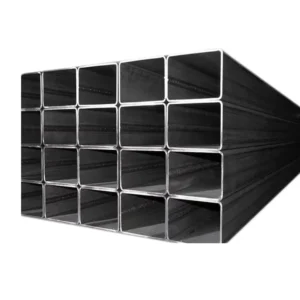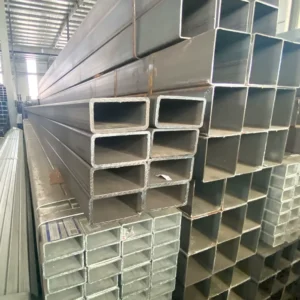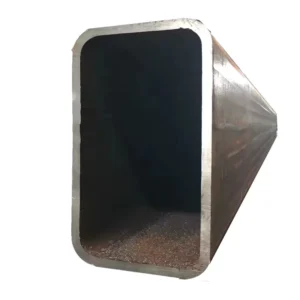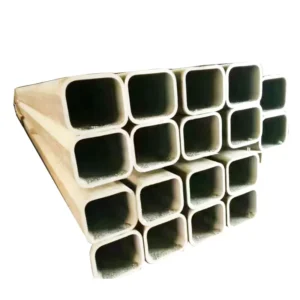



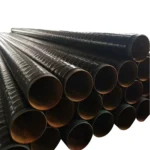
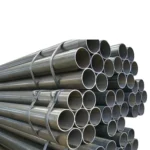
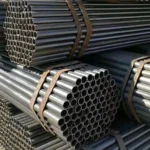
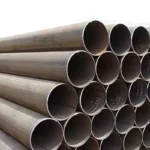
Description
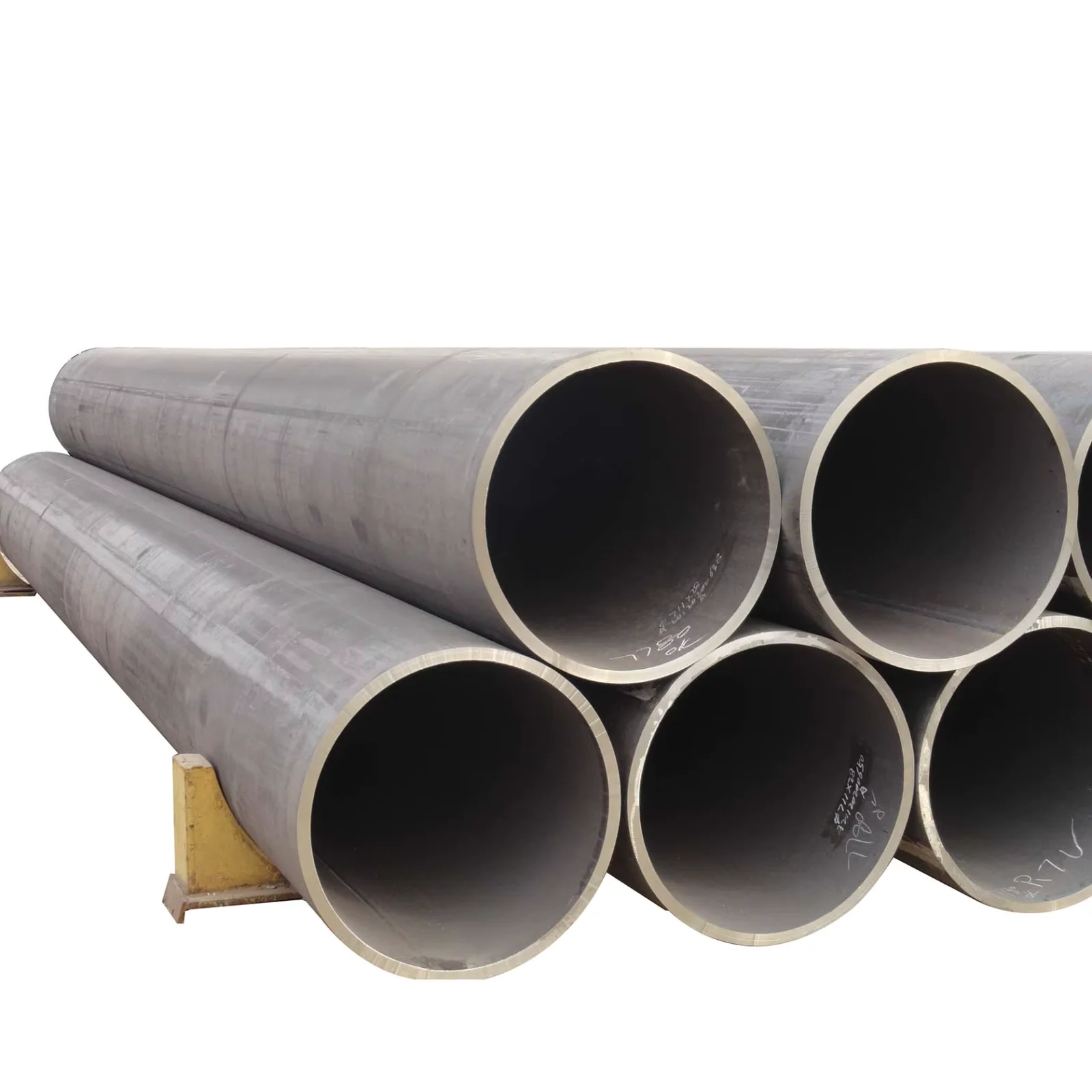
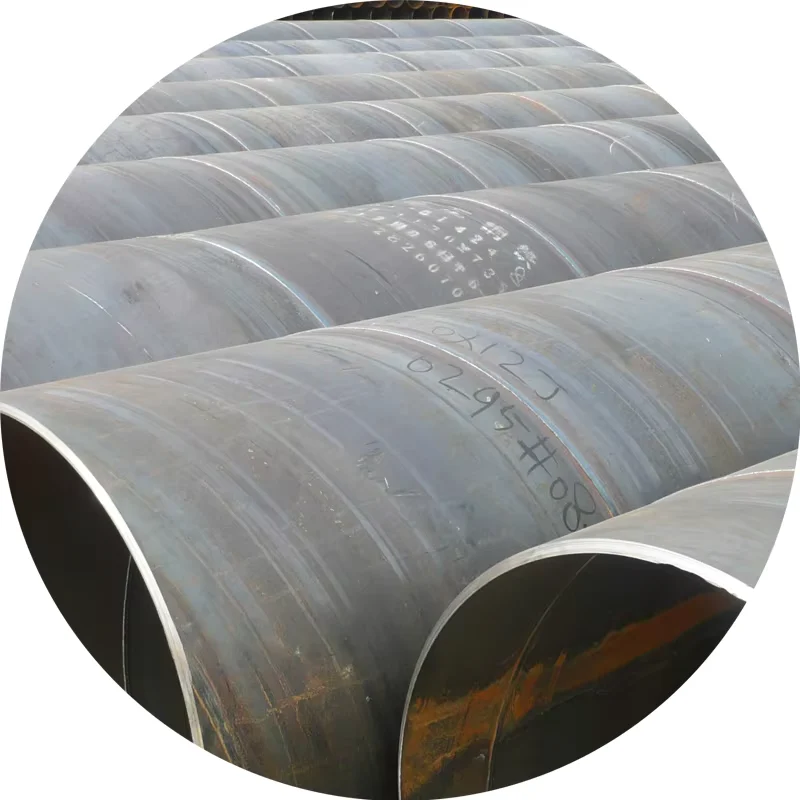
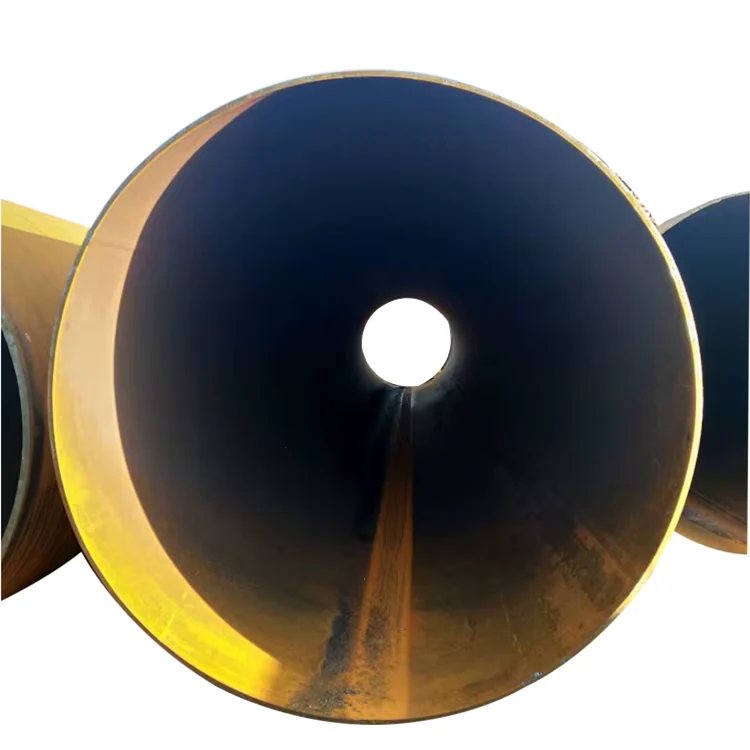
Factory-Direct ERW Pipe Production — Every Q235 Q345 ERW welded steel pipe is manufactured on our own longitudinal seam submerged arc welding lines, eliminating trader markups and ensuring direct mill test traceability from raw coil to finished bundle.
Technical Specifications
| Parameter | Value |
|---|---|
| Designation | Q235 Q345 ERW Longitudinal Seam Submerged Arc Welded Steel Pipe |
| Product Type | ERW Welded Steel Pipe / Round Steel Pipe |
| Steel Grade | Q235, Q345 |
| Standard | GB, API |
| Section Shape | Round |
| Outer Diameter | 10–2620 mm |
| Wall Thickness | 0.5–80 mm |
| Length | 6 m / 12 m (or as required) |
| Technique | ERW Longitudinal Seam Submerged Arc Welded / Hot Rolled |
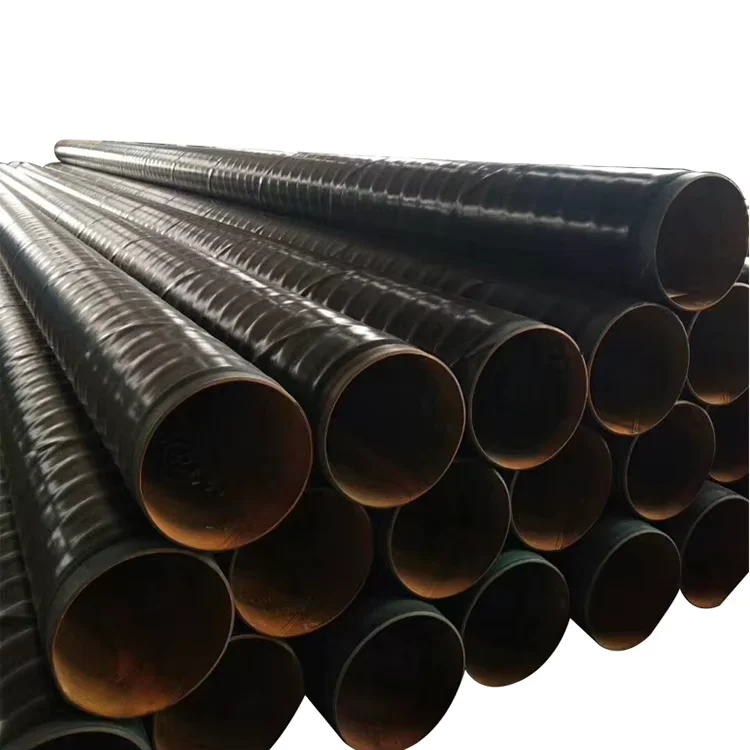
| Surface Treatment | Oiled / Coating / Threaded / Grooved / Beveled |
| Tolerance | ±1% |
| Ends | Plain / Beveled / Threaded / Grooved |
| Application | Structure Pipe |
| MOQ | 25 tons |
| Origin | Shandong, China |
Application Suitability
| Industry | Typical Applications |
|---|---|
| Building Construction | Column frames, roof trusses, and load-bearing pipe racks for commercial and industrial buildings |
| Bridge Engineering | Piling supports, pier casings, and structural bracing members for highway and railway bridges |
| Industrial Infrastructure | Conveyor frameworks, equipment support legs, and process pipe galleries in petrochemical and power plants |
| Municipal Engineering | Underground utility conduits, drainage culverts, and foundation piling for urban development projects |
What Negative Tolerance Costs When Thick-Wall ERW Pipe Arrives at Port
A 0.9 mm shortfall on an 8 mm nominal wall turns a compliant structural order into a rejected shipment.
I watched a full container of thick-wall ERW pipe get refused at Jebel Ali because the buyer’s SGS re-inspection found walls measuring well below the contract nominal. The mill had pushed negative tolerance to its limit, and no amount of paperwork could reverse the physical measurement. With Q235 Q345 ERW welded steel pipe in heavy wall sections, buyers sourcing from trading companies rather than direct mills face exactly this risk — the middleman has no control over rolling practice, and the mill test certificate may reflect furnace chemistry while the actual wall dimension tells a different story. Dimensional verification on every pipe, not just per-batch sampling, is what separates a deliverable order from a port-side dispute [NEED_CITE: EN 10219 dimensional tolerance requirements for structural hollow sections].
Matching Heavy-Wall Round Pipe to Structural Load Paths
The 10–2620 mm outer diameter range and wall thickness up to 80 mm in Q235 and Q345 grades position this Q235 Q345 ERW welded steel pipe for primary load-bearing roles rather than secondary cladding or light framing. Q345’s higher yield tier serves column and piling applications where bending moments demand greater section modulus, while Q235 covers bracing, handrail posts, and non-critical conduit runs. The submerged arc welding process produces a full-penetration longitudinal seam suitable for structural stress transfer, and the ±1% dimensional tolerance keeps section properties within engineering calculation assumptions — a critical factor when these pipes form part of a certified structural system.
Engineering Compliance and Surface Protection Selection
Structural frames designed to GB or API standards require mill documentation that traces each pipe to its heat number, with chemical composition and mechanical test results matching the specified grade. For projects entering European or Middle Eastern markets, third-party inspection by SGS or BV before shipment provides the independent verification that customs authorities and project engineers expect [NEED_CITE: third-party inspection protocols for structural steel pipe exports]. Surface treatment selection — oiled for temporary transit protection, coating for moderate corrosion environments, or beveled/grooved ends for field welding — should align with the installation timeline and exposure conditions rather than defaulting to the mill’s standard offering.
Understanding Q235 and Q345 Grade Selection for ERW Pipe
Q235 and Q345 belong to the Chinese GB/T 700 and GB/T 1591 carbon and low-alloy structural steel systems respectively. Q345 offers a higher minimum yield strength tier than Q235, making it the preferred choice for primary structural members subject to significant bending or compressive loads. The ERW longitudinal seam submerged arc welding technique used here differs from standard high-frequency ERW in that the submerged arc process deposits filler metal under flux, producing a weld seam with mechanical properties approaching the parent plate — this matters for thick-wall sections where the weld zone represents a larger proportion of the cross-section. Hot rolled feedstock further ensures uniform grain structure through the wall thickness, reducing the risk of laminar tearing during field bending or welding.
Hidden Costs of Unverified Wall Thickness and Grade Substitution
Ordering Q345 pipe and receiving Q235 substitution — or accepting wall thickness at the extreme negative edge of tolerance — creates costs that surface only during structural inspection or load testing. Engineering sign-off fails when as-delivered section modulus falls below calculated requirements; customs clearance stalls when the mill test certificate references a different standard than the purchase order specified; and on-site rework becomes necessary when end preparations do not match the welding procedure qualified for the project. These failures trace back to procurement from sources that cannot guarantee grade traceability or control rolling tolerances at the production line [NEED_CITE: structural steel grade equivalence and substitution risks in international procurement].
Direct Mill Control Over Quality and Documentation
Every Q235 Q345 ERW welded steel pipe leaving our facility passes through our in-house physical and chemical laboratory, where dimensional checks, tensile testing, and chemical analysis are performed per heat and documented in the mill test certificate. We maintain ISO 9001:2015 certification alongside Lloyd’s CE marking for EN 10210/EN 10219 and Singapore FPC approval, meaning the documentation package satisfies requirements across Middle Eastern, European, and Southeast Asian project specifications. Our 2,800+ specification range covers the full 10–2620 mm diameter and up to 80 mm wall thickness in a single procurement source, and our professional container loading team designs stowage plans that prevent ovality and surface damage during ocean transit — because a pipe that arrives bent or dented fails inspection regardless of its mill certificate.
Documentation & Compliance
- Mill test certificate documenting Q235 or Q345 chemical composition and mechanical properties per GB/T 700 or GB/T 1591, traceable to heat number
- CE certificate covering EN 10210/EN 10219 compliance for projects requiring European market access
- ISO 9001:2015 quality management system certificate covering the full ERW submerged arc welding production process
- SGS or BV third-party inspection report available for pre-shipment dimensional, visual, and mechanical verification
- Material traceability documentation linking each pipe bundle to its production heat and rolling schedule
- Export customs documents including packing list, bill of lading, and certificate of origin formatted for destination port requirements
Packaging, Loading & Delivery
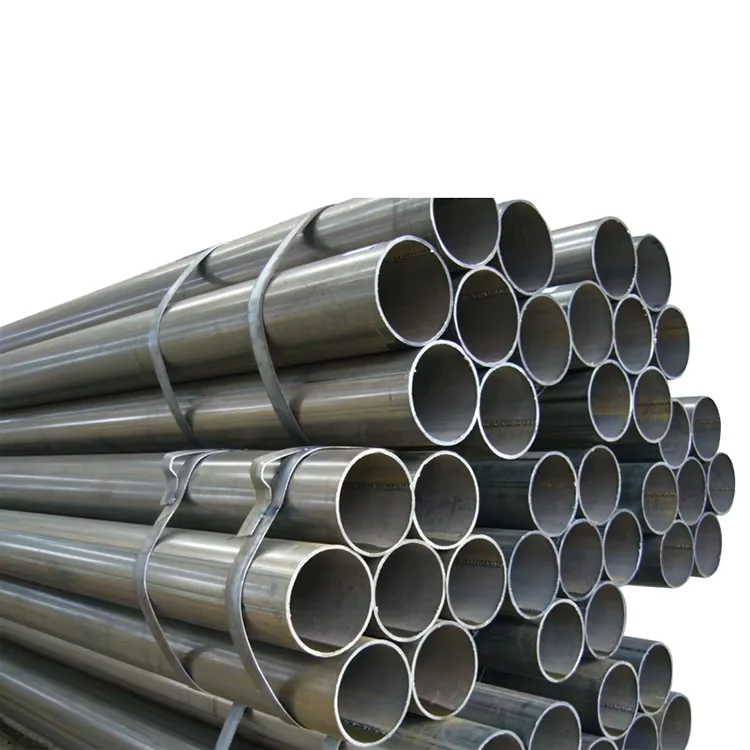
- Heavy-wall Q235 Q345 ERW welded steel pipe bundled with high-tensile steel strips and separated by timber dunnage to prevent surface scoring during ocean transit
- Oiled or coated surface finishes protected by plastic end caps and wrapping to preserve corrosion resistance through port storage and inland transport
- Container loading plans optimized for 6 m and 12 m lengths with nested diameter arrangements to maximize payload per 20ft or 40ft unit
- Beveled, threaded, or grooved end preparations individually capped to prevent thread damage and groove deformation before field installation
- Heat number and grade identification stenciled on each pipe bundle for on-site traceability verification during structural inspection
- FOB, CIF, and CFR trade terms available with professional stowage supervision to ensure weight distribution and lashing integrity
Starting Your Q235 Q345 ERW Pipe Inquiry
Submit your required outer diameter, wall thickness, length, steel grade, surface treatment, and destination port to receive a detailed quotation with unit pricing, production lead time, and mill test certificate commitment. Our technical team reviews each inquiry within 12 hours and confirms whether your specification falls within standard range or requires custom rolling — including non-standard lengths, special end preparations, or third-party inspection coordination.
Request Your ERW Pipe Quotation with Mill Test Certificate
Send your specification sheet to admin@sdxjypipe.com or contact us via WhatsApp at +86 188 5315 7756 to begin your procurement process with direct mill pricing and full documentation support.
Frequently Asked Questions
Q: What is the difference between Q235 and Q345 grades for ERW welded steel pipe?
A: Q235 and Q345 are Chinese GB standard structural steel grades where Q345 provides a higher minimum yield strength tier than Q235. Q345 is typically specified for primary structural members requiring greater load capacity, while Q235 suits secondary framing, bracing, and non-critical structural applications. Both grades are available in our ERW longitudinal seam submerged arc welded pipe range.
Q: Can you arrange third-party inspection before shipment?
A: Yes, we coordinate SGS or BV third-party inspection for dimensional verification, visual examination, and mechanical testing before container loading. The inspection report is issued independently and provided alongside our mill test certificate as part of the complete export documentation package.
Q: What surface treatment options are available for Q235 Q345 ERW welded steel pipe?
A: We offer oiled finish for temporary rust prevention during transit, custom coating for corrosion protection in service, and end preparations including plain, beveled, threaded, and grooved configurations. The selection depends on your installation environment, connection method, and project timeline.
Q: What is the minimum order quantity for custom sizes?
A: Our standard minimum order quantity is 25 tons. For non-standard outer diameters, wall thicknesses, or lengths outside our regular stock range, we evaluate custom rolling feasibility based on production scheduling and provide specific MOQ guidance during quotation.
Q: Do you provide mill test certificates for each shipment?
A: Yes, every shipment of Q235 Q345 ERW welded steel pipe is accompanied by a mill test certificate documenting chemical composition and mechanical properties per the applicable GB standard, with heat number traceability linking each pipe to its production batch.