


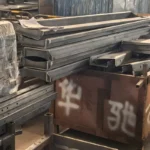
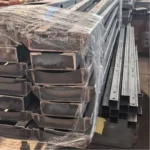

Description
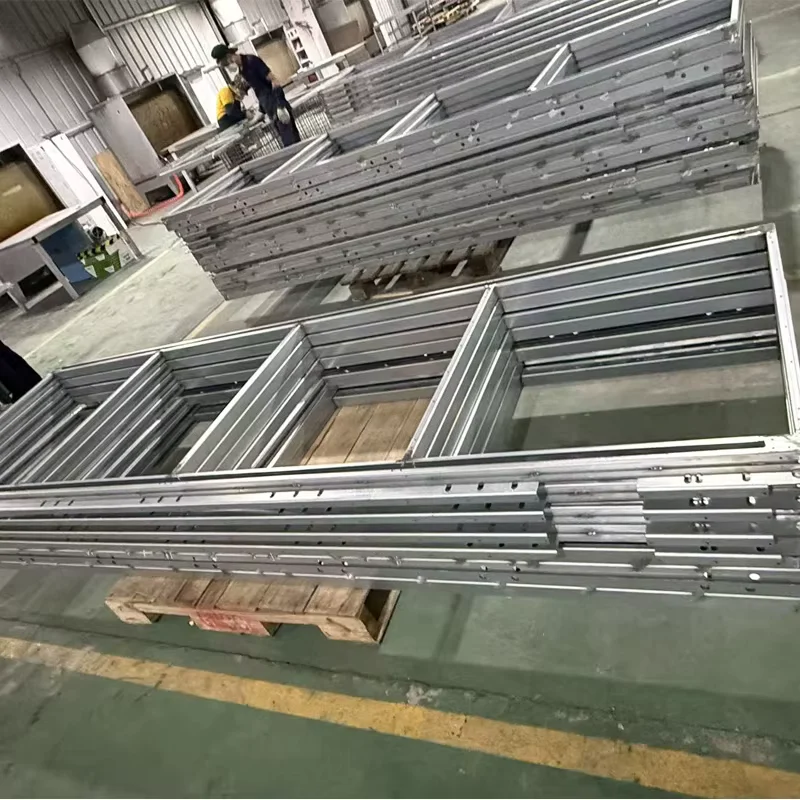
Factory-Direct Fabrication Source — All laser cutting, CNC bending, stamping, and welding processes executed in-house, eliminating third-party subcontractors and ensuring tolerance control from raw sheet to finished assembly.
Technical Specifications
| Parameter | Value |
|---|---|
| Designation | Custom Stainless Steel Fabricated Structural Parts |
| Product Type | Machined Steel Product (Sheet Metal Fabrication) |
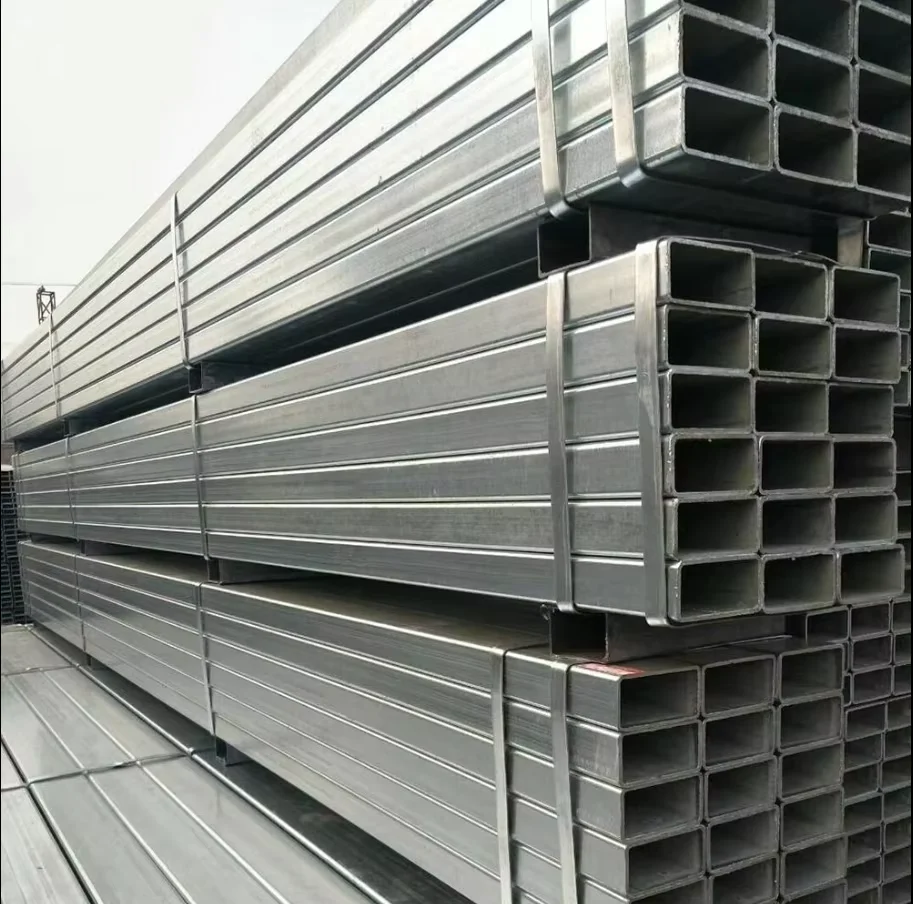
| Steel Grades | Stainless Steel, Carbon Steel, Aluminum, Copper, Alloy Steel |
| Thickness Range | 3 mm–10 mm / customized |
| Size | Customized Size |
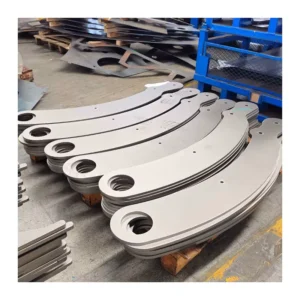
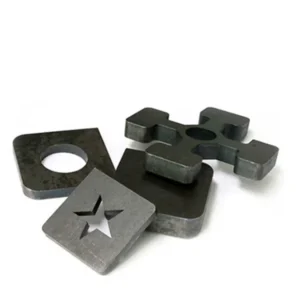
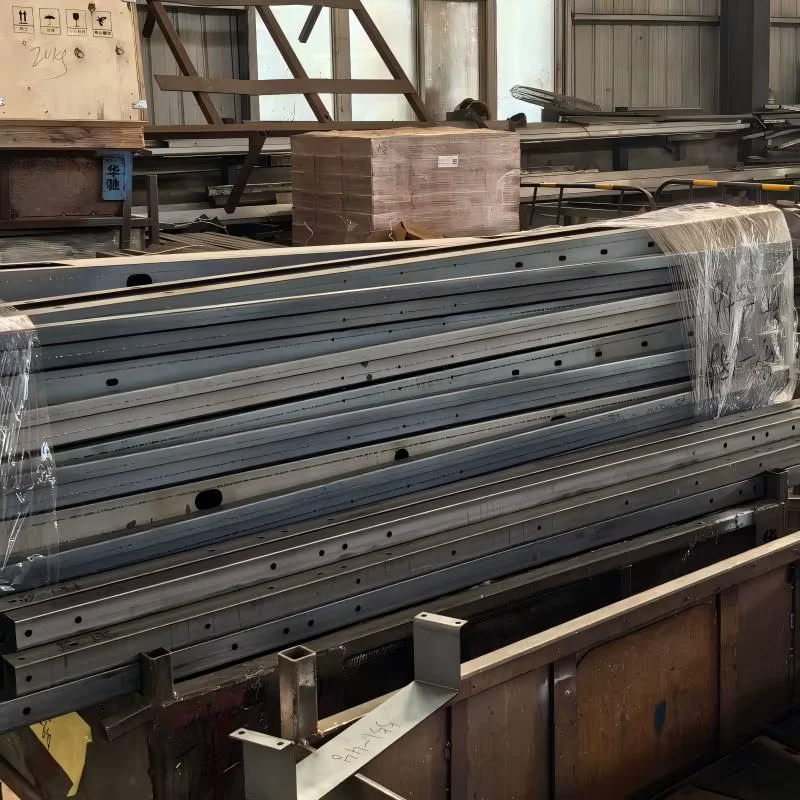
| Technique | Laser cutting, CNC punching & bending, stamping, welding |
| Surface Treatment | Powder coating, oxidization, electrophoresis, galvanization |
| Tolerance | ±0.2 mm |
| Package | Carton, wood pallet, case, or wooden boxes (customized) |
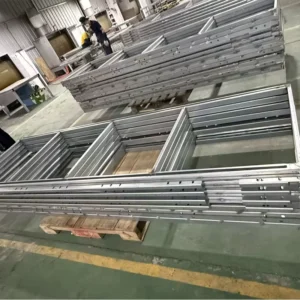
| Application | ATM machine enclosures, mail boxes, metal accessories, custom structural components |
Application Suitability
| Industry | Typical Applications |
|---|---|
| Financial Equipment Manufacturing | ATM machine enclosures, secure cash-handling housings, terminal frames |
| Commercial Infrastructure | Postal sorting station mail boxes, public access kiosks, parcel locker systems |
| Industrial Machinery | Custom structural brackets, machine guarding panels, conveyor guide frames |
| Electrical & Control Systems | Control box enclosures, electrical cabinet housings, junction box assemblies |
When Tolerance Stack-Up Turns a Simple Bracket Into a Site Rejection
±0.2 mm is the line between drop-in assembly and on-site rework.
Procurement teams sourcing custom fabricated metal parts frequently discover tolerance drift only after the container arrives at the job site. A facade bracket designed for M12 bolt holes at ±0.2 mm arrives with ±0.8 mm deviation — and suddenly the entire curtain wall mounting sequence stalls. Laser cutting kerf variation, CNC bending springback compensation errors, and uncontrolled welding distortion each contribute fractions of a millimeter that compound across multi-piece assemblies. When cutting, bending, and welding are split across three different workshops, nobody owns the final tolerance chain. [NEED_CITE: tolerance stack-up analysis in sheet metal fabrication assemblies]
Matching Fabrication Precision to Structural and Enclosure Requirements
Custom stainless steel fabrication structural welding service supplier capability determines whether an ATM enclosure meets IP-rated sealing requirements or a structural bracket carries design loads without deformation. The 3 mm–10 mm thickness range covers both light-gauge equipment housings and medium-duty structural frames. Laser cutting delivers clean edges that require no secondary deburring for visible architectural surfaces, while CNC punching and bending produce repeatable geometries across production batches of identical components. Welding processes are selected based on material grade and joint configuration — TIG for stainless steel enclosures requiring corrosion-resistant continuous seams, MIG for carbon steel structural brackets where penetration depth matters more than bead appearance.
Engineering Compliance Across Material Grades and Surface Finishes
Structural fabricated parts must satisfy both dimensional standards and material certification requirements depending on the installation environment. Stainless steel components for coastal or high-humidity installations rely on inherent corrosion resistance, while carbon steel parts require galvanization or powder coating to achieve equivalent service life [NEED_CITE: corrosion protection standards for fabricated steel in outdoor environments]. Electrophoresis coating provides uniform coverage in recessed geometries that spray-applied powder coating cannot reach. For projects requiring CE marking or third-party material verification, the fabrication supplier must maintain heat-number traceability from raw coil through every cutting, bending, and welding operation. Dimensional inspection reports referencing the ±0.2 mm tolerance band become part of the project handover documentation.
Material Selection and Process Fundamentals for Fabricated Parts
Stainless steel grades selected for fabricated structural parts prioritize corrosion resistance and weldability — 304 for general indoor and mild outdoor environments, 316 for marine or chemical-exposed applications. Carbon steel options range from mild steel (suitable for powder-coated indoor enclosures) to higher-strength alloy grades for load-bearing brackets. Aluminum fabrication addresses weight-sensitive applications where steel’s strength-to-weight ratio becomes a disadvantage. The laser cutting process produces a narrow heat-affected zone that preserves material properties adjacent to cut edges, critical when tolerance requirements approach ±0.2 mm. CNC bending must account for material-specific springback characteristics — stainless steel exhibits different elastic recovery than carbon steel at identical bend radii, requiring separate tool compensation programs. Welding distortion management becomes essential in assemblies combining multiple thicknesses; fixturing sequences and weld-pass planning determine whether a fabricated frame emerges within tolerance or requires post-weld straightening.
The Hidden Cost of Fragmented Fabrication Sourcing
Splitting laser cutting, bending, and welding across separate suppliers creates three failure modes: tolerance accumulation across handoffs, surface damage during inter-process transport, and material traceability gaps when certificates cannot follow the workpiece between shops. A stainless steel enclosure cut at one facility, bent at a second, and welded at a third arrives at the final assembly point with no single supplier able to certify the complete dimensional chain. Rework costs multiply when a welding distortion error is discovered after powder coating has already been applied. Material substitution — carbon steel delivered where stainless was specified — passes undetected until corrosion appears in service, at which point the entire installed base requires replacement. [NEED_CITE: quality control challenges in multi-vendor sheet metal supply chains]
Why Consolidated Fabrication Capability Reduces Procurement Risk
In-house control over the complete fabrication sequence — from flat sheet through laser cutting, CNC punching and bending, stamping, welding, and surface treatment — means a single quality system governs every operation. Dimensional inspection at each process stage catches drift before it propagates to subsequent operations. The ±0.2 mm tolerance claim is verifiable because the same facility that cuts the part measures it, rather than relying on a supplier’s incoming inspection report. Material certificates trace each batch from coil to finished component. When a facade contractor in Jakarta rejected an entire container of bent frames due to loading damage, the lesson was clear: fabrication precision means nothing if packaging and handling protocols treat finished parts as raw material. Professional container loading with custom bracing protects fabricated assemblies through ocean transit.
Documentation & Compliance
- Mill test certificate documenting stainless steel or carbon steel chemical composition and mechanical properties per applicable material standard, with heat number traceability to raw coil
- Third-party inspection report from SGS or BV verifying dimensional accuracy against ±0.2 mm tolerance and visual weld quality before shipment
- Surface treatment certification confirming powder coating thickness, galvanization coating weight, or electrophoresis film integrity per specified finish requirements
- Material traceability records linking each fabricated component to its source material certificate and production batch
- Customs documentation including packing list, bill of lading, and certificate of origin formatted for destination-country import requirements
Packaging, Loading & Delivery
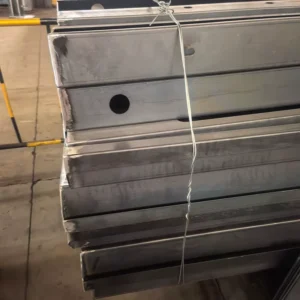
- Fabricated stainless steel components packed in individual cartons with foam separators to prevent surface scratching during transit, then consolidated on wood pallets for container loading
- Powder-coated and galvanized carbon steel parts wrapped with edge protectors and stretch film to preserve surface finish against abrasion and moisture during ocean shipping
- Custom wooden crates or cases for large structural assemblies requiring rigid support to prevent bending deformation under stacking loads
- Heat number and steel grade markings applied to each component or packaging unit for site identification and material verification upon arrival
- Professional container loading plans optimized for fabricated part geometry, with bracing and blocking designed to prevent shifting during sea voyage
- FOB, CIF, or DDP shipping terms available with complete export documentation and tracking through final delivery
Initiating Your Fabrication Inquiry
Submit your technical drawings or specifications indicating material grade, thickness, dimensions, surface treatment requirements, and target quantity to receive a detailed quotation with lead time and shipping terms. Non-standard sizes and custom geometries are evaluated for feasibility and pricing. Material certificates and third-party inspection arrangements are confirmed before production begins.
Frequently Asked Questions
Q: What materials are available for custom sheet metal fabrication?
A: Stainless steel, carbon steel, aluminum, copper, and alloy steel are available, with specific grade selection based on your application’s corrosion, strength, and environmental requirements.
Q: What is the tolerance range for laser cutting and CNC bending?
A: The standard tolerance is ±0.2 mm, maintained through in-process inspection at each fabrication stage.
Q: Can you provide surface treatment options like powder coating or galvanization?
A: Yes, powder coating, oxidization, electrophoresis, and galvanization are all available as integrated finishing processes.
Q: What is the MOQ for custom fabricated parts?
A: MOQ is evaluated based on part complexity and setup requirements; contact us with your specifications for a detailed assessment.
Q: Do you provide mill test certificates and third-party inspection reports?
A: Yes, material certificates with heat-number traceability are provided for every batch, and SGS or BV third-party inspection can be arranged upon request.
Request a Fabrication Quote with Material Certification
Send your drawings and specifications to receive pricing, lead time, and mill test certificate confirmation within one business day.
Mobile/WhatsApp/WeChat: +86 188 5315 7756 | Email: admin@sdxjypipe.com