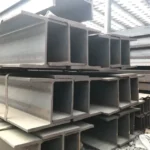
Description
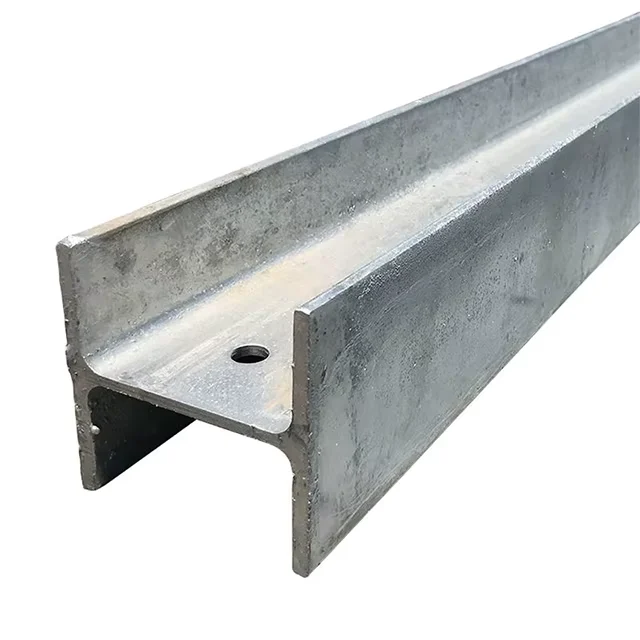
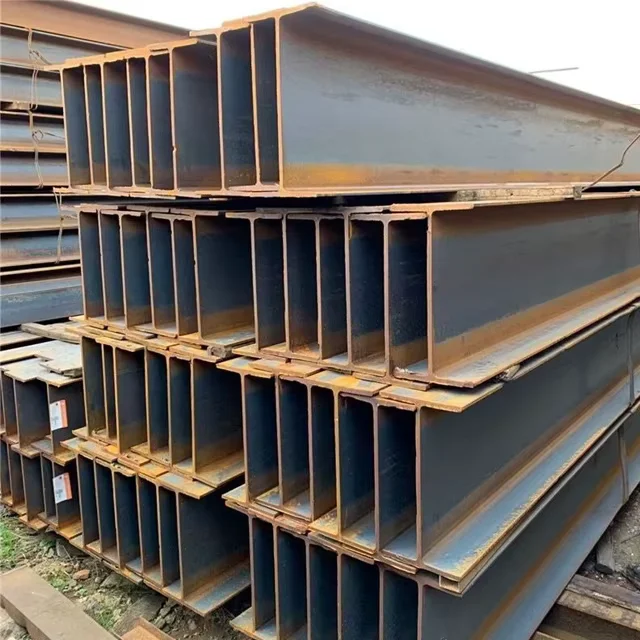
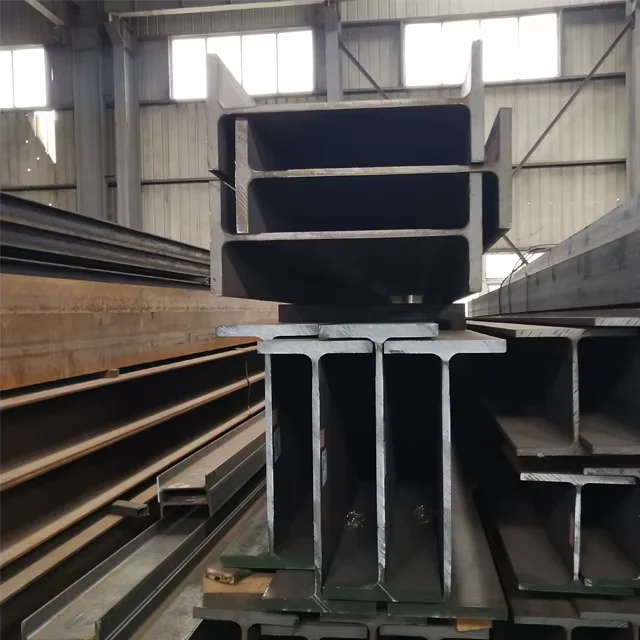
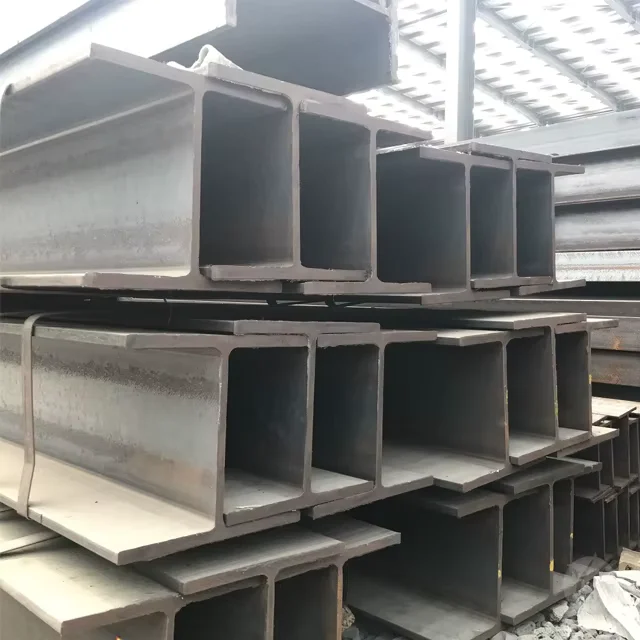
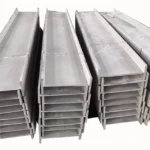
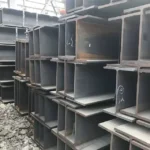
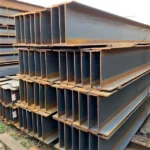
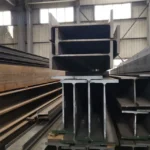
Mill-Direct Hot Rolled H-Beam — In-house lab testing per shipment with CE and ISO certification
Technical Specifications
| Parameter | Value |
|---|---|
| Designation | Q235B/Q345B Hot Rolled H-Beam |
| Product Type | H-Beam |
| Steel Grade | Q235, Q345, ST37-2, ST52, Q420, Q460, S235JR, S275JR, S355JR, SS400, A36 |
| Standard | JIS, ASTM, GB, EN |
| Section Shape | H-Section |
| Flange Width | 100mm–300mm |
| Flange Thickness | 8mm–28mm |
| Web Width | 100mm–900mm |
| Web Thickness | 6mm–16mm |
| Length | 6–12m/pc or customized |
| Technique | Hot Rolled Molding |
| Surface Treatment | Natural Surface |
| Tolerance | ±1% |
| Processing Service | Bending, Welding, Decoiling, Punching, Cutting |
| Invoicing | By Theoretical Weight |
| Application | Industrial structures, Building frames, Steel structure fabrication, Bridges, Infrastructure projects |
| MOQ | 1 Ton |
| Origin | China |
Application Suitability
| Industry | Typical Applications |
|---|---|
| Steel Structure Fabrication | Warehouse columns, portal frame rafters, mezzanine beam systems |
| Construction & EPC | High-rise building core frames, bridge girder supports, industrial plant structures |
| Infrastructure | Railway station canopy beams, airport terminal roof trusses, power plant pipe racks |
| Steel Trading & Distribution | Regional stock yard supply, cut-to-length distribution for local fabricators |
What Steel Grade Equivalence Errors Cost on an H-Beam Shipment
Wrong grade mapping between GB, EN, and ASTM standards leads to customs rejection and structural re-approval delays.
Buyers ordering Hot Rolled H-Beam Steel Q235B Q345B Supplier materials for EU or Middle East projects frequently discover that mill certificates listing Q345B do not automatically satisfy EN 10219 S355JR requirements — the chemical composition boundaries differ, and customs authorities in regulated markets reject shipments lacking explicit equivalence documentation [NEED_CITE: steel grade equivalence between EN and ASTM standards]. I once saw a full container of H-beams held at Jebel Ali for 23 days because the mill cert referenced Q345B without cross-referencing S355JR, and the client’s third-party inspector refused to sign off without a documented equivalence table from the producer. Dimensional tolerance drift beyond ±1% compounds the problem: flange thickness variation forces fabricators to re-measure every piece before welding, adding labor cost and delaying erection schedules.
How Hot Rolled H-Beam Steel Q235B Q345B Supplier Sections Match Structural Frame Demands
Hot rolled H-beams in Q235B and Q345B grades deliver the section modulus and moment of inertia that portal frame and braced frame designs require, while S235JR through S355JR variants satisfy EN 1993-1-1 load combinations for European-spec projects. The hot rolling process produces a fibrous grain flow along the web and flange junction, which improves resistance to lamellar tearing at welded connections — a critical factor when fabricators are joining beam-to-column moment connections without pre-heating. Our in-house physical and chemical laboratory tests every heat before dispatch, confirming that Q345B material meets the yield strength floor required for seismic-category frames, and we provide full mill test certificates with heat number traceability so that project inspectors can verify compliance without requesting additional third-party sampling.
Structural Code Compliance and Certification Pathways for H-Beam Procurement
Engineering specifications for bridges and high-rise structures typically reference EN 10210 for hot-finished hollow sections or EN 10025 for structural steel plates and sections, and procurement teams must confirm that the Hot Rolled H-Beam Steel Q235B Q345B Supplier they select holds Lloyd’s CE certification under EN 10210/10219 for European market access [NEED_CITE: EN 10210 hot finished structural hollow sections requirements]. ASTM A36 and A992 grades dominate North American specifications, while JIS G3101 SS400 and G3136 SN490 apply to Japanese-standard infrastructure projects — the ability to supply all these grades from a single production source eliminates the risk of mixed-standard deliveries that complicate site welding procedures. Tolerance control at ±1% ensures that flange width and web height dimensions remain within the limits that bolted end-plate connections require, reducing the need for on-site shimming or reaming.
Hot Rolling Process and Grade Selection Principles for H-Beam Applications
The hot rolling molding process heats slabs above recrystallization temperature and passes them through universal mills that form the web and flanges simultaneously, producing H-beams with consistent mechanical properties across the full cross-section. Q235 and S235JR grades serve general-purpose structural frames where yield strength requirements remain moderate, while Q345 and S355JR grades provide higher yield strength for heavy-load columns and long-span girders — the Q-series and S-series designations follow different national standards but occupy equivalent performance tiers when chemical composition and testing protocols are properly cross-referenced [NEED_CITE: steel grade equivalence chart GB EN ASTM JIS]. Wall thickness ranges from 6mm to 16mm for the web and 8mm to 28mm for flanges, covering the majority of warehouse, industrial plant, and mid-rise building specifications without requiring welded built-up sections. Surface condition remains as-rolled with natural mill scale, which provides adequate corrosion resistance for indoor applications and serves as a suitable base for paint or fireproofing coatings in exterior exposure conditions.
Hidden Costs of Incorrect Grade Documentation and Tolerance Drift
Procuring Hot Rolled H-Beam Steel Q235B Q345B Supplier sections without verified mill test certificates creates downstream liability: if a project inspector discovers that the delivered Q345B material lacks proper chemical composition documentation for S355JR equivalence, the entire batch may require removal and replacement, triggering schedule delays and liquidated damages claims [NEED_CITE: structural steel procurement certification requirements]. Negative tolerance abuse — where actual flange thickness falls below the nominal dimension by more than the permitted ±1% — reduces section modulus and compromises load-bearing capacity, forcing engineers to order heavier sections than originally specified to maintain safety margins. Certification gaps also block customs clearance in EU member states that enforce the Construction Products Regulation, meaning that shipments without valid CE marks under EN 10210/10219 face rejection at port regardless of material quality.
Why SD XJY Pipe Eliminates Procurement Risk for H-Beam Buyers
We operate three dedicated production lines covering 2,800+ specifications, and our in-house physical and chemical laboratory performs dimensional, mechanical, and chemical testing on every heat before dispatch — this means that when you order Q345B H-beams, the mill test certificate you receive documents actual test results rather than generic grade specifications. Our Lloyd’s CE certification under EN 10210/10219 and Singapore FPC approval allow direct shipment to EU and Southeast Asian markets without additional third-party certification costs, and we hold ISO 9001:2015 registration with SGS and BV verification available upon request. Custom non-standard lengths beyond the 6–12m range are available with low MOQ of 1 Ton, and our professional container loading team uses anti-damage measures including edge protectors and timber dunnage to prevent flange deformation during ocean transit — a detail that matters when H-beams arrive at site and fabricators discover that bent flanges require straightening before welding.
Documentation & Compliance
- Mill test certificate documenting Q235B/Q345B chemical composition and mechanical properties per GB/T 706, with heat number traceability for each piece
- CE certificate under EN 10210/EN 10219 for S235JR/S275JR/S355JR grades, required for EU market customs clearance
- ISO 9001:2015 quality management system certificate covering hot rolled H-beam production and testing processes
- SGS or BV third-party inspection report available upon request, documenting dimensional tolerance verification and mechanical test results
- Material traceability by heat number stamped on each beam end, matching mill test certificate records
- Customs documents including packing list, bill of lading, and certificate of origin formatted for destination country requirements
Packaging, Loading & Delivery
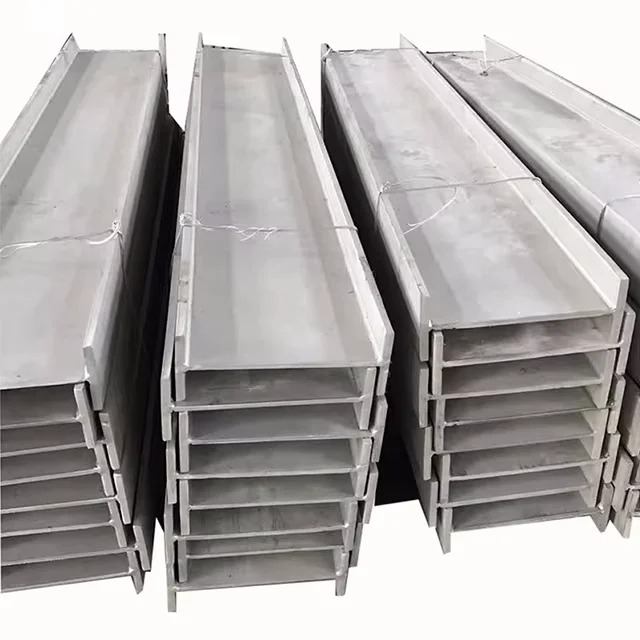
- Hot rolled H-beams bundled with high-tensile steel strips at intervals not exceeding 1.5m, with natural mill scale surface protected by anti-rust oil coating for ocean transit
- Flange edge protectors installed on each bundle to prevent deformation during container loading and unloading, critical for Q345B and S355JR grades where flange thickness tolerance must remain within ±1%
- Container loading optimized for 6m and 12m lengths using timber dunnage and steel wire lashing to prevent shifting during vessel roll, with weight distribution calculated to maximize payload per 20ft and 40ft containers
- Custom cut-to-length service available for non-standard project requirements, with cut pieces individually bundled and labeled with heat number and steel grade
- Shipping marks stenciled on each bundle end showing steel grade (Q235B/Q345B/S355JR), heat number, piece count, and net weight, matching mill test certificate documentation
- FOB, CIF, and DDP terms available with door-to-door logistics coordination to 50+ countries, including Middle East, EU, Southeast Asia, and South America markets
How to Request a Quotation and Verify Certification Before Order
Submit your Hot Rolled H-Beam Steel Q235B Q345B Supplier inquiry with section dimensions, steel grade, total tonnage, and destination port, and we respond within 12 hours with unit pricing, production lead time, and available mill test certificate samples. If your project requires non-standard lengths or specific tolerance control beyond ±1%, our technical team provides custom fabrication options with dimensional drawings for your approval before production begins. We arrange SGS or BV third-party inspection at our facility prior to shipment, and you receive complete export documentation including CE certificates for EU-bound orders — this verification step ensures customs clearance without delay and confirms that delivered material matches your engineering specifications.
Frequently Asked Questions
Q: How do Q235B, Q345B, S235JR, and S355JR grades compare across GB, EN, and ASTM standards?
A: Q235B corresponds approximately to S235JR and ASTM A36 in yield strength tier, while Q345B aligns with S355JR and ASTM A572 Grade 50 — however, chemical composition boundaries differ slightly between standards, and we provide equivalence documentation with mill test certificates to support customs clearance and third-party inspection approval.
Q: What mill test certificates are provided, and can third-party inspection be arranged?
A: Every shipment includes a mill test certificate documenting chemical composition and mechanical properties per the specified standard, with heat number traceability for each piece. SGS or BV third-party inspection is available upon request and conducted at our facility before shipment, with full inspection reports and photographs provided.
Q: What is the minimum order quantity, and can non-standard dimensions be produced?
A: The minimum order quantity is 1 Ton, and we produce custom non-standard lengths beyond the 6–12m range with dimensional tolerance held to ±1%. Custom flange width and web height combinations are available for project-specific requirements, subject to production line capability confirmation.
Q: How are H-beams packed and loaded to prevent damage during ocean freight?
A: H-beams are bundled with high-tensile steel strips and protected with flange edge guards, then loaded into containers using timber dunnage and steel wire lashing to prevent shifting. Anti-rust oil coating protects the natural mill scale surface during transit, and weight distribution is calculated to maximize container payload while maintaining stability.
Q: What surface treatment options are available, and how do they affect pricing and lead time?
A: Standard delivery is natural mill scale surface with anti-rust oil coating for short-term corrosion protection. Hot-dip galvanizing or paint coating is available upon request for projects requiring long-term corrosion resistance, with additional lead time for surface treatment processing and pricing adjusted based on coating thickness requirements.
Get Your Hot Rolled H-Beam Quote with Full Certification
Send your section dimensions, steel grade, and quantity to receive pricing and mill test certificate samples within 12 hours.
Contact: admin@sdxjypipe.com | WhatsApp: +86 188 5315 7756