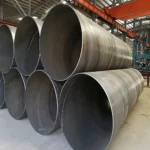
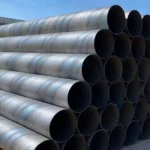
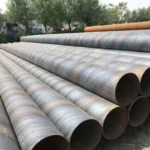
Description
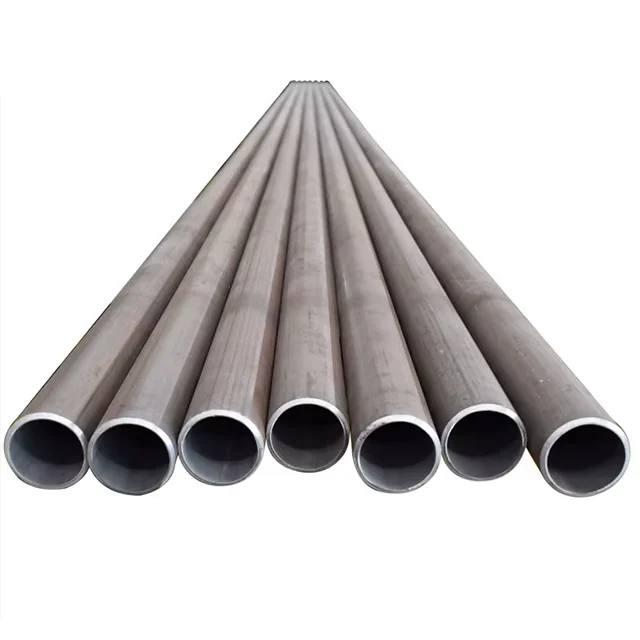
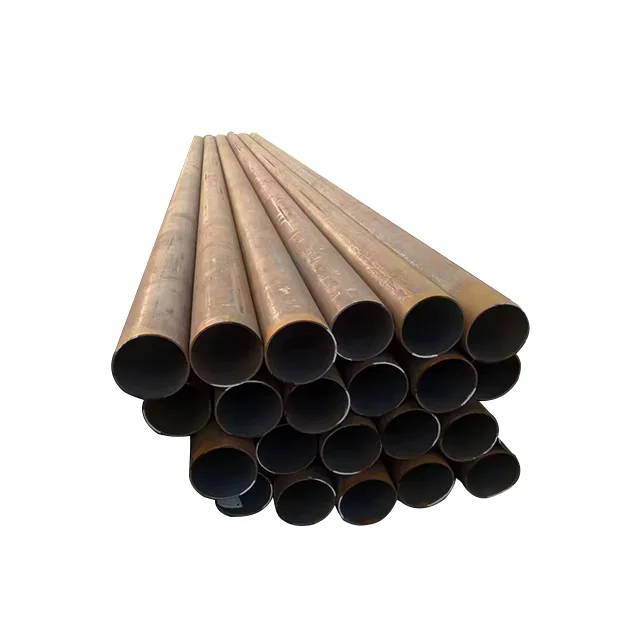
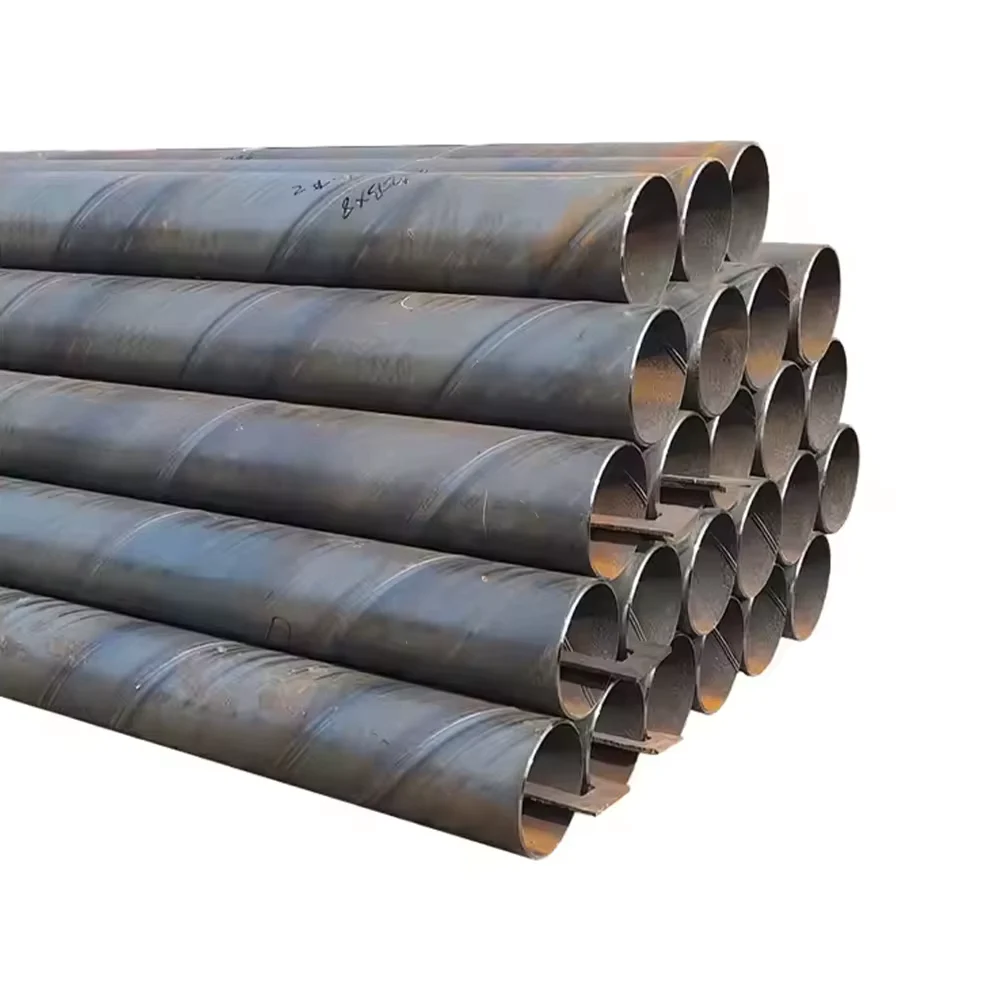
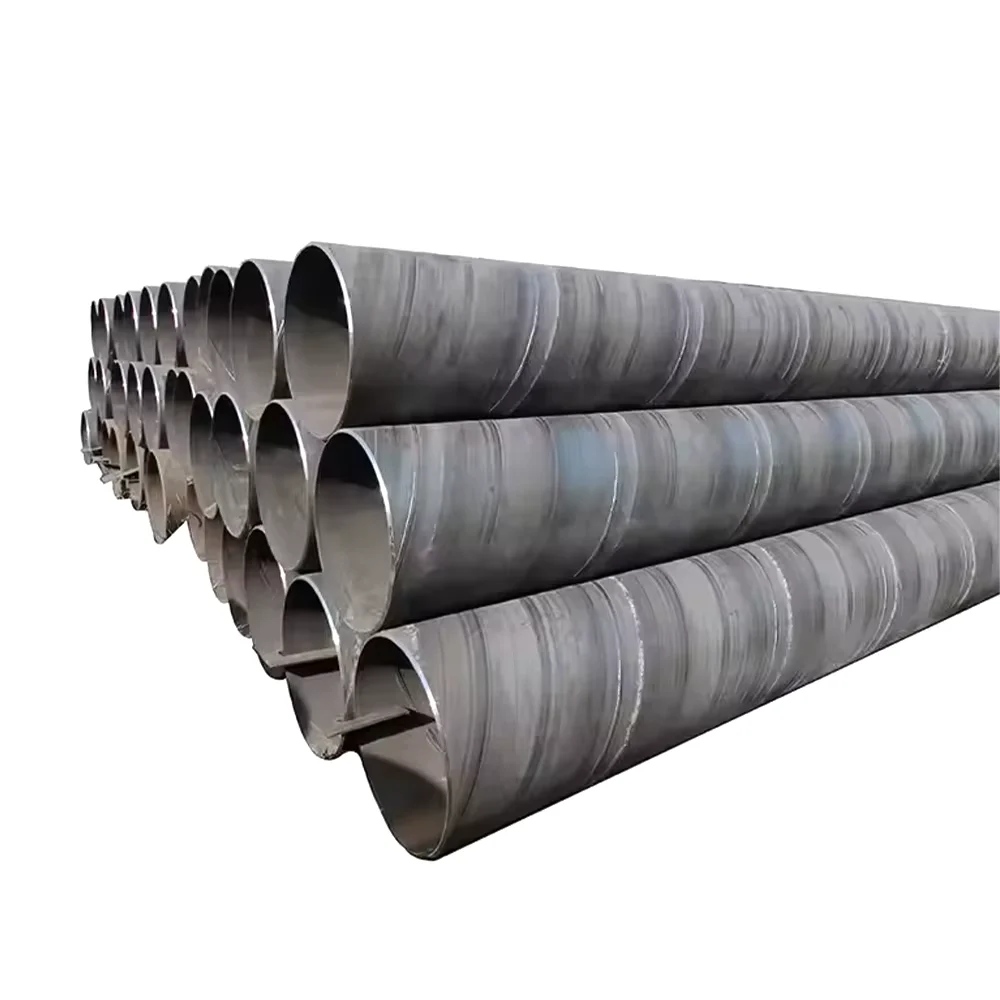
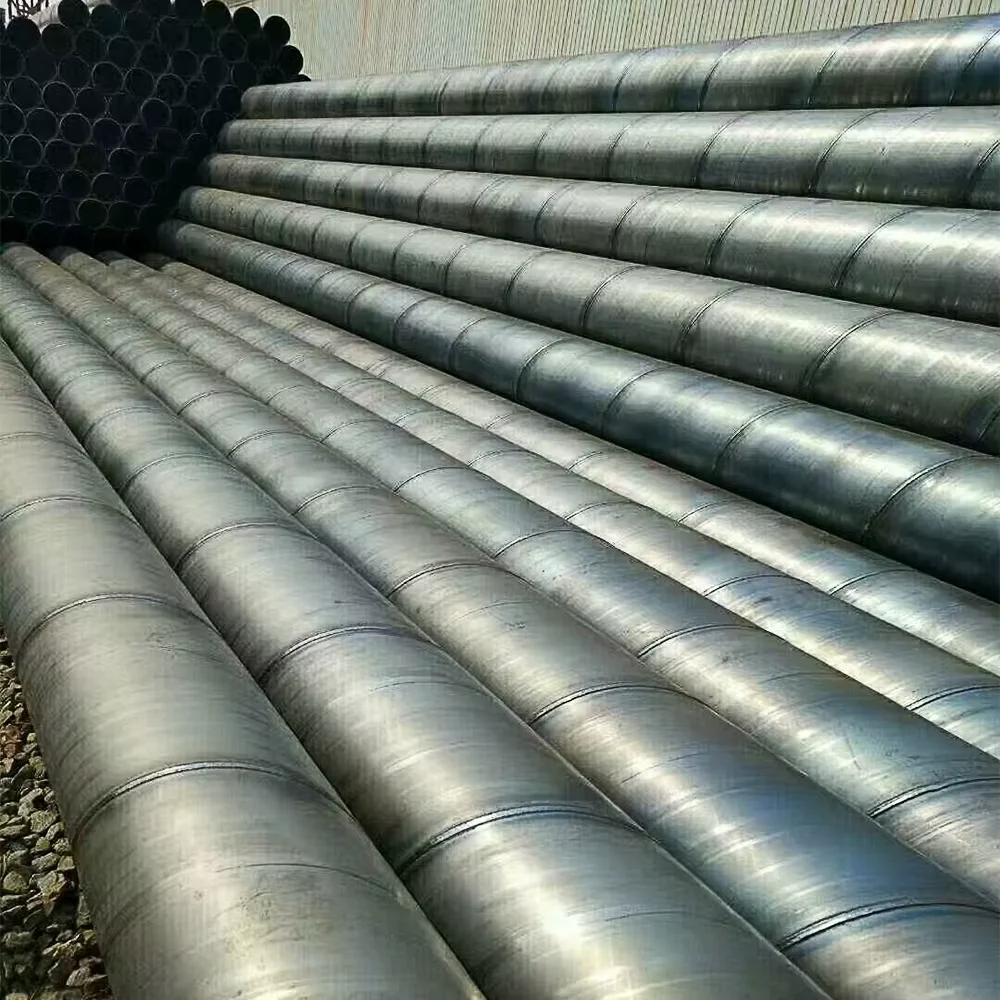
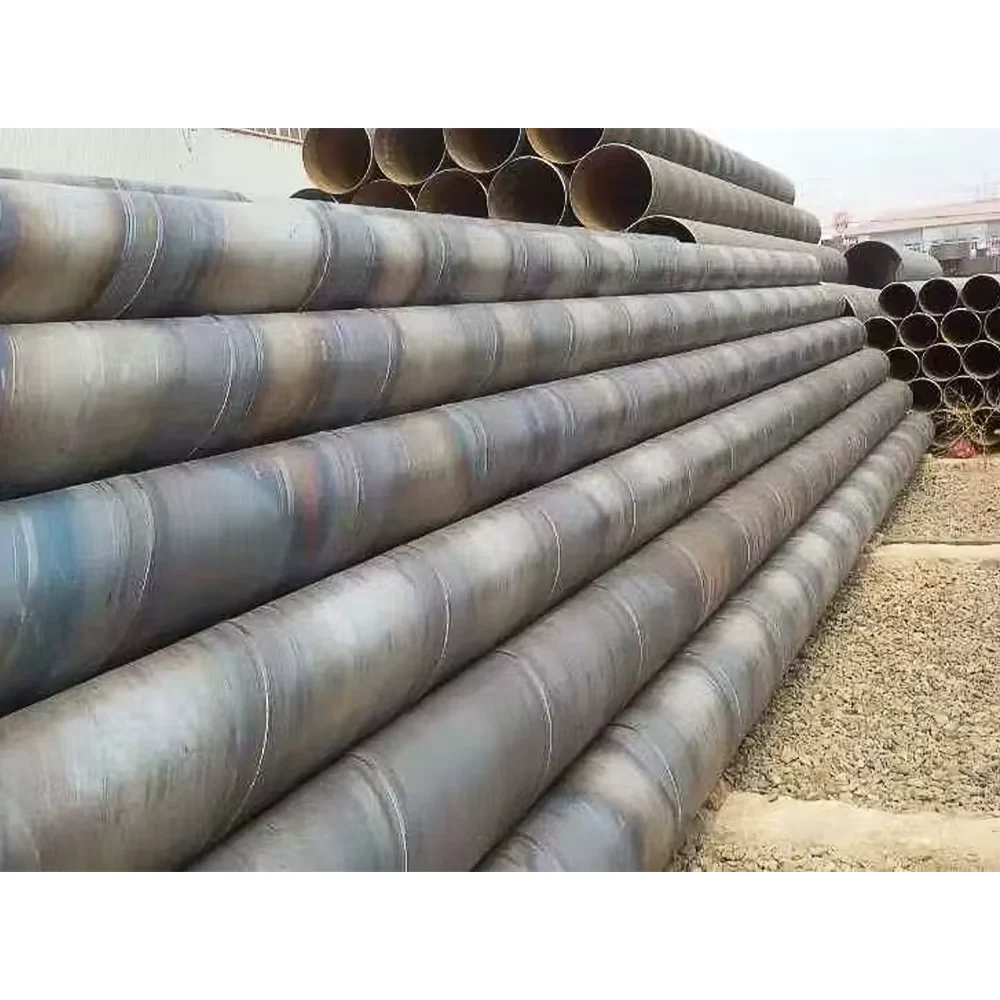
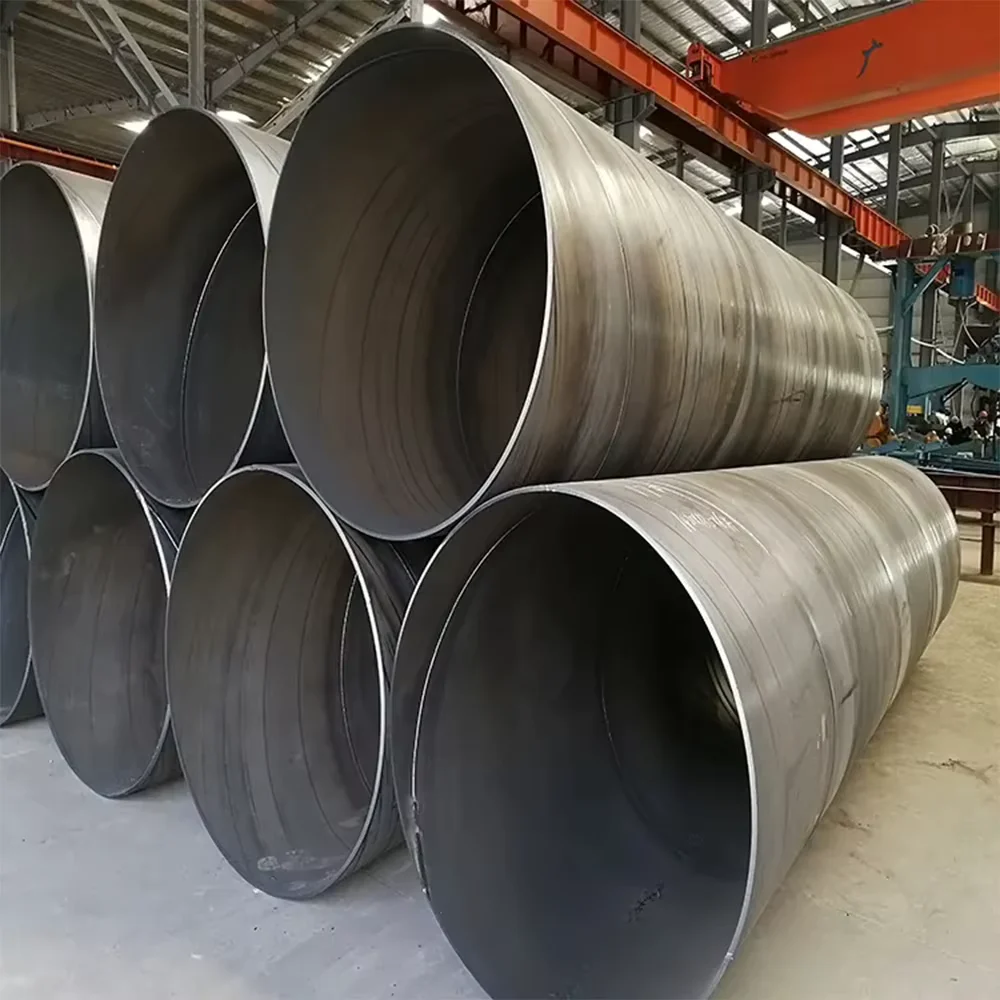
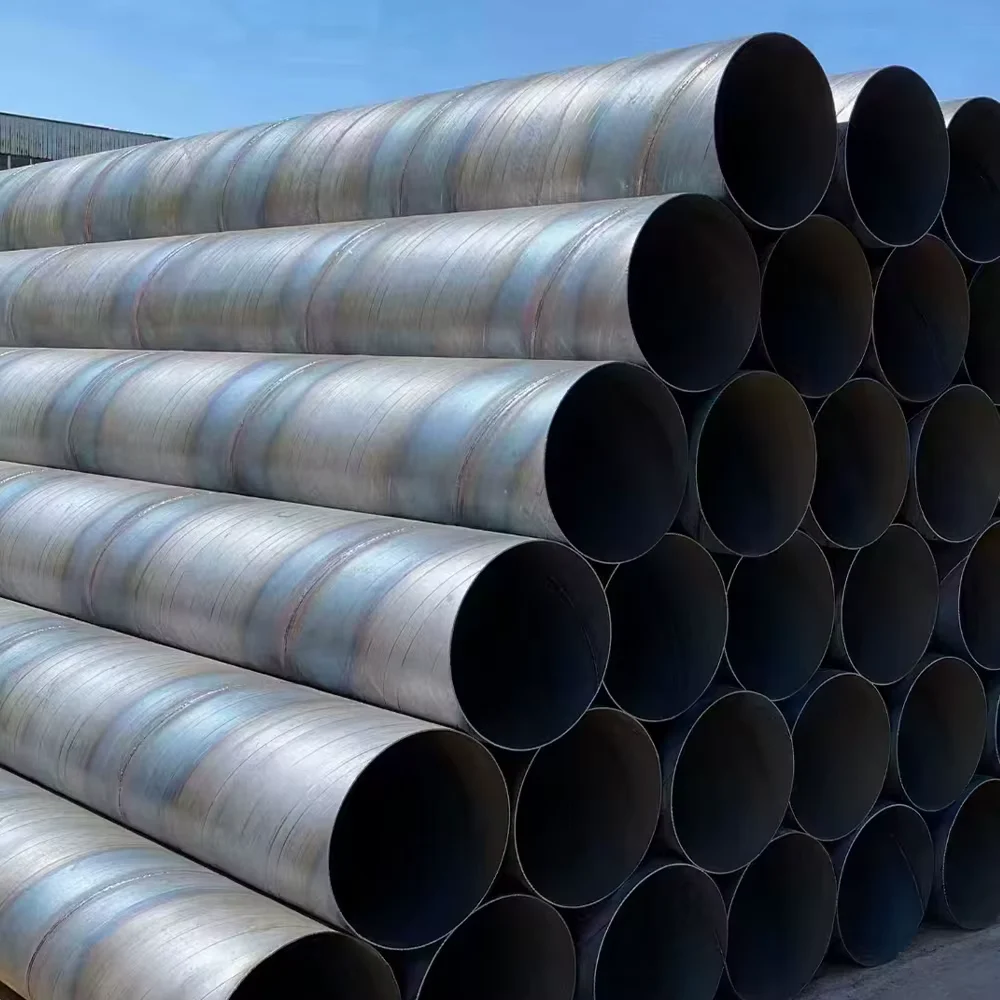
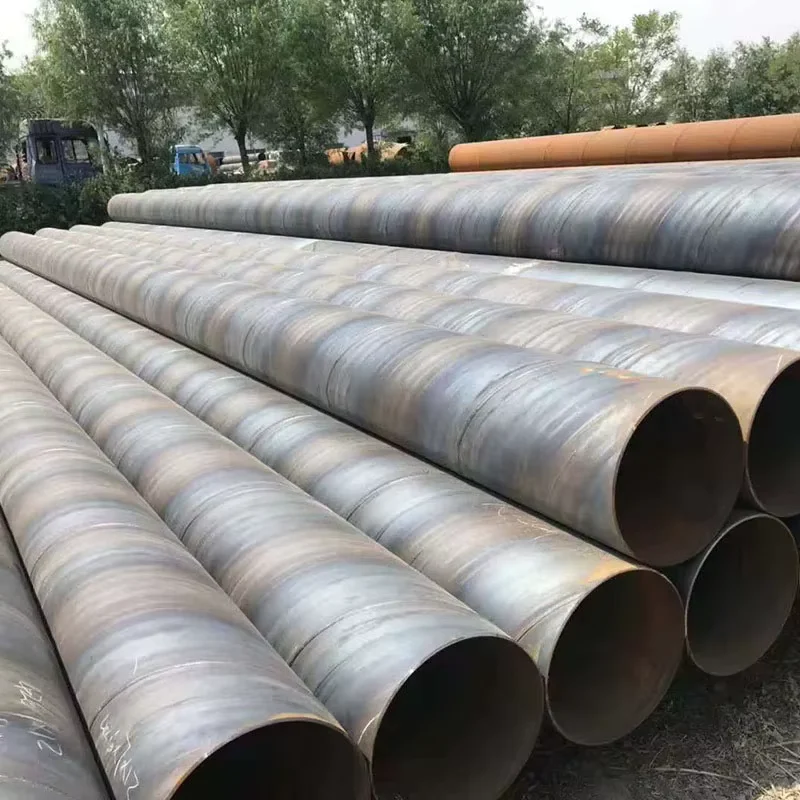
Factory-direct SSAW pile pipe — API 5L GR.B and ASTM A252 spiral welded pipes produced in-house with full mill test certificates and third-party inspection support.
Technical Specifications
| Parameter | Value |
|---|---|
| Designation | API 5L GR.B / ASTM A252 Spiral Welded Pile Pipe |
| Product Type | SSAW Spiral Welded Steel Pipe |
| Steel Grade | API 5L GR.B, ASTM A252 Grade B, X42, X52, X60, X70, L245, L290, L320, L360, L390, L415, Q195, Q235, Q345 |
| Standard | API 5L, ASTM A252, ASTM A53, ASTM A106, ASTM A500, GB/T 3091, GB/T 13912, BS 1387 |
| Section Shape | Round |
| Size Range | Outer Diameter 10–1000 mm |
| Wall Thickness | 1–80 mm |
| Length | 6–12 m (or customized) |
| Technique | Hot Rolled / Spiral Welded (SSAW) |
| Surface Treatment | Black Painting / Oiled / Non-oiled |
| Tolerance | ±1% |
| Ends | Plain / Beveled (per standard) |
| Application | Pile foundations / Fluid transport / Construction structures / Chemical fertilizer pipelines / Boiler systems / Hydraulic systems / Structural frameworks |
| MOQ | 5 Tons |
| Origin | Shandong, China |
Application Suitability
| Industry | Typical Applications |
|---|---|
| Infrastructure & EPC | Bridge pile foundations, highway sound barrier posts, port quay wall structures |
| High-Rise Construction | Building foundation piling, basement retaining walls, tower crane base supports |
| Oil & Gas Transmission | Water intake pipelines, gas distribution networks, crude oil transfer lines |
| Industrial Plants | Chemical fertilizer process piping, boiler feed water systems, hydraulic structural frames |
| Marine Engineering | Offshore platform support piles, dock fendering systems, jetty structural members |
What Negative Tolerance Costs on a Pile Foundation Order
Dimensional deviation beyond ±1% triggers third-party rejection and project delay claims.
On a Southeast Asian bridge EPC project, I watched an entire container of ASTM A252 pile pipes sit on the码头 for three weeks because wall thickness negative tolerance exceeded 0.3mm. The监理 rejected the batch after SGS re-inspection, and the contractor filed delay claims against the supplier. The root cause was not the steel grade itself, but the mill’s failure to control rolling tolerance within API 5L GR.B specifications.
When sourcing API 5L GR.B spiral welded steel pipe supplier products for load-bearing piles, buyers face three hidden risks: uncertified material that fails customs clearance, off-standard dimensions that cause welding fit-up problems on site, and improper loading that bends pipes during ocean transit [NEED_CITE: API 5L dimensional tolerance requirements for spiral welded pipes].
Matching Pile Foundation Requirements with SSAW Process
Spiral welded pipes in API 5L GR.B through X70 grades meet the structural demands of deep foundation piling where axial load capacity and driving resistance matter. The SSAW process produces continuous lengths up to 12m with consistent wall thickness distribution, reducing field welding joints compared to shorter seamless alternatives. For bridge piles requiring ASTM A252 Grade B, the spiral weld seam undergoes 100% ultrasonic testing per API 5L requirements, ensuring integrity during hydraulic hammer driving. Our in-house laboratory performs chemical composition analysis and mechanical testing on every heat, with results documented in mill test certificates that satisfy both EN 10204 3.1 and project-specific third-party inspection protocols.
Engineering Compliance and Certification Pathways
Pile foundation specifications typically reference ASTM A252 for structural piling or API 5L for pressure-containing applications, with material certification requirements varying by jurisdiction. EU projects demand CE marking under EN 10210/EN 10219, while North American infrastructure work requires ASTM material test reports traceable to heat numbers [NEED_CITE: EN 10219 structural hollow section certification requirements]. The steel grade selection—whether API 5L GR.B for general piling or X52/X60 for high-stress applications—directly affects driving performance and long-term corrosion allowance. Surface treatment choices between black painting, oiled, or non-oiled conditions depend on storage duration and installation environment, with oiled surfaces providing temporary corrosion protection during ocean transit to tropical ports.
Steel Grade Selection and Spiral Welding Process
API 5L GR.B represents the baseline grade for spiral welded pile pipes, offering minimum yield strength suitable for most foundation applications without the premium cost of higher grades. Moving up to X42, X52, or X60 increases yield strength for deeper piles or higher axial loads, but requires tighter control of welding parameters to maintain weld seam integrity. The SSAW process forms the pipe from steel coil through continuous spiral welding, allowing production of large diameters up to 1000mm that would be impossible with seamless methods. Wall thickness tolerance of ±1% ensures consistent load-bearing capacity along the pipe length, while the spiral weld angle distributes stress more evenly than longitudinal seams in ERW pipes. For corrosive soil conditions, the choice between black painting and oiled surfaces becomes critical—black paint provides longer-term protection but may chip during driving, while oil offers temporary protection that must be replenished if storage exceeds six months.
Hidden Costs of Incorrect Material Procurement
Material mismatch and certification gaps create exponential cost multiplication through rework, delays, and structural compromise.
Purchasing API 5L GR.B spiral welded steel pipe supplier products without verified mill test certificates risks receiving material that fails third-party inspection at destination, triggering container demurrage charges and project schedule delays. Negative tolerance violations that exceed specification limits force either rejection of the entire batch or costly structural redesign by the engineer of record. Missing CE documentation blocks EU customs clearance, while incorrect grade marking—such as supplying Q235 when ASTM A252 Grade B is specified—creates liability exposure if the pile fails during driving or under service loads [NEED_CITE: steel grade equivalence between API 5L and ASTM A252 standards].
Procurement Advantages from Direct Factory Supply
Our production facility manufactures API 5L GR.B through X70 spiral welded pipes across 2,800+ specification combinations, eliminating the specification gaps that force buyers to source from multiple suppliers. The in-house physical and chemical laboratory performs dimensional verification, mechanical testing, and chemical analysis on every production heat, generating mill test certificates that satisfy international inspection requirements. Full certification portfolio includes ISO 9001:2015 quality management, Lloyd’s CE marking for EN 10210/EN 10219 compliance, and Singapore FPC for Southeast Asian projects, with SGS and BV third-party inspection available upon request. Professional container loading protocols prevent the bending and surface damage that plague improperly packed pipe shipments, while custom non-standard sizes accommodate project-specific requirements without forcing design compromises.
Documentation & Compliance
- Mill test certificate documenting API 5L GR.B chemical composition and mechanical properties per API 5L requirements
- CE certificate confirming compliance with EN 10210/EN 10219 for EU market access
- ISO 9001:2015 quality management system certificate covering spiral welded pipe production
- SGS or BV third-party inspection report verifying dimensional accuracy and weld seam quality
- Material traceability documentation linking each pipe to specific heat number and coil certification
- Complete customs documentation including packing list, bill of lading, and certificate of origin
Packaging, Loading & Delivery
- API 5L GR.B spiral welded pipes bundled with steel strips at intervals matching 6-12m lengths to prevent sagging during ocean transit
- Black painted surfaces protected with edge guards and plastic wrapping to prevent coating damage from steel strip contact
- Container loading optimized for 10-1000mm OD pipes using wooden chocks and anti-roll measures to eliminate movement during vessel transit
- Oiled surface treatment applied uniformly to prevent rust formation during storage and shipping to humid climate destinations
- Heat number and steel grade stenciled on each pipe end for site identification and material traceability verification
- FOB, CIF, and DDP shipping terms available with professional export documentation and real-time container tracking
Initiating Your Pile Pipe Procurement
Submit your API 5L GR.B spiral welded steel pipe requirements including outer diameter, wall thickness, steel grade, quantity, and destination port to receive detailed pricing with mill test certificate specifications. Our engineering team reviews non-standard size requests within 12 hours and provides third-party inspection coordination for projects requiring independent verification.
Request API 5L GR.B Spiral Welded Pile Pipe Quotation
Send your specifications to admin@sdxjypipe.com or contact via WhatsApp at +86 188 5315 7756 for pricing, certification confirmation, and delivery scheduling.
Frequently Asked Questions
Q: What is the difference between API 5L GR.B and ASTM A252 Grade B for pile applications?
A: API 5L GR.B is a pipeline specification covering chemical composition and mechanical properties for pressure and structural applications, while ASTM A252 specifically addresses steel pipe piles for foundation construction. Both grades have similar yield strength requirements, but ASTM A252 includes additional requirements for driving performance and dimensional tolerances specific to piling operations. Our mill test certificates document compliance with the specific standard you require, and we can supply material certified to both specifications when project demands require dual compliance.
Q: Can you provide third-party inspection before shipment for API 5L GR.B spiral welded pipes?
A: Yes, we coordinate SGS and BV third-party inspection services covering dimensional verification, visual weld examination, ultrasonic testing of spiral seams, and review of mill test certificates. The inspection occurs after production completion but before container loading, with full reports provided to you and your project engineer. Third-party inspection fees are quoted separately based on order quantity and specific testing requirements.
Q: What surface treatment is recommended for API 5L GR.B pipes destined for tropical marine environments?
A: For tropical marine environments with high humidity and salt exposure, we recommend black painting as the standard surface treatment, providing immediate corrosion protection during transit and storage. For extended storage periods exceeding six months or aggressive soil conditions, additional external coating such as 3PE or epoxy can be applied after delivery. Oiled surfaces provide temporary protection suitable for immediate installation but require replenishment if pipes remain uncovered in humid conditions.
Q: What is the minimum order quantity for custom wall thickness or non-standard lengths?
A: The minimum order quantity is 5 tons for standard specifications, while custom non-standard sizes including special wall thickness or cut-to-length requirements typically require 10-20 tons depending on the deviation from our standard production schedule. Custom orders enter production within typical lead times after contract confirmation and deposit receipt, with exact quantities confirmed during the quotation stage based on your specific dimensional requirements.
Q: Do you provide material traceability documentation for API 5L GR.B spiral welded pipes?
A: Each pipe is traceable to its specific heat number through mill test certificates documenting chemical composition and mechanical properties. The heat number is stenciled on both pipe ends, and our documentation package includes coil certification from the steel mill, production records linking each pipe to its source coil, and final inspection reports confirming compliance with API 5L requirements. This traceability chain satisfies most international project specifications and third-party inspection protocols.